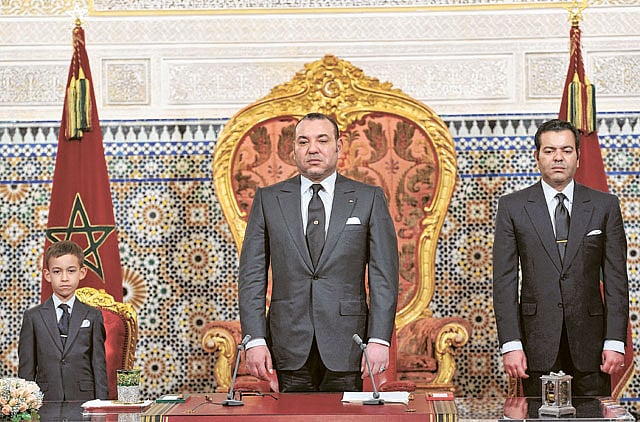
Rabat: Morocco's King Mohammad VI promised a sweeping constitutional reform, including real powers for a popularly elected prime minister instead of a royal appointee, as well as a free judiciary.
In his first speech after uprisings across the Arab world and less than a month after protests erupted in Morocco for more social justice and limits on royal powers, the king on Wednesday pledged to draw up a new draft constitution.
"We have decided to undertake a comprehensive constitutional reform," King Mohammad said, underlining his "firm commitment to giving a strong impetus to the dynamic and deep reforms... taking place".
He outlined seven major steps, including the way the prime minister is chosen.
Instead of being appointed by the king, the prime minister will be drawn from "the political party which leads in the elections" in parliament, he said.
The prime minister will have "effective executive power" and be "fully responsible for the government, public administration... and implementing the government's programme," the monarch said.
He also pledged "expanded individual and collective liberties and the reinforcement of human rights in all dimensions" and spoke of the "will to set up an independent judiciary".
The Moroccan monarch announced the formation of a commission to work on the constitutional revisions, with proposals to be made to him by June. A referendum will then be held, he said, without giving a date.
Commitment
On February 21, during the launch of an Economic and Social Council, the king spoke of his commitment to "pursuing the realisation of structural reforms".
He also expressed his willingness to "strengthen" the country's accomplishments "by new reforms".
The Moroccan government has said it had heard the demands for more change and was committed to speeding up reforms, which it said were already on its national agenda.
Opposition Islamist Justice and Development Party (PJD) leader Abdelilah Benkirane welcomed the speech saying that Mohammad had "reacted positively to the demands made by the parties and young people".
"We are almost surprised," he said in a first reaction, welcoming the monarch's "powerful" response.
"The PJD is satisfied. This development looks more like a revolution and the concerned parties are asked to work seriously to make the contents of the speech become reality."
"This is a break with a discredited past," said political scientist Mohammad Darif. "He has met the demands of many Moroccans who never stopped to ask for institutional and political reforms."
"This speech breaks with the monarchy as an executive power. It does not create a parliamentary monarchy but provides for a balanced monarchy where power is divided between the king and a government based on parliament."
Sign up for the Daily Briefing
Get the latest news and updates straight to your inbox
Network Links
GN StoreDownload our app
© Al Nisr Publishing LLC 2026. All rights reserved.