Khawar, since opening his first Sharjah shop in 2000, has built the groceries, sweet counters and restaurants that gave the area its name: Pakistan Chowk.
Meet the man behind Sharjah's famous and beloved Pakistan Chowk
In Sharjah's Al Mujarrah, Sohail Khawar built a home away from home
Last updated:
6 MIN READ
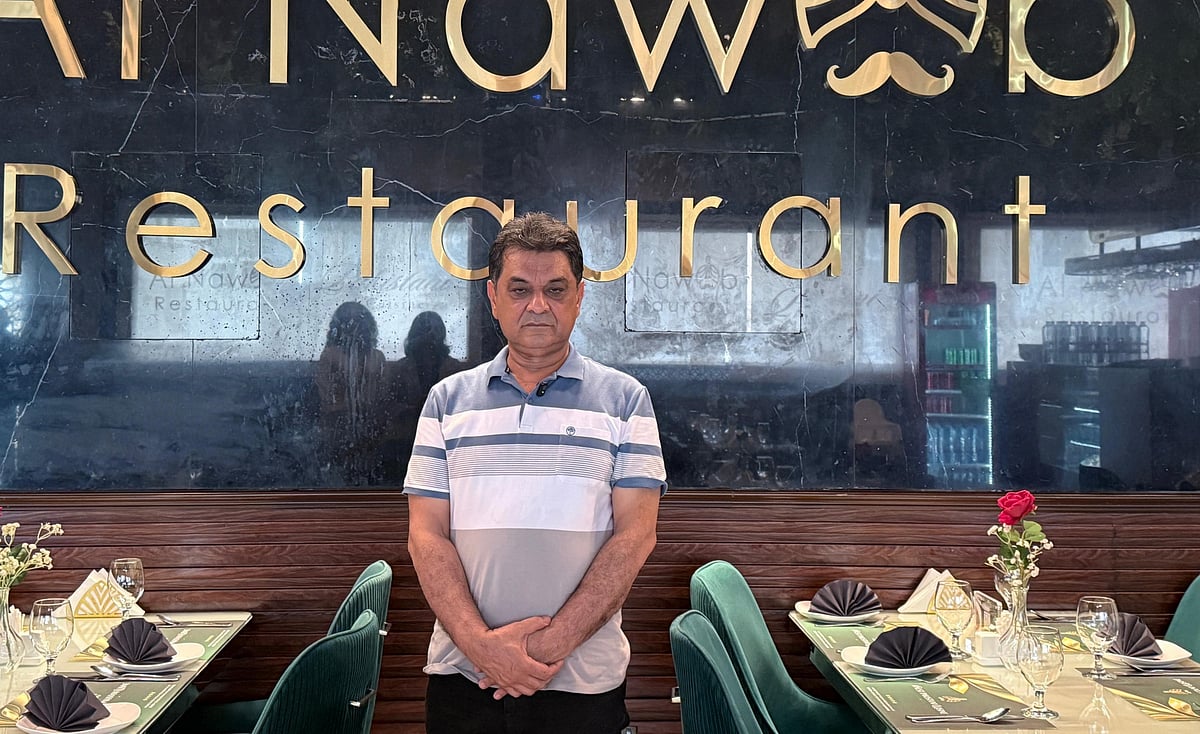
Pakistani expatriate Sohail Khawar who came to the UAE in 1979, runs multiple businesses a large segment of serving the community here.
Dubai: You do not need an address to get to Pakistani Chowk (square). You need a taxi and a driver who understands you, and in Sharjah's Al Mujarrah, he will get you there.
"When you ask a taxi driver that you want to go to Pakistan Chowk (square), you don't have to tell him how to get there," says Sohail Khawar. "You don't have to clarify that you want to head to Al Mujarrah either. Because most taxi drivers are also Pakistani. And when they see that you want to head here, they will straight away bring you to this place."
Khawar has watched that happen for a quarter of a century. He arrived in the UAE in 1979 and, since opening his first Sharjah shop in 2000, has built the groceries, sweet counters and restaurants that gave the area its identity. He also gave it a phrase that has followed it ever since: Watan se door, watan ki khushbu. The smell of the homeland, away from home.
A neighbourhood that named itself
Al Mujarrah was a known quantity long before any of this. "This area in Sharjah called Al Mujarrah is famous in itself," Khawar says.
The little intersection in that area, around Rain Room in Sharjah, are nestled multiple Pakistani shops, Pakistani sweets, Pakistani Supermarket, Al Nawab restaurant which serves authentic Pakistani cuisine, Pakistani meat shop, tailors, and more, all majorly owned and kick-started by one man.
Al Nawab Restaurant, Pakistan Supermarket, Al Hajaj Grocery, and Pakistan Sweets all located in one square intersection in Al Mujarrah.
Then people started calling the pocket of it where he set up all his shop, the name Pakistani Chowk, then taxi drivers learned it, and now it works as a real address in a city where it appears on no map.
"It used to make me very happy when I would see people visiting our store with their families," he says. "There would be this twinkle in their eye when they would spot something, and that gave me the idea to launch this slogan."
Watan se door, watan ki khushbu. The smell of the homeland, away from home.
"Especially people from the previous generation, when they would see these things they would get happy. 'Oh, I used to eat this in Pakistan.'"
Sweets counter in Pakistan Supermarket.
A government job, then a gamble
Khawar's parents were already in the UAE by the early 1970s. He followed in 1979 and spent years in a government job before the itch to build something of his own became too strong to ignore.
His first venture was a sweet shop in Abu Dhabi. Then he looked towards Sharjah and Dubai.
"I noticed how in Abu Dhabi we had one or two Pakistani stores, but at that time there were none in Sharjah and Dubai," he recalls. So, he opened Al Hajjaj Grocery in Al Mujarrah in 2000. He slowly built the list of things he sold starting from: fruit, vegetables, daals, spices, drinks and sweets, all sourced from Pakistan.
Al Hajaj Grocery was first opened in Sharjah in 2000.
Nobody came, at first
The Al Mujarrah of that moment bears almost no resemblance to the one outside the shop today.
"Back then there were no buildings here, not even proper roads. It was all kacha(sand), and no one would come here either," says Khawar.
So they went to the people instead. "We would visit people's homes, schools, hotels. Wherever we heard there were Pakistanis, we would go there and spread the word about the grocery through people like that."
The word travelled. Khawar went from ordering weekly to daily.
"People would line up to buy food, and thanks to God, whatever we ordered we would sell out," he says. Prices helped. There was one rate for everything, produce was cheap, and customers turned up with bags big enough to feed a household for a week.
Food counter outside Pakistan Sweets, where you can order various Pakistani snacks.
Order today, eat tomorrow
The part of the operation Khawar sounds proudest of is the speed, and the fact that customers could name almost anything.
"Back then, people would come to us and say that near Lahore, Peshawar or Rawalpindi there is this thing that I like to eat and drink and would like to order it," he says. "We would then order those things and provide it to them in around 24 hours."
Shoppers buying vegetables from Pakistan in Pakistan Supermarket.
Some of the requests were his own. He wanted a particular barfi from a particular shop. He wanted jamun. He wanted saag. None of it existed here, so he brought it.
Mangos being sold in Al Hajaj Grocery.
Two brothers and a khoya counter
The next idea was to stop importing the finished product and start making it here.
He took the plan to his brother, Haji Muhammad Yaseen, who later then opened Pakistan Supermarket in the same cluster of streets. Together they launched Pakistani Sweets, working with traditional ingredients like khoya and mawa and turning out sweets in the Pakistani style. Gol gappay and samosas followed, then a wider snack counter. About seven years ago came Al Nawab Restaurant, which now has branches in across UAE.
The way they have maintained the same taste all these years is due to, Khawar's strict policy. "What we eat ourselves is what we serve to the customers. We only use fresh beef and chicken, because I don't believe in using any frozen foods."
Staff preparing customer's order of Chole in Pakistan Sweets.
Not just a Pakistani address
The customer base outgrew the community that built it.
"We get people from all different nationalities, Indian, Bangladeshi, Sri Lankan, Filipino," says Khawar. "Especially when it's mango season, we have lines and lines of people lining up to get mangoes."
Resident looking to buy mangos in Pakistan Supermarket during mango season.
The calendar has its own rhythm too. Eid and Pakistan's Independence Day bring a rush for mehndi cones and flags. Cricket used to bring crowds of a different kind, with fans arriving to celebrate after a Pakistan win, though Khawar says they no longer encourage it, because of the traffic it created and current restrictions on large gatherings.
Decorated Dhokli for festive occasions.
What he thinks made it work
Ask him for the lesson and he does not reach for anything complicated.
"I believe in life, if you work hard and put your all into something, you will be successful," he says. "Especially in the UAE. If you work hard in this country, it will always bear fruit."
Twenty-six years on, his legacy lives on a neighbourhood that took its name from the people who shop there, on a road that once had no one visiting, and a driver who knows exactly where to go when you say, 'Take me to Pakistan Chowk'.
Network Links
GN StoreAbout Gulf NewsTerms & ConditionsReach by GNSitemapContact usPrivacy PolicyGN FocusHave your sayWork with usAdvertise with usGulf News epaperPrinting Services
Download our app
© Al Nisr Publishing LLC 2026. All rights reserved.