UAE leads global AI adoption with 97% usage and major investments
AI adoption hits 97% and the number of programmers exceeds 450,000 nationwide
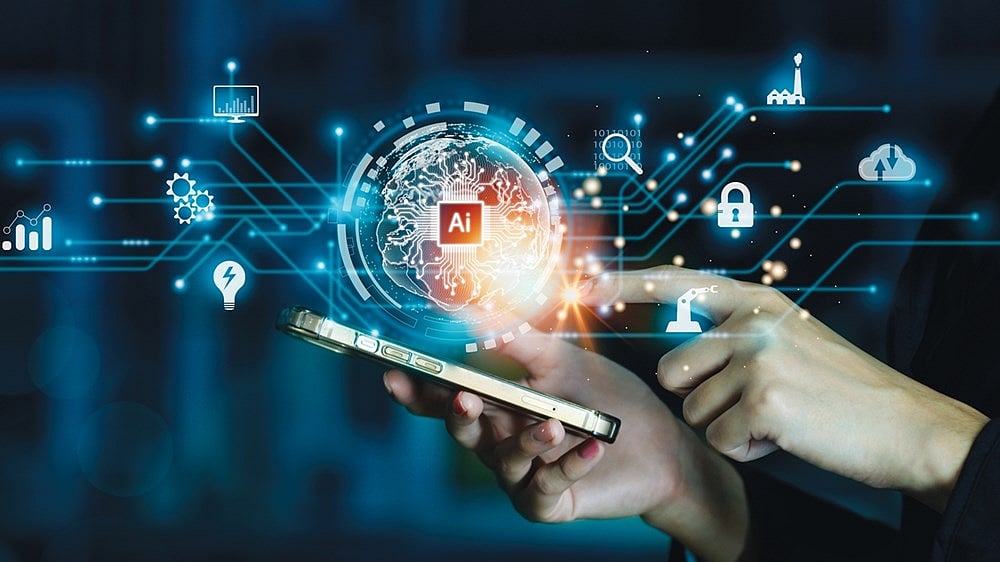
Dubai: In October 2017, the Government of the United Arab Emirates launched the UAE Artificial Intelligence Strategy, marking the next phase beyond the Smart Government era. This initiative laid the foundation for future services, sectors, and infrastructure, in alignment with the UAE Centennial 2071 vision, which aspires to make the UAE the best country in the world across all fields.
The UAE AI Strategy aims to achieve the objectives of Centennial 2071 by accelerating the implementation of development programs and projects to shape the future, achieving 100% reliance on artificial intelligence in services and data analysis by 2031, enhancing government performance, expediting service delivery, fostering innovative work environments, positioning the UAE as the world’s leading government in leveraging AI across vital sectors, and creating a promising, high-value new economic market in the region.
During 2025, the UAE recorded landmark strategic achievements in artificial intelligence, advancing steadily toward building one of the world’s most powerful digital infrastructures and consolidating its position as a key global hub shaping the new world economy. AI tool usage in the country reached 97%—the highest rate globally—while the number of programmers surpassed 450,000.
In 2025, AI adoption in the UAE reached 97%, the highest in the world, with more than 450,000 programmers nationwide. Investments directed toward artificial intelligence exceeded AED 543 billion during 2024 and 2025, alongside major investment announcements by global companies such as Microsoft and KKR.
The year also witnessed the launch of the UAE–France Framework for Cooperation in Artificial Intelligence, which includes projects in renewable energy, advanced semiconductors, joint research platforms, and investment in a 1-gigawatt computing complex in France.
The establishment of the UAE–US Artificial Intelligence Campus in Abu Dhabi, with a capacity of 5 gigawatts, marked a major turning point, making it the largest supercomputing complex outside the United States. The “Stargate UAE” project, with a capacity of 1 gigawatt, was also announced.
In addition, UAE-based MGX, in partnership with BlackRock and Microsoft, announced the joining of NVIDIA and xAI to the “AI Infrastructure Partnership,” aimed at investing in next-generation data centers and advanced energy solutions, with potential investments reaching USD 100 billion.
Collaboration with the University of Birmingham Dubai
The UAE has expanded the scope of specialised training through the AI Chief Executive Officers Programme, in collaboration with the University of Birmingham Dubai, with the aim of preparing government leaders capable of deploying artificial intelligence models across various sectors.
The initiative titled “An AI Agent for Every Faculty Member” at Hamdan Smart University marked a new transformation in higher education ecosystems, contributing to a 95% reduction in workload and a 40% increase in students’ academic achievement.
The UAE also continued to develop advanced AI models, most notably the K2 Think reasoning model, which is regarded as one of the most advanced models in open-domain linguistic reasoning. In addition, the “AI in the Field” Index was launched to measure the alignment of AI models with Emirati culture through 250 cultural indicators, making it the first index of its kind globally.
44% of government entities adopt high-performance computing systems
A national study revealed that 44% of government entities in the UAE rely on high-performance computing systems, while 91 advanced AI use cases were identified across the healthcare, financial, educational, and security sectors.
Investments directed towards artificial intelligence exceeded AED 543 billion during 2024 and 2025, with several global companies, including Microsoft and KKR, announcing major investments in the country.
The UAE Cabinet also launched a Global Centre of Excellence for Cybersecurity in collaboration with Google, creating more than 20,000 job opportunities and strengthening the national cybersecurity ecosystem.
Agriculture sector
The UAE launched an AI ecosystem to support the development of the international agricultural sector, in partnership with the Gates Foundation through a USD 200 million initiative announced during COP28.
G20
At the recent G20 Summit, the UAE announced the “AI for Development” initiative, valued at USD 1 billion, to support artificial intelligence projects in African countries.
Semiconductors
UAE companies continued their global expansion in AI, with Presight opening a smart cities laboratory in Kazakhstan to support digital transformation programs in Central Asia. The announcement of the “UAE–US AI Corridor” will facilitate the flow of advanced semiconductors to national companies.
Legislative ecosystem
The UAE unveiled the world’s first smart legislative ecosystem that leverages artificial intelligence to analyze laws, assess the impact of legislation, and develop public policies. It also launched the Tahnoun bin Zayed Scholarship for Excellence in Artificial Intelligence to support outstanding undergraduate students at the Mohamed bin Zayed University of Artificial Intelligence.
Jais 2
The UAE introduced a smart human resources assistant offering 108 services across government workflows, serving more than 50,000 employees and saving thousands of working hours annually. It also launched “Jais 2,” the world’s most advanced open-weight large Arabic language model, developed from scratch with 70 billion parameters and trained on the largest and richest Arabic-origin dataset to date.
Furthermore, the UAE expanded specialized training through the AI CEO Program in cooperation with the University of Birmingham Dubai, aimed at preparing government leaders capable of deploying AI models across various sectors.
Sign up for the Daily Briefing
Get the latest news and updates straight to your inbox
Network Links
GN StoreDownload our app
© Al Nisr Publishing LLC 2026. All rights reserved.