Master of the Raven: Abu Dhabi photographer brings Edgar Allan Poe to life for Halloween
Selecting the model was a crucial step in translating the concept into a visual reality
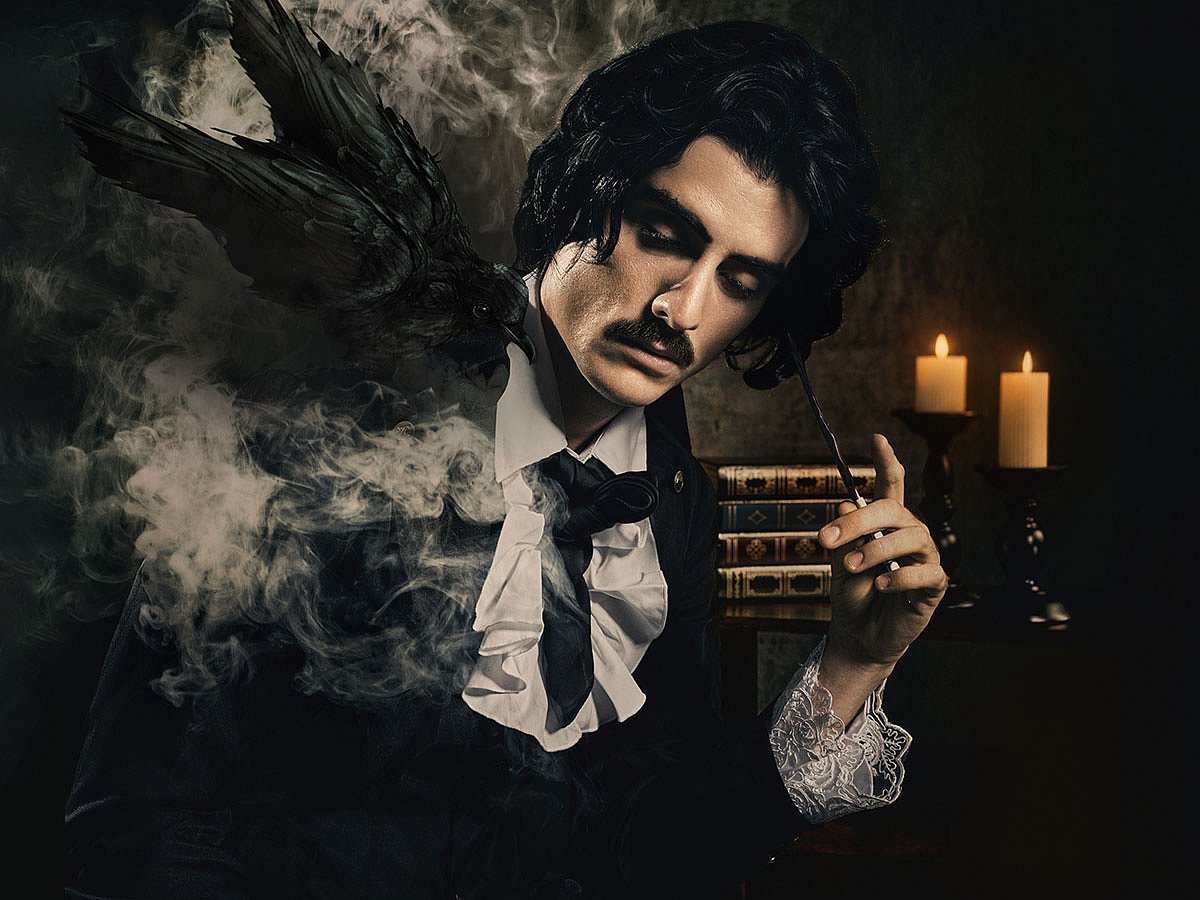
Edgar Allan Poe wrote about fear and mystery, but he also left behind an enduring mystery of his own: how did he die? On October 7, 1849, the American writer died at the age of 40 after being found in a severely distressed state in Baltimore. Despite numerous theories, no definitive explanation for his death has ever been established, leaving his final days shrouded in the same mystery that permeated much of his writing.
Drawing inspiration from this literary world, Egyptian photographer Marwa El Demerdash developed her project, Master of the Raven, which brings Poe’s persona to life through artistic conceptual portraits. The project offers her own distinctive interpretation of Halloween, with reading serving as the starting point for creating images.
Get updated faster and for FREE: Download the Gulf News app now - simply click here.
Born in 1809, Poe was a poet, short-story writer and literary critic, and one of the most influential pioneers of psychological horror. His writing explored the fears that arise within the human mind and the ways obsession and guilt can affect an individual. His life was marked by repeated early losses. His mother died when he was two, and he later lost his wife, Virginia, to tuberculosis in 1847. He also endured prolonged periods of financial hardship.
Poe’s name is inextricably linked to his celebrated poem The Raven, published in 1845. It portrays a man grieving the loss of his beloved, whose sorrow deepens with the arrival of a mysterious raven. This association inspired the title Master of the Raven, with the bird becoming a recurring visual presence throughout the photographic series. Poe’s legacy also extends beyond the pages of his books: the Baltimore house where he once lived has been transformed into a museum dedicated to his life and work.
“The idea grew out of my longstanding interest in English literature, particularly horror and fantasy, and my fascination with Edgar Allan Poe’s world,” El Demerdash says. “I began asking myself why I had kept these interests separate. I wanted to bring my passion for reading and my passion for photography together in a single project — to give a visible form to what words evoke in my imagination.”
She adds: “I wanted to create something connected to Halloween, but away from the usual imagery of gore, crime, pumpkins and conventional costumes. I found in Poe a literary and artistic gateway into this world. Mystery can be conveyed through a distant gaze, a sense of isolation or a quiet tension within an image. That became my own way of expressing the occasion.”
The artistic vision centred on constructing a world evocative of the 19th century, drawing inspiration from Gothic literature and dark Romanticism. The choice of clothing, books, papers, ink and the recurring presence of the raven was closely tied to the stories conveyed through the images, while the interplay of light and shadow helped establish their psychological atmosphere.
“I approached lighting as an integral part of the narrative,” El Demerdash explains. “I wanted the light to reveal certain details while allowing the shadows to preserve a sense of mystery and invite contemplation. My aim was for viewers to feel the isolation, distraction and psychological weight I wanted to convey through my artistic interpretation of the character. Every element within the frame had to contribute to that feeling.”
Selecting the model was a crucial step in translating the concept into a visual reality. After researching and comparing the features of several candidates with visual references of Poe, El Demerdash chose Claudio, drawn to his facial structure, the expression in his eyes and his ability to convey introspection and quiet tension.
“I was looking for features that could serve as a starting point for the character, as well as a gaze that conveyed sadness and a sense of being lost in thought,” she says. “Claudio’s photographs, particularly the simpler portraits that clearly revealed his features, suited the concept. I contacted him and explained the idea and the world we wanted to create. We then worked to bring the character closer to life through clothing, hairstyling, makeup and careful direction of his expressions.”
The project brought together Marwa El Demerdash, who conceived the idea, handled the photography and oversaw the artistic direction; Claudio, who portrayed the character.
El Demerdash concludes: “Not every photography concept has to begin with photography itself. Sometimes, an idea emerges from bringing together two things we love. For me, those were literature and photography — and from their intersection, Master of the Raven was born.”

Sign up for the Daily Briefing
Get the latest news and updates straight to your inbox
Network Links
GN StoreDownload our app
© Al Nisr Publishing LLC 2026. All rights reserved.