Baptiste de Clarens, General Manager of Sanofi Greater Gulf
PARTNER CONTENT
Sanofi partners with the UAE to advance genomic research and health innovation
Global biopharma leader expands footprint with UAE health security initiatives
Last updated:
4 MIN READ
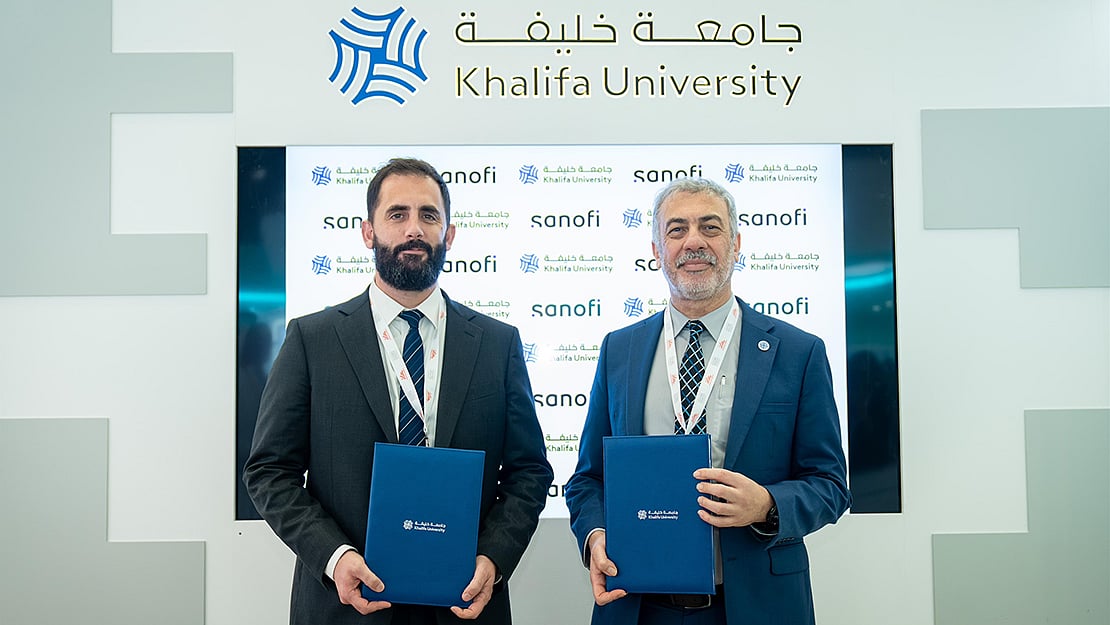
Sanofi has signed a genomic research agreement with Khalifa University
"We are no longer here just to supply medicines into the country; we are here to co-build the future of health alongside the UAE’s leadership."
That is the message Baptiste de Clarens, General Manager of Sanofi Greater Gulf, brought to Gulf News on Thursday at the Abu Dhabi Future Health Summit, speaking about Sanofi’s role in the UAE.
Last week at the summit the global biopharmaceutical company put its name to a genomic research agreement with Khalifa University, calling it an extension of its long-term commitment to the UAE.
"More than ever, Sanofi is committed to the UAE for the long term."
From supplier to partner
Sanofi’s footprint in the UAE is growing, and so is its role. De Clarens said that the company has moved from supplying the country to building alongside it.
"More than ever, we see the resilience and ambition of the UAE, and we are backing that vision by expanding our scientific and operational footprint across the country."
The concrete elements of that expansion are, according to de Clarens, the regional distribution hub, the collaboration with the Department of Health (DOH) and the clinical research programme.
"Today, we anchor our regional distribution through our distribution hub here in the UAE, we are collaborating with the DOH to advance vaccine readiness, and we are expanding local research through 26 clinical studies across 32 local sites," he explained.
The Khalifa University collaboration
The most recent addition is the agreement signed this week with Khalifa University, which he links to the company’s view of health security.
"We signed a new genomic research agreement with Khalifa University to inform future therapeutic discoveries in asthma and COPD, leveraging on the incomparable richness of the UAE Genomic Program," he said. "For us, true health security means embedding science, supply, early prevention and local readiness so communities are better protected and innovation reaches patients faster."
Asked what the agreement means for patients, de Clarens begins with the scientific basis for the project.
"Breakthrough medicines always begin with a deep understanding of human biology and genetics," he said, adding that Sanofi is the first company of its kind to enter into such a partnership with the university.
"Our joint research team will analyse governed local health and genomic datasets to study the genetic factors behind asthma and COPD."
The project addresses a gap in global research, according to de Clarens.
"Historically, regional populations have been under-represented in global genomic research, so studying local population genomics in Abu Dhabi is a major step forward. It means future respiratory treatments can be informed by locally relevant scientific evidence that reflects the patients we serve in this region."
AI and vaccine research
Technology was high on the agenda at this year’s summit, and de Clarens said AI is already changing how vaccines are researched and developed.
He explained where Sanofi applies AI in its own work.
"At Sanofi, we apply AI across every stage of our R&D to analyse complex biological data to accelerate the design of mRNA sequences, identify the most promising vaccine candidates early on, and focus our clinical trials where they have the highest chance of success."
He also described a change in how vaccines are made, centred in a new facility in France.
"A first-of-its-kind modular plant that can switch between different vaccine platforms in weeks rather than months... That means we can advance next-generation protection against respiratory risks like RSV and influenza, or respond to a newly emerging virus, in a fraction of the traditional time.”
A world first for progressive MS
Asked how Sanofi’s partnerships in the UAE help accelerate early detection and bring new treatments to patients faster, de Clarens described what he sees as the common factor.
"What we have learned from our collaborations in the UAE is that when visionary regulators, clinicians, and industry align around a shared priority, the country does not just adopt global innovation, it leads the world in patient access, while establishing its position as a global hub for medical breakthroughs, " he said.
He then pointed to the most recent example, the oral therapy Cenrifki.
"This was recently translated into action where Abu Dhabi led the world in administering our first and only oral treatment in routine clinical care for secondary progressive multiple sclerosis (MS) following its first global regulatory approval in the UAE. This is a true testament to how strong collaboration across the UAE healthcare ecosystem turns scientific breakthroughs into real impact for patients.”
Preparing for health threats
Last Thursday, de Clarens took part in a Forum Stage panel on preparing for infectious disease threats rather than responding once an outbreak has begun.
"The most important takeaway from our panel is that the quality of our response to an emerging health threat depends entirely on the quality of planning we do today," he said.
He referred to the lessons learned from the COVID-19 pandemic.
"One thing we all learned during COVID is that science alone is not enough. You also need global partnerships, access, distribution capacity, and regulatory mechanisms to bring a solution to patients, and if you try to improvise those after an outbreak starts, you lose precious time."
On the UAE’s role, he said the country’s pandemic response has shaped its current approach and describes how Sanofi is working with the authorities.
"The UAE did an exceptional job mobilising during COVID, and it is now setting the benchmark by treating readiness as a major pillar of health security," he said. "At Sanofi, we are working closely with UAE health authorities to put those long-term preparedness frameworks in place well before a crisis arrives."
Sign up for the Daily Briefing
Get the latest news and updates straight to your inbox
Network Links
GN StoreAbout Gulf NewsTerms & ConditionsReach by GNSitemapContact usPrivacy PolicyGN FocusHave your sayWork with usAdvertise with usGulf News epaperPrinting Services
Download our app
© Al Nisr Publishing LLC 2026. All rights reserved.