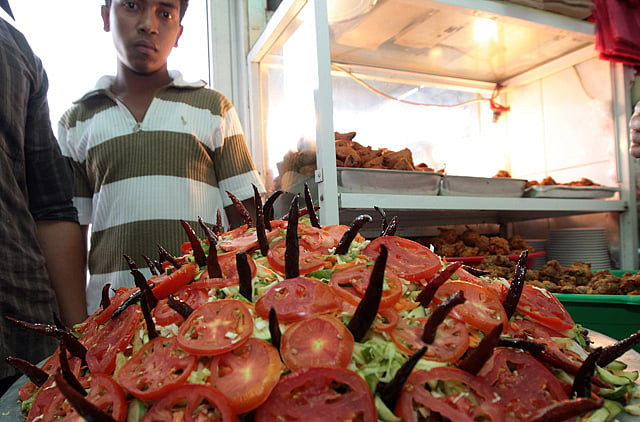
Half of the fasting month has passed. The inspectors from Abu Dhabi Food Control Authority (ADFCA) have been on overdrive over the past two weeks, leaving nothing to chance to ensure food safety for consumers.
"We have also intensified our food safety campaign, aimed at raising the levels of consumer consciousness among people", ADFCA said.
The authority calls upon all people in the emirate of Abu Dhabi to protect public health through attaining maximum food safety. "Our success in this endeavour depends a good deal on the extent to which consumers apply discretion and care in purchasing, transporting, storing and supplying food products," the authority said.
"We received a number of questions from the readers, asking about various aspects of food safety. Some of the questions, however, related to issues of nutrition and health care, which we would not take up for they are outside our brief," the authority said.
What is the best and most recommended food to be eaten during suhour?
The main consideration is to consume foods that are rich in fibre content and vitamins, such as fruits, vegetables, dairy products and wholegrain bread. The need for high water content goes without saying. May we refer Ahmad to the first issue published last Tuesday, which contained a more detailed description of these issues.
When we cook or fry chicken franks, the cover comes out as a layer, which can be separated from what is inside it. Does this cover contain much cholesterol? I fry it in a minimal amount of oil and do not deep-fry.
Franks do have a certain amount of saturated fat in them. Deep-fried or shallow-fried, the fat in the product remains the same, with the oil used in frying adding to it substantially. The point is to minimise consumption of fatty foods and guard against high cholesterol and other complications.
What are the food risks that can and cannot be identified through the senses?
This is a very important question. While it is easier to make up our minds on the basis of what is clear to our naked eyes, it is a tough call for ordinary people to sense food risks that are not apparent in any way.
Some risks appear in the form of tangible changes that a sensible person can identify through the senses. For example, swelling in the packaging, the presence of a foreign body in the food, change in the texture, taste, smell or flavour of the food such as the smell of kerosene, microbial growth, a change in the consistency of the food material with unusual increase in the degree of viscosity than usual or any other changes that make you suspicious or reject it. Besides, the consumer can also get some information from the food labels, such as the presence of any material that may cause allergy or difficulty to him or his family members.
There are also risks caused by excessive consumption of products that contain additives that are permissible but need to be consumed in quantities consistent with the weight of the consumer. Some such products, if consumed in excess, might expose the consumer to potential risks.
There are hidden dangers that may not affect the smell, texture, consistency and colour of the food. You will not be able to see them with your eyes. Radioactive pollutants; pesticide residues; veterinary drug residues; metal contaminants; microbes and their toxins and all the other toxins and contaminants that could enter food items fall in this category. These risks are mitigated through effective quality control programmes by ADFCA and other food control agencies in the country, targeting the production and sale of food as well as through inspection of foods available in markets.
Tips on selection
- Organise your purchase list: Put frozen and refrigerated food items in the bottom of your purchase list so that they remain outside the ideal conditions of preservation for the shortest possible duration.
- Choose food items on the basis of how they appear at the time of sale: While choosing unpacked items, such as fruits and vegetables, the decision has to be on the basis of the consumer's satisfaction about their conditions at purchase as well as the time of their eventual use. The point is to make sure they remain healthy till the time you consume them.
- Avoid buying green potatoes
- Do not buy cut fruit or salads if they are kept at room temperature, unless they have been prepared in front of your eyes. This applies to all foods whose safety is dependent on the temperature at which they are stored, such as ready to eat foods, eggs, fresh chicken, fish, meat etc.
- Do not buy foods found in airtight or swollen packages.
- Expiry dates are not fully reliable because foods remain healthy till the expiry date only if they are preserved in the required conditions of temperature and humidity.
What are the precautions that one should take while buying bottled or tinned foods?
- Choose bottled foods that can be stored in room temperature. Examples are long-term milk or juices for school students or travellers that can be preserved in room temperature for a long time.
- Before making up your mind on buying any bottled or tinned foods, read the information given on the food label with utmost care and make informed and conscious decisions.
- Store bottled or tinned foods as per the instructions on the food label.
- There are many websites that explain the information on food labels. There are also specifications and criteria in regard to food labels issued by UAE Authority for Standardisation and Metrology. The Authority's website is: www.esma.ae
Sign up for the Daily Briefing
Get the latest news and updates straight to your inbox
Network Links
GN StoreDownload our app
© Al Nisr Publishing LLC 2026. All rights reserved.