A step towards peace: Trilateral Ukraine talks conclude in Abu Dhabi
US, Russia and Ukraine delegates meet as UAE pushes for peace and dialogue
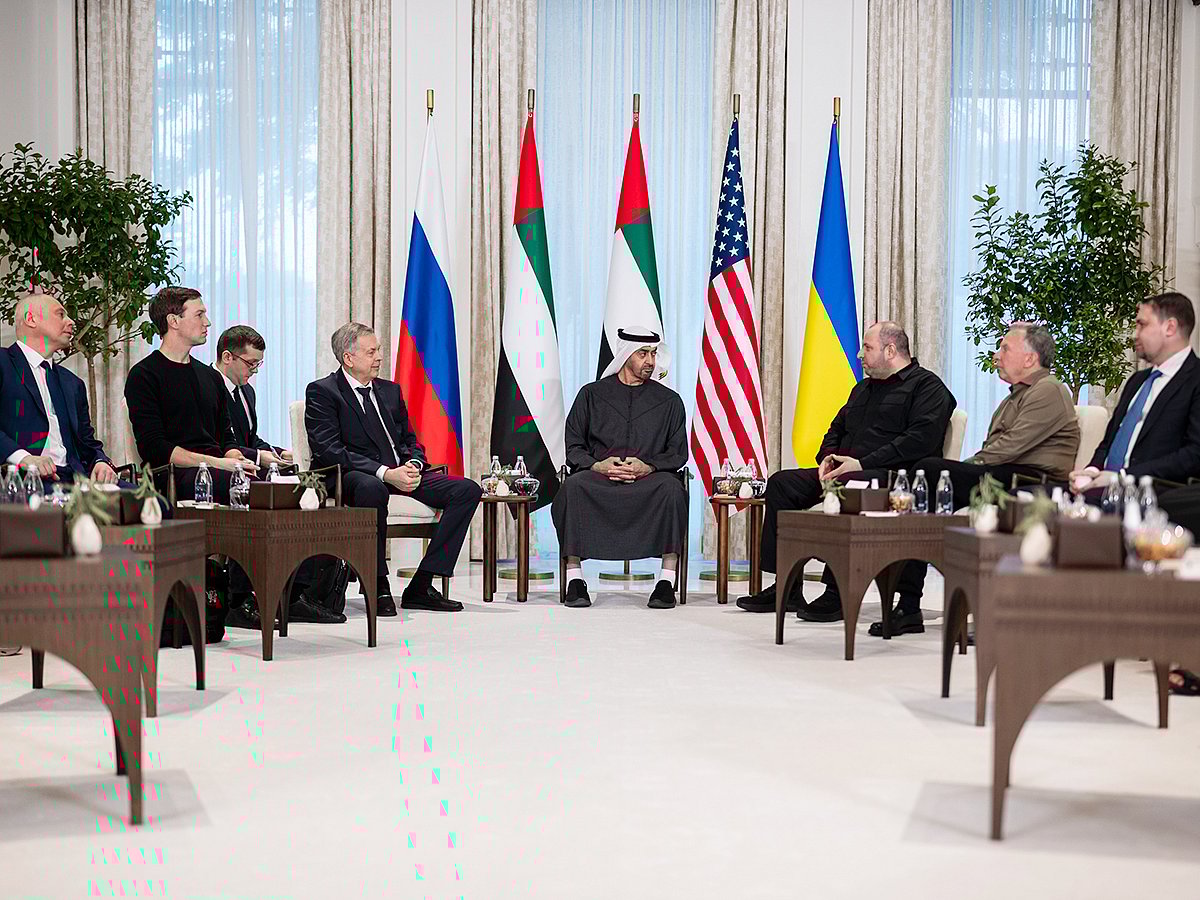
Abu Dhabi: The trilateral talks aimed at ending the war in Ukraine concluded today (Saturday) in Abu Dhabi, the capital of the UAE. The discussions brought together the United States, Russia and Ukraine, as part of ongoing efforts to encourage dialogue and seek a political solution to the crisis.
The talks began yesterday, Friday, and were attended by US presidential envoys Steve Witkoff and Jared Kushner; Igor Kostyukov, head of the Main Directorate of the Russian General Staff; Kyrylo Budanov, director of the Office of the Ukrainian President; and Rustem Umerov, secretary of Ukraine’s National Security and Defence Council, along with senior officials from both sides.
UAE: A key partner for peace
The UAE has emerged as a key diplomatic player, with its mediation efforts in the Ukraine crisis going beyond conventional diplomacy to embrace a humanitarian mission. Through these efforts, the UAE has aimed to prioritise life over conflict and build bridges of hope amid destruction.
By hosting the trilateral talks, the UAE has once again shown its role as a crucial partner in peace. The meetings in Abu Dhabi are part of the country’s broader strategy to support stability and keep channels of dialogue open between conflicting parties.
Abu Dhabi’s role as a regional and global hub for dialogue highlights its long-standing diplomatic approach, which prioritises de-escalation, confidence-building, and continuous communication in pursuit of international peace and security.
A broader vision
This role reflects a wider Emirati vision that places preventive diplomacy and humanitarian action at the heart of foreign policy. The approach has strengthened global confidence in the UAE’s ability to play a meaningful role in sensitive international matters, based on respect for state sovereignty and a focus on sustainable, consensus-based solutions.
Prisoner exchanges and humanitarian support
The UAE has a strong track record of mediation between Moscow and Kyiv, built through continuous initiatives. It has announced the success of several humanitarian mediation efforts, resulting in 17 prisoner exchange operations so far, releasing 4,641 prisoners since the crisis began.
The UAE’s involvement goes beyond political mediation, extending to sustained humanitarian aid for Ukraine. The country launched a humanitarian air bridge delivering food, medical supplies, power generators, ambulances and other essentials. It also provided relief support to Ukrainian refugees in neighbouring countries such as Poland, Moldova and Bulgaria.
International recognition
Russian political analyst Andrey Ontkov praised the UAE’s diplomatic role, describing Abu Dhabi as a trusted platform for dialogue. He said the UAE’s balanced foreign policy and strong international relations make it a credible mediator in complex situations.
Ukrainian military expert Yevhen Herbskiy also highlighted the UAE’s role as a key diplomatic actor. He said the UAE’s initiatives help create safe spaces for discussion, allowing parties to explore solutions away from pressure. Both Russian and Ukrainian voices agree that Abu Dhabi is playing a meaningful role in building long-term momentum for peace.
Sign up for the Daily Briefing
Get the latest news and updates straight to your inbox
Network Links
GN StoreDownload our app
© Al Nisr Publishing LLC 2026. All rights reserved.