Abu Dhabi's mangroves: A natural solution to climate change and coastal protection
100 million mangroves by 2030: UAE's vision for a greener future
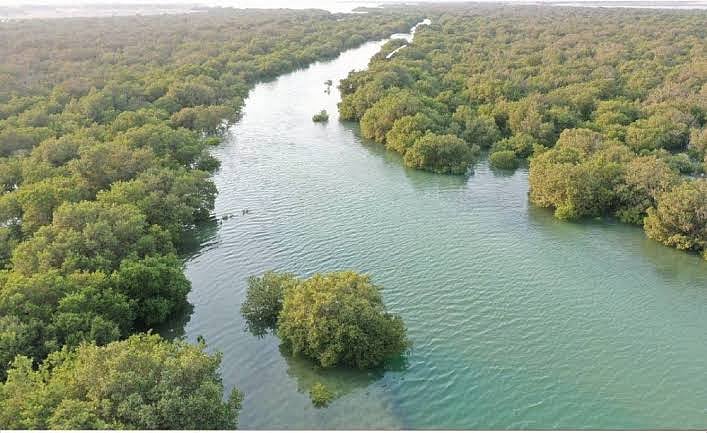
Abu Dhabi: Mangrove trees, locally known in the UAE as qurm, are assuming growing strategic importance in Abu Dhabi as the emirate steps up efforts to address the impacts of climate change, protect coastal ecosystems and advance its environmental and climate objectives.
Growing in coastal areas influenced by tidal movements and capable of withstanding high salinity and harsh environmental conditions, these trees are far more than greenery along the shoreline. They form an integrated natural system that plays a vital role in absorbing carbon, protecting coastlines from erosion and providing habitats for marine life and birds.
In an environment such as Abu Dhabi, where coastlines, islands, sabkhas and marine habitats intersect, mangrove forests represent a valuable natural asset that can help build a more sustainable future. They also strengthen the emirate’s capacity to adapt to rising temperatures and sea levels while preserving its rich biodiversity for future generations.
Blue carbon: Nature’s weapon against global warming
Mangroves are among the most important coastal ecosystems associated with what is known as “blue carbon” — carbon captured and stored by marine and coastal ecosystems, including mangrove forests, seagrass meadows and salt marshes.
These trees absorb carbon dioxide from the atmosphere and store carbon in their trunks, branches and roots. Significant quantities also accumulate in coastal soils rich in organic matter. This is particularly important because much of the carbon stored in these environments can remain locked away for long periods, provided the ecosystems remain intact and are not degraded or cleared.
The value of mangrove forests extends beyond the carbon stored in the trees themselves. The soil and sediment surrounding their roots constitute an important long-term carbon reservoir. Protecting existing forests and preserving the integrity of their soils can therefore be just as important as planting new trees.
From a climate-policy perspective, mangroves can support emissions-reduction efforts and strengthen nature-based solutions, provided carbon stocks and absorption rates are measured using recognised scientific methodologies and environmental benefits are not overstated.
Abu Dhabi: Coastal habitats of environmental and economic value
Abu Dhabi is home to important mangrove habitats, including the Eastern Mangroves in Abu Dhabi city, as well as coastal ecosystems across several islands and marine areas. These environments provide shelter for marine organisms and feeding and breeding grounds for numerous species, while supporting biodiversity in the waters of the Arabian Gulf.
The intricate root systems of mangroves function much like natural nurseries for juvenile fish, crustaceans and other marine organisms. They provide shelter and protection from predators, help stabilise sediments and create favourable conditions for species associated with coastal ecosystems.
These functions contribute to the sustainability of fish stocks, as the health of coastal habitats is closely linked to the life cycles of many marine species. Mangrove forests are also important habitats for resident and migratory birds, which depend on them for food and resting places during seasonal journeys.
Their ecological value is becoming increasingly significant amid mounting pressures on marine environments, including rising temperatures, changes in water conditions, coastal development and pollution. Protecting mangrove forests therefore means safeguarding not only the trees themselves but also the wider network of ecological relationships essential to the health of coastal areas.
60 million trees covering 200 square kilometres, with a target of 100 million by 2030
The UAE’s mangrove forests are a strategic natural asset in the fight against climate change. The country is home to approximately 60 million mangrove trees covering around 200 square kilometres, while a national plan aims to plant 100 million trees by 2030 to protect coastlines, enhance biodiversity and increase carbon absorption.
Mangroves are a fundamental component of the UAE’s coastal environment and a strategic resource for climate action and sustainability. The country continues to protect existing forests and expand their coverage because of their pivotal role in safeguarding coastlines, supporting biodiversity and strengthening resilience to the impacts of climate change.
Despite changing natural conditions, mangrove forests continue to grow and demonstrate a remarkable capacity to withstand environmental pressures. They have become a symbol of resilience and adaptation, as well as guardians of coastal ecosystems.
Mangroves also hold a special place in Emirati culture and heritage. The UAE’s commitment to protecting and restoring these trees is not new: it dates back to the 1970s, when the late Sheikh Zayed bin Sultan Al Nahyan, the UAE’s Founding Father, initiated early efforts to restore and expand the country’s mangrove forests.
Strengthening the UAE’s global leadership
In November 2021, the UAE announced an enhanced ambition to expand its mangrove cover by planting 100 million trees by 2030. The initiative reinforces the country’s position as a global leader in deploying nature-based solutions to address the challenge of climate change.
The target reflects the growing recognition that restoring natural ecosystems can complement technological and industrial measures to reduce emissions, while delivering wider environmental and economic benefits.
Natural nurseries for fish and shrimp
Mangroves are an environmental treasure of considerable economic and biological importance because they provide habitats for a wide range of marine organisms.
Their complex root systems act as natural nurseries for fish stocks, offering shelter to juvenile fish and other marine species. These habitats also support shrimp and other crustaceans, while mangrove forests help protect shorelines from erosion and provide shelter and nesting habitats for birds.
Mangrove ecosystems play an important role in protecting the UAE’s coastlines from rising sea levels and severe storms. They also provide natural habitats that sustain biodiversity and function as carbon sinks, capturing and storing carbon dioxide.
The UAE is home to approximately 60 million mangrove trees, which are estimated to capture around 43,000 tonnes of carbon dioxide annually. With the addition of 100 million trees, the total area of mangrove forests is projected to reach approximately 483 square kilometres, with annual carbon dioxide absorption expected to rise to around 115,000 tonnes.
These figures underscore the potential contribution of mangrove restoration to the UAE’s environmental objectives. However, the long-term climate benefits depend not only on the number of trees planted but also on their survival rates, the protection of existing forests and the preservation of carbon-rich coastal soils.
Mangroves across the UAE’s protected areas
Mangroves are found in several natural reserves across the UAE. Prominent examples include the Mangrove National Park in Abu Dhabi; Ras Al Khor and Jebel Ali reserves in Dubai; the Khor Kalba Mangrove Reserve in Sharjah; Khor Al Mazahmi Reserve in Ras Al Khaimah; and the mangrove reserve in Umm Al Quwain, among other sites.
The trees belong to the genus Avicennia and thrive in saline waters within the intertidal zone, the area between high and low tide along the coast. Their leaves are relatively thick and lack thorns, while their roots extend into coastal sediments and shallow marine environments.
Mangroves in the UAE typically grow to heights of between two and four metres. They attract a wide variety of terrestrial and marine birds, providing shelter from predators and the intense midday sun. Their structure also creates shaded and sheltered microhabitats, while fish often congregate around their submerged roots.
Beyond providing habitats, these trees help maintain ecological balance and support the survival of species that depend on healthy coastal environments.
The UAE is home to the grey mangrove, scientifically known as Avicennia marina, a species adapted to the country’s saline coastal conditions. Mangrove forests generally develop in intertidal areas, where they play a crucial role in linking terrestrial and marine ecosystems.
Protecting these forests, restoring degraded areas and ensuring that new planting projects are scientifically planned are essential to preserving their long-term environmental value.
As the UAE advances its climate and sustainability agenda, mangroves are increasingly recognised as more than a natural feature of the coastline. They are a strategic asset that can help protect communities, sustain marine resources, store carbon and strengthen the resilience of coastal ecosystems in the face of a changing climate.
Sign up for the Daily Briefing
Get the latest news and updates straight to your inbox
Network Links
GN StoreDownload our app
© Al Nisr Publishing LLC 2026. All rights reserved.