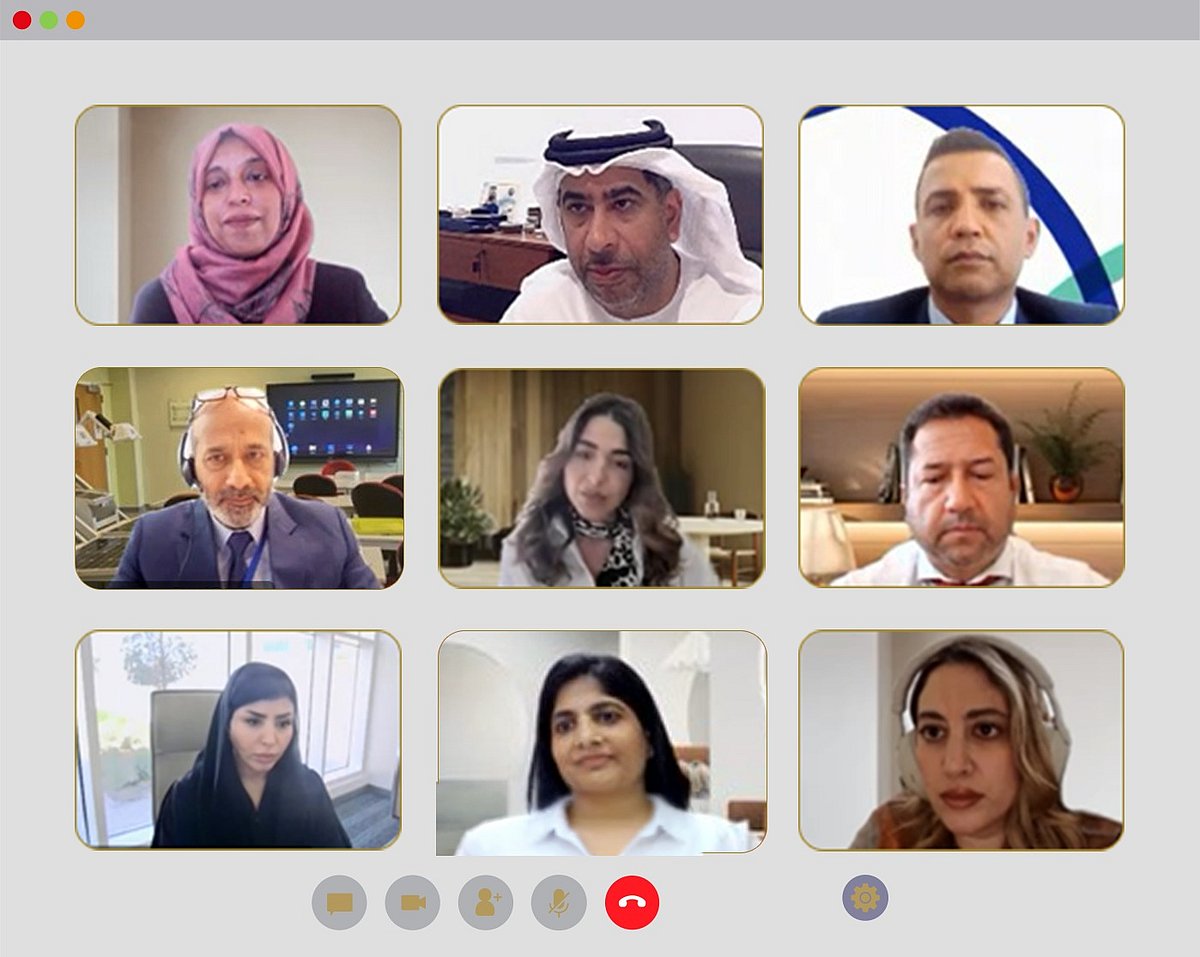
The Ministry of Higher Education and Scientific Research (MoHESR) – represented by the Industry-Academia Collaboration Working Group, part of the Advisory Committee for Higher Education and Future Skills – organised a national virtual event entitled ‘Bridging Economic Sector and Academia’. The event, held in cooperation with the Ministry of Human Resources and Emiratisation, formed part of MoHESR’s ongoing efforts to build a more integrated national model bridging universities and the economic sectors, thereby enhancing academic programmes, advancing applied research and innovation and equipping students with the skills required for a seamless transition into the labour market.
The event, which brought together 60 representatives from higher education institutions (HEIs) and various economic and industrial sectors across the UAE, focused on three main tracks: the Industry Sabbatical Programme for academic staff; the implementation of a work experience governance policy; and enhancing the participation of industry practitioners and experts in the educational and research process. These tracks aim to drive a qualitative paradigm shift in the relationship between HEIs and diverse industrial and economic sectors; by building sustainable institutional partnerships, universities will gain a deeper understanding of labour market needs, while empowering these sectors to actively participate in developing students' skills and experiences. This synergy will positively impact the quality of educational outcomes and the competitiveness of graduates.
Get updated faster and for FREE: Download the Gulf News app now - simply click here.
MoHESR emphasised that this strategic cooperation between HEIs and the economic sectors serves as a key driver in developing a more agile and competitive higher education ecosystem, empowering HEIs to design academic programmes that are closely aligned with the needs of the national economy and equipping students with the practical skills and expertise required for the jobs of the future.
A study conducted by the working group, in collaboration with partners from the economic and industrial sectors, revealed widespread interest in the Industry Sabbatical Programme for academic staff. 84% of respondents expressed interest in the initiative and 88% indicated their willingness to participate in the 2026 pilot phase. This reflects the growing momentum of the initiative and the high level of confidence in its anticipated impact on advancing the academic environment and integrating it with the needs of the national economy.
The pilot phase of the project is scheduled to launch in June 2026, featuring approximately 150 academic and teaching staff members from three HEIs. The outcomes of this pilot will be utilised to further refine the model ahead of its nationwide rollout in December 2026.
Through the working group, MoHESR organised introductory roadshows for the Industry Sabbatical Programme in February and May, with the participation of 42 entities representing 11 vital economic and industrial sectors. These roadshows identified more than 380 opportunities to host academic and teaching staff within institutions and companies operating in key fields, including energy, retail, manufacturing and industrial production, healthcare and life sciences, construction, infrastructure and real estate, technology, data and digital services, banking, financial and professional services and hospitality. This highlights the extensive scope of the partnership between HEIs and priority economic sectors.
The programme is expected to empower academic and teaching staff and help them gain firsthand exposure to the latest practices, technologies and challenges within various industries, which will translate into updated academic content, enhanced teaching methodologies and improved research projects. It will also foster the integration of practical skills and modern technologies into educational programmes, while supporting the development of applied research that is directly aligned with national priorities and economic needs.
The event also addressed the development of a national model to enhance the involvement of practitioners and experts from the economic and industrial sectors in the educational and research process, which involves building an ecosystem that connects HEIs with qualified professionals and providing mechanisms for evaluation and feedback. Such a framework will broaden the utilisation of practical expertise within the academic environment and support the development of educational and training content that meets the actual demands of the economic sectors.
Furthermore, the event discussed mechanisms for implementing the work experience governance policy, including aligning roles and responsibilities between HEIs, training providers and MoHESR's operational teams. Implementation also involves organising awareness and capacity-building sessions to ensure a unified understanding of guidelines and implementation mechanisms, alongside establishing a monitoring and reporting framework that includes key performance indicators (KPIs), data submission requirements, and tracking HEI compliance.
Network Links
GN StoreDownload our app
© Al Nisr Publishing LLC 2026. All rights reserved.