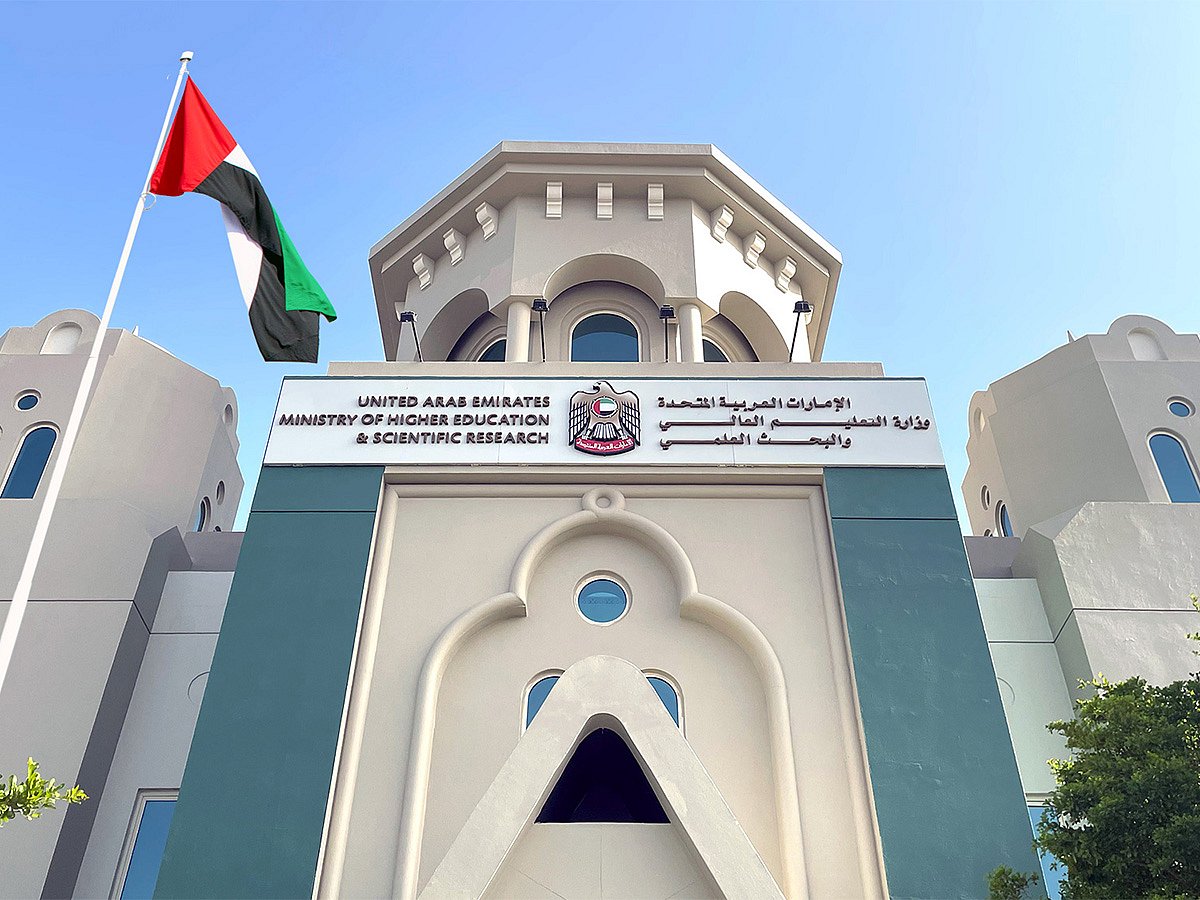
Abu Dhabi: The Ministry of Higher Education and Scientific Research (MoHESR), has announced the approval of the resolution regarding the regulations governing violations, penalties and administrative measures related to the Ministry’s mandates and services. The move represents a further step in completing the legislative and regulatory framework for the higher education and scientific research sector, establishing an integrated framework that supports effective sector governance and regulatory oversight, enhances the quality and competitiveness of educational and training institutions operating in the UAE, and protects the rights of students and trainees.
In this regard, Dr. Ahmed Sultan Al Shoaibi, Undersecretary of the Ministry of Higher Education and Scientific Research, said that the higher education and scientific research sector in the UAE is undergoing significant transformation aimed at advancing its legislative and regulatory environment and building an integrated system that combines flexibility with effective governance, while enhancing the sector’s readiness to meet future requirements.
Get updated faster and for FREE: Download the Gulf News app now - simply click here.
Al Shoaibi noted that the new resolution complements these efforts by providing a clear regulatory framework that strengthens institutional compliance and promotes best practices among higher education institutions. It also supports the transparent implementation of regulatory requirements and contributes to the sustainability and competitiveness of the sector.
Dr. Al Shoaibi said: “We believe that effective governance is built on clear roles and responsibilities, fair procedures, and empowering institutions to enhance their performance and improve the quality of their services. This is reflected directly in the quality of educational outcomes and in the confidence of students and society in the higher education system.
“From this perspective, the new regulations ensure that all regulatory procedures and measures are accompanied by the necessary safeguards to protect students, including measures that ensure the continuity of their academic journey and protect their academic and financial rights. This reflects a balanced approach that combines the effective implementation of regulatory governance frameworks with continued support for institutions to develop and improve.”
An integrated framework for governance and compliance
The new resolution will enter into force on 12 September 2026,establishing a unified regulatory framework that defines violations, penalties and administrative measures applicable to higher education institutions, Technical and Vocational Education and Training institutions, and training centres and institutes. The framework enhances clarity around regulatory obligations, reinforces the principles of compliance and transparency, and provides institutions with a clear basis for managing their responsibilities in accordance with the highest standards of quality and governance.
The resolution also standardises the mechanisms for addressing violations and implementing regulatory procedures across entities subject to the Ministry of Higher Education and Scientific Research’s jurisdiction. This will promote consistency in implementation and enhance transparency in the Ministry’s dealings with educational institutions.
The regulations adopt a graduated and balanced approach to addressing violations, taking into account the nature and severity of the violation and whether it has been repeated. This approach strikes a balance between enabling institutions to rectify their status and strengthen compliance and taking appropriate action against violations that affect the quality of education, academic integrity, or the rights of students and service beneficiaries.
The resolution covers a broad range of violations related to licensing and accreditation, the accuracy of data, monitoring and evaluation requirements, academic integrity, the security and integrity of examinations, practical training, academic advertising, and environmental, health and safety requirements, among other areas regulated by the Ministry.
It also provides educational institutions with a clear understanding of their regulatory requirements and obligations, promoting proactive compliance, helping to prevent violations before they occur, and enhancing the efficiency of the sector’s regulatory environment.
The resolution further reinforces the principles of fairness and transparency by providing an institutional mechanism through which decisions, procedures, penalties and administrative measures may be challenged. A specialised committee established by the Ministry of Higher Education and Scientific Research will consider such grievances in accordance with clear regulatory procedures, ensuring that each case is examined independently and fairly.
The framework also strengthens coordination with the relevant local education authorities, while respecting their respective mandates and helping to avoid duplication in the procedures or penalties applied to institutions.
Protecting students and trainees is a priority
The resolution places particular emphasis on protecting students and trainees. In cases where this is required, institutions will be obliged to ensure the continuity of academic provision, preserve academic records, safeguard financial rights, refund fees or amounts collected without entitlement, and take the necessary measures to regularise the status of affected students. These measures are designed to ensure that students’ educational journeys are not adversely affected by regulatory action taken against non-compliant institutions.
The resolution forms part of a series of legislative and executive measures issued pursuant to the Federal Decree-Law concerning Higher Education and Scientific Research. Recent measures have included the approval of the National Framework for Licensing Higher Education Institutions, the updated scholarship programme framework, the standardisation of review fees for higher education and Technical and Vocational Education and Training institutions, and the approval of a unified framework for fees and financial guarantees related to services provided by the Ministry of Higher Education and Scientific Research.
Together, these measures reflect an integrated approach to advancing the legislative and regulatory environment governing the sector and building a higher education system that is more flexible, efficient and capable of preparing national talent and meeting the requirements of future development.

Sign up for the Daily Briefing
Get the latest news and updates straight to your inbox
Network Links
GN StoreDownload our app
© Al Nisr Publishing LLC 2026. All rights reserved.