New CBSE curriculum 2026‑27: Mathematics, science go two-level; three languages now mandatory
New CBSE plan brings AI, vocational, art and physical education into core studies
The Central Board of Secondary Education (CBSE) will phasedly implement its new curriculum starting 2026-27, officials said on Friday.
The reforms include the three-language formula for Class 6 and a two-level system in mathematics and science for Class 9, according to a PTI report.
Three-language formula for Class 6
Under the new National Education Policy (NEP), CBSE will implement a structured three-language framework across stages R1, R2, and R3, with at least two of the three languages being Indian.
From Class 6, a third language will be mandatory, ensuring every student studies at least two Indian languages.
Get updated faster and for FREE: Download the Gulf News app now - simply click here.
Officials clarified that students returning from foreign schools may be exempted from R3 if the third language studied abroad is unavailable in domestic schools. R3 textbooks will be introduced in Class 6 this year, with full implementation of the three-language formula expected in 2031 when the first board exams under this scheme will be conducted.
Two-level system in math and science
A major structural change in mathematics and science will be introduced for Class 9. All students will take a standard 80-mark, three-hour exam, while those seeking higher proficiency can opt for an advanced 25-mark, one-hour paper. The advanced exam tests higher-order thinking and conceptual understanding.
Marks from the advanced paper will not be included in the overall aggregate, but students scoring 50% or above will have the qualification noted separately on their mark sheets. The first board exams under this system for Class 10 students will be held in 2028.
New subjects and mandatory education areas
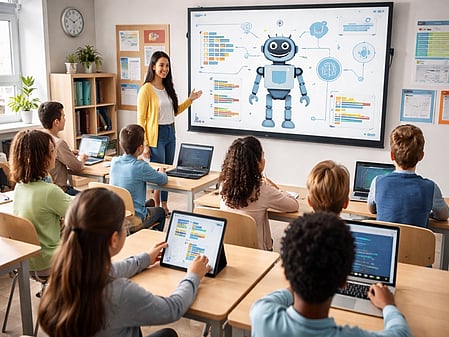
CBSE will introduce computational thinking and artificial intelligence as compulsory modules for Classes 9 and 10, with board exams for AI starting in 2029.
Additionally, art education, vocational education, and physical education will become mandatory in Classes 9 and 10. Textbooks are being rolled out for art and physical education, with school-based assessments in the current academic session and board exams for vocational education beginning in 2027-28.
Phased approach and student flexibility
Officials emphasised that the curriculum reforms are being phased in gradually to ensure smooth transition, while maintaining flexibility for students in language and advanced-level subjects.
New CBSE syllabus: What students must know
Three-language formula (Class 6):
Structured framework across stages R1, R2, R3 under NEP.
At least two of the three languages must be Indian.
Third language becomes mandatory from Class 6.
Students returning from foreign schools may be exempted from R3 if unavailable domestically.
Full implementation expected by 2031, coinciding with the first board exams under this scheme.
Two-level system in maths and science (Class 9):
Standard paper: 80 marks, 3 hours for all students.
Advanced paper: 25 marks, 1 hour for students seeking higher proficiency.
Advanced paper tests higher-order thinking and conceptual understanding.
Marks from the advanced paper are not included in overall aggregate but noted separately if ≥50%.
First board exams under this system for Class 10 in 2028.
New subjects and mandatory education areas:
Computational thinking and AI: Compulsory for Classes 9‑10; AI board exams from 2029.
Art, vocational, and physical education: Mandatory in Classes 9‑10.
Textbooks for art and PE being rolled out; school assessments ongoing.
Vocational education board exams begin 2027‑28.
Network Links
GN StoreDownload our app
© Al Nisr Publishing LLC 2026. All rights reserved.