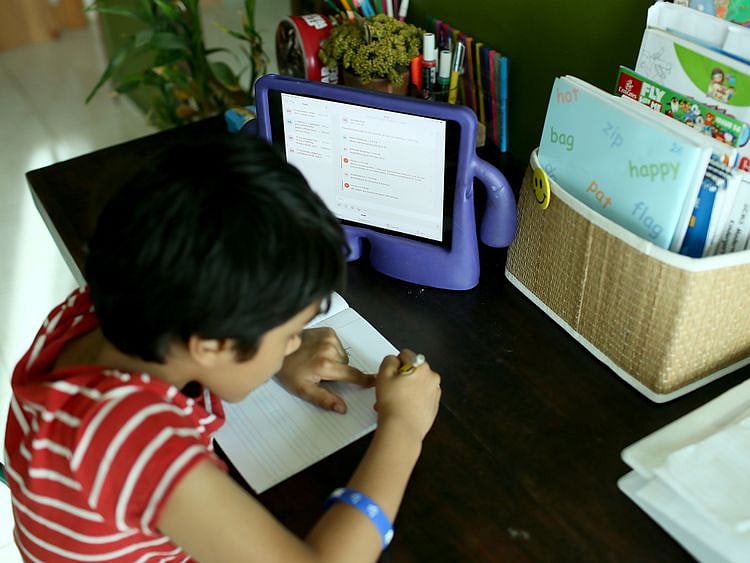
The Abu Dhabi Department of Education and Knowledge (ADEK) has approved a code of conduct for teachers and educational staff within the distance learning system, establishing a clear framework for lesson delivery, enhancing student wellbeing, and ensuring teachers’ professional balance. The initiative aims to improve the overall quality of education and regulate teaching practices.
According to the 14-point code, teachers are required to appear on camera during all live (synchronous) lessons and upload lesson plans to the school’s Learning Management System no more than 30 minutes before the class begins. Teachers must also incorporate interactive tools—such as polls, questions, breakout rooms, and direct engagement—at least once every 20 minutes during live sessions.
Get updated faster and for FREE: Download the Gulf News app now - simply click here.
The code further recommends recording live lessons whenever possible, while avoiding recording students unless parental consent is obtained. Recordings should be made available to students who were absent for documented reasons. It also prohibits conducting lessons from inappropriate settings and requires teachers to adhere to student protection and safeguarding policies during all one-on-one sessions, with prior notification to parents regarding their scheduling.
In terms of student wellbeing, the code emphasizes the importance of conducting regular in-class check-ins according to a defined schedule, documenting them in the school’s approved student care system, and completing records of individual follow-up sessions within one hour of their occurrence.
Teachers are also required to report any observations related to student wellbeing—regardless of how minor they may seem—to the designated student care officer within 24 hours, and to implement absence protocols without waiting for reminders.
The code prohibits communication with parents outside official working hours regarding routine academic matters. It also prevents delivering more than three consecutive hours of live instruction without a break and requires teachers to escalate any workload concerns to their direct supervisor through the school’s approved channels. Additionally, teachers are encouraged to make use of the mental and physical wellbeing support services provided by both the school and ADEK
Attendance, absence, and parent communication guidelines
ADEK has also mandated that schools streamline communication with parents through a single channel on a regular weekly basis. Schools must send daily schedules in advance, no later than 8:00 PM, and clearly define communication hours. These measures are accompanied by detailed guidelines outlining parental responsibilities and procedures for managing student absences to ensure discipline within the distance learning system.
The Department clarified that each academic inquiry should be directed to a designated contact—either the teacher or the stage coordinator—with a required response time of within one school day. A separate communication channel must be allocated for matters related to student safety and wellbeing, with similar response timelines during working hours. Any technical changes or updates to learning platforms must be communicated clearly and in simple language, at least 24 hours prior to implementation.
Parents are expected to ensure students attend classes on time and to provide a quiet and suitable learning environment. They are also required to respond promptly to any school communications within 24 hours. The level of parental involvement should vary based on the student’s age, with greater support expected in early years and reduced supervision as students progress academically.
What schools are not permitted to request from parents
ADEK stressed that schools must not ask parents to explain lessons or teach academic content, as this responsibility lies entirely with the school. Parents are also not required to monitor students during lessons, except in the case of younger children for safety reasons.
Communication with parents regarding routine academic matters is limited to between 3:30 PM and 8:00 PM, and schools must use only one communication channel per family to avoid confusion. Parents should not be tasked with following up on student absences before the school has implemented its own procedures.
The Department further clarified that parental roles vary by educational stage and outlined that schools bear primary responsibility for monitoring student attendance. Parents should only be contacted after internal procedures have been carried out, except in emergency cases.
Network Links
GN StoreDownload our app
© Al Nisr Publishing LLC 2026. All rights reserved.