Beyond the degree: What employers really want now
Experts say adaptability and industry exposure now shape career success
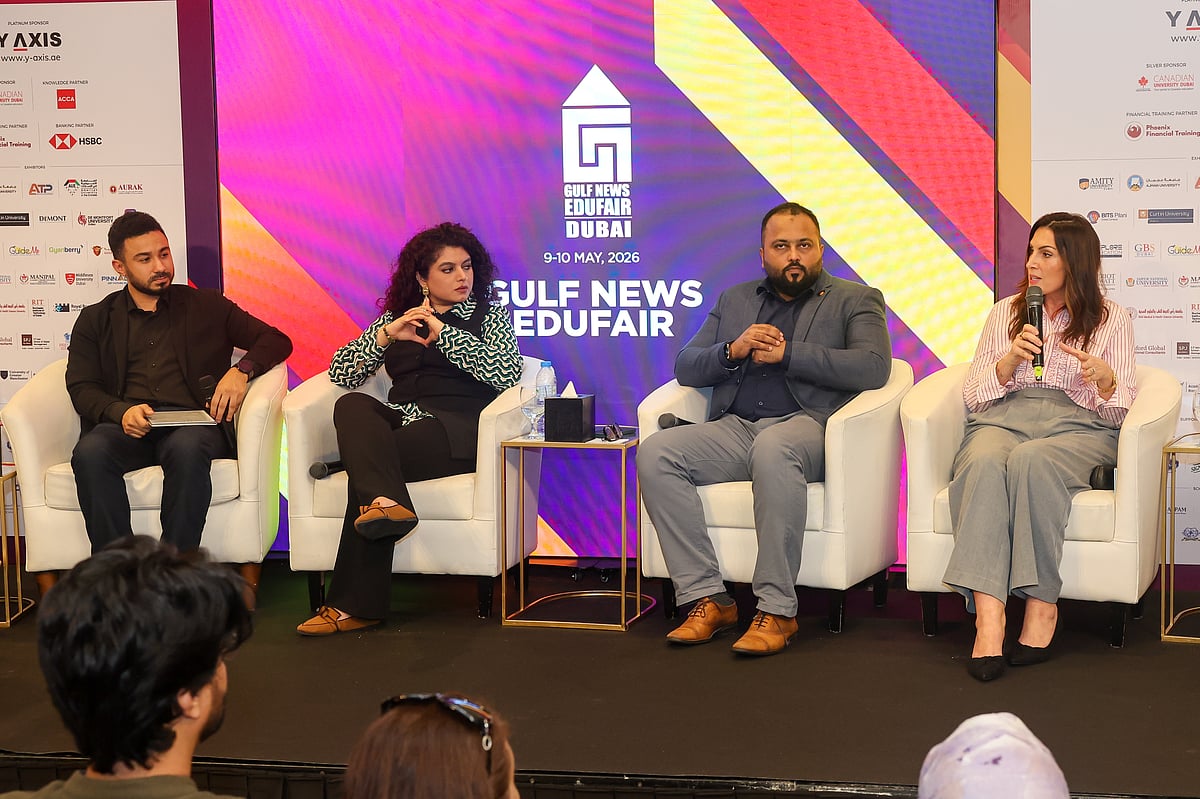
Degrees alone no longer guarantee employability, industry leaders and university experts agreed during a panel discussion at the second day of Gulf News Edufair 2026, as employers increasingly prioritise adaptability, practical exposure and cross-functional skills over academic credentials alone.
Speaking during the session titled What are you really paying for? Breaking down degree value at The H Dubai Hotel, panelists stressed that students today are expected to graduate with real-world experience already built into their profiles.
Ahmed Mahdy, Student Recruitment Manager at Canadian University Dubai, says employers today are looking beyond academic performance and focusing on practicality.
“One of the key things employers look for today is practicality. They want to know what students can actually do when they enter their first job and how they can support the company from day one,” he says.
Mahdy believes universities can no longer afford to separate academics from industry exposure. “If universities do not prepare students from day one throughout the four years, students will always be playing catch-up,” he says.
Dr Krishna Priya, Industry Relations and Employability Manager at GBS Dubai, echoes the sentiment, saying employers increasingly demand proof of work-readiness rather than theoretical understanding alone.
“When we talk about students being work-ready, employers are looking for evidence,” she says. “If practical projects and industry collaboration are not embedded into the curriculum from the very beginning, students risk losing direction somewhere along the way.”
She adds that students and parents should look beyond marketing material while evaluating universities. “If your interaction with a university feels purely transactional, that should be a warning sign,” she says.
For Abdul Razak, Senior Manager – Career Services at BITS Pilani Dubai Campus, the future belongs to graduates who can combine technical knowledge with strong human skills.
“A recent LinkedIn survey revealed that over 50 per cent of the skills companies are looking for in the age of AI are soft skills,” he says, adding that adaptability, communication and interpersonal abilities continue to dominate hiring conversations.
Razak says interdisciplinary learning is also becoming increasingly valuable. “A civil engineer with knowledge of 3D printing gains an advantage. A computer science student with AI and cybersecurity expertise becomes more valuable,” he says.
Letecia Saunders, Director of MASAR Career Excellence at Ajman University, says students must stop treating university education as a passive four-year process.
“It’s no longer enough to simply graduate and hope for the best,” she says. “From Year One, students must actively build their own career pathway.”
Saunders encourages students to actively pursue internships, leadership experiences and industry exposure while studying. “Today, students are expected to graduate with experience already built into their profile,” she says.
The discussion also explored how AI is reshaping employability across sectors including technology, healthcare, engineering and business.
Mahdy says employers increasingly expect graduates to combine multiple competencies rather than specialise narrowly. “Coding alone is no longer enough. If you are coding, you also need to understand project management, AI ethics and communication,” he says.
Dr Krishna Priya believes students now need to clearly demonstrate how they apply what they learn academically. “Students may say they studied AI ethics or business strategy, but can they explain what they actually learned and how they applied it?” she says.
The panelists also urged students to research alumni outcomes, industry partnerships and entrepreneurship opportunities before selecting universities.
“LinkedIn has become an incredible resource,” Razak says. “Students can connect directly with alumni, study their career paths and see where graduates are working.”
As the session concluded, each speaker left students with a final takeaway for navigating a rapidly changing job market.
“Adapt to change and learn how to communicate effectively,” says Mahdy.
“Build a cross-functional profile. Take every internship opportunity you can,” says Dr Krishna Priya.
“Learn, unlearn and relearn,” says Razak.
“It’s okay to feel uncertain sometimes. Rejection and redirection are part of growth. Lean into the journey,” says Saunders.
Sign up for the Daily Briefing
Get the latest news and updates straight to your inbox
Network Links
GN StoreDownload our app
© Al Nisr Publishing LLC 2026. All rights reserved.