Khor Al Ghanadhah in Abu Dhabi was the first location where a shipment of oil drilling equipment was unloaded in 1949, marking an early milestone in the emirate’s journey towards oil exploration.
Abu Dhabi in the 1950s: Rare glimpses of life before the oil boom
Step back to 1950s Abu Dhabi, when life was shaped by the sea, sand and traditional trades
Last updated:
2 MIN READ
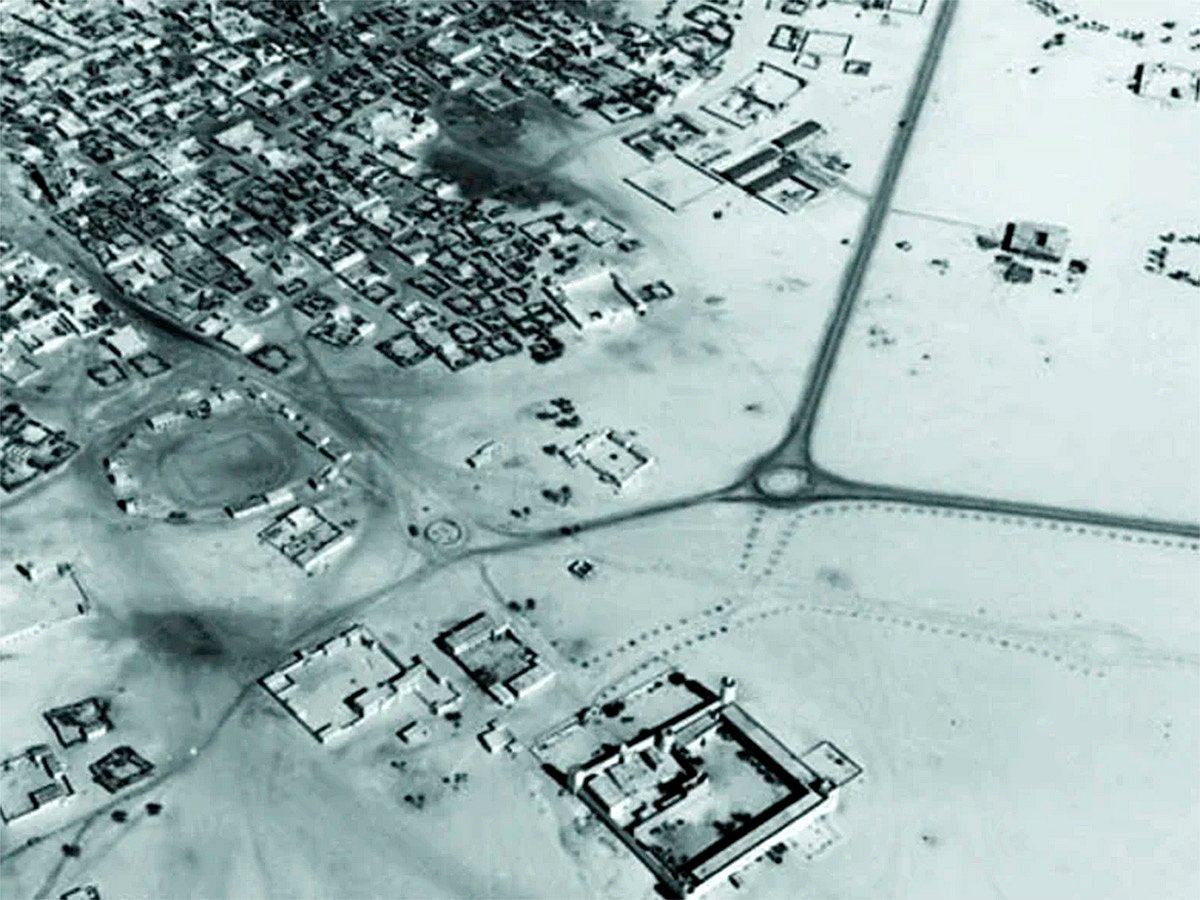
Aerial view of Qasr Al Hosn and the surrounding area of Abu Dhabi in the 1950s, showing the emirate before the oil boom transformed the city.
BP Archive/Gulf News archives
Abu Dhabi in the 1950s was a small coastal settlement, vastly different from the modern capital it would become. Gulf News archives describe a community of about 3,000 people in 1953, where families lived in traditional homes and children often played barefoot in the desert.
Life revolved around the sea and traditional livelihoods. Fishing, pearling and small-scale trading supported many families, while roads and modern infrastructure were limited. Homes were built to suit the harsh climate, and daily routines followed the rhythms of the seasons and the sea.
A rough causeway across Al Maqta Channel, built in the early 1950s, made travel between Abu Dhabi Island and the mainland easier.
Change, however, was already approaching. Oil exploration intensified, with oil discovered offshore at Umm Shaif in 1958. Archaeological excavations at Umm Al Nar also highlighted the emirate’s much older history.
These archive photographs offer a glimpse of Abu Dhabi at a pivotal moment — just before oil transformed its economy, landscape and way of life.
1950: Emirati guards walk along the causeway linking the mainland to Abu Dhabi Island, heading towards the old guard tower in the middle of the channel. The scene predates the construction of the first Maqta Bridge in 1967, which was later expanded and eventually joined by Sheikh Zayed Bridge in 2010.
Sheikh Shakbout Bin Sultan Al Nahyan, Ruler of Abu Dhabi, welcomes T. Hillyard, Representative of Abu Dhabi Marine Areas Ltd.
1950s: A traffic policeman controls traffic in front of the Abu Dhabi Municipality building.
1953: Many homes in Abu Dhabi were built using dried palm fronds, known as areesh in Arabic. Such traditional houses were common across the emirates before concrete construction became widespread in the 1960s.
Early oil drilling operations in Abu Dhabi, which led to the discovery of oil in 1953 and marked the beginning of a major transformation for the emirate.
1956: Badi radio at Abu Dhabi Central Market in the early years of the emirate’s development.
1957: The early days of oil drilling in Abu Dhabi, as exploration activity gathered pace ahead of the emirate’s transformation into a major oil producer.
1958: A view over Abu Dhabi, showing the emirate in the early years of its transformation.
Network Links
GN StoreAbout Gulf NewsTerms & ConditionsReach by GNSitemapContact usPrivacy PolicyGN FocusHave your sayWork with usAdvertise with usGulf News epaperPrinting Services
Download our app
© Al Nisr Publishing LLC 2026. All rights reserved.