Al Bahar Towers in Abu Dhabi.
Al Bahar Towers: A fusion of sustainability and traditional Arab architecture in Abu Dhabi
Award-winning Al Bahar Towers showcase modern solutions for desert climates
Last updated:
2 MIN READ
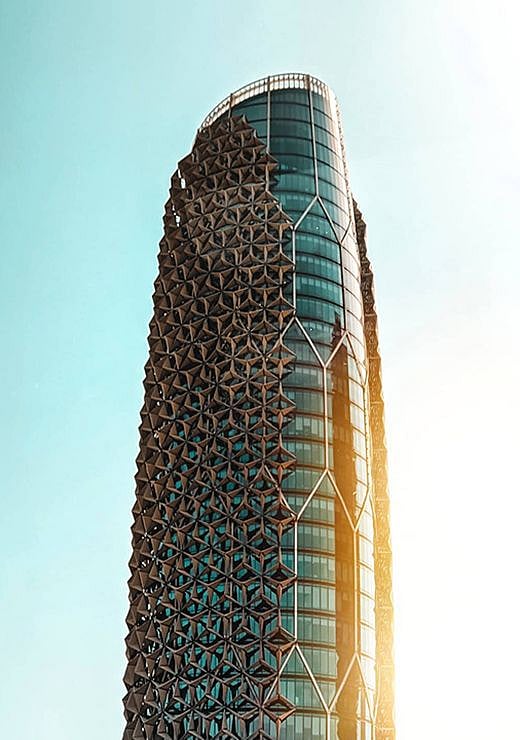
Architecture is a visual art and this building speaks for itself. This is a daytime shot of Al Bahar Towers, Abu Dhabi
Mohammed Sahil Shibili/Gulf News reader
Abu Dhabi: To some it looks like a pineapple, to others a honeycomb. On the corner of Al Saada and Al Salam Streets in Abu Dhabi stand two towers that few people walk past without looking up.
They are officially called Al Bahar Towers. Each is 29 storeys and 145 metres tall, completed in 2012, and they were designed by the architecture firm Aedas together with engineers from Arup.
One tower houses the Abu Dhabi Investment Council, the other the head office of Al Hilal Bank.
But it is the outside that draws the attention.
Umberella-shaped elements
Both buildings are wrapped in a beige shield of more than 2,000 umbrella-shaped elements that open and close as the sun moves across the sky. A central building management system controls them, so the façade is constantly in motion.
The idea is simple: when the sun hits one side, the panels close and keep the heat out. That reduces glare, lets in more daylight and cuts the need for air conditioning.
In a city where the sun is the biggest challenge for any building, that makes a real difference to the energy bill.
Innovative and Arab architecture
The architects wanted a building that was sustainable and modern but also rooted in local culture.
The folding panels are inspired by the traditional wooden lattice screens found in Arab architecture, known as mashrabiya, which provide shade while letting air through.
Whether you love the look or find it strange, the towers have been recognised internationally.
In 2013 they were named Best Overall Project in the Middle East, and they appear on the Chicago-based Council on Tall Buildings and Urban Habitat’s “Innovative 20” list of buildings that challenge what a tall building can be in the 21st century.
Sign up for the Daily Briefing
Get the latest news and updates straight to your inbox
Network Links
GN StoreAbout Gulf NewsTerms & ConditionsReach by GNSitemapContact usPrivacy PolicyGN FocusHave your sayWork with usAdvertise with usGulf News epaperPrinting Services
Download our app
© Al Nisr Publishing LLC 2026. All rights reserved.