The Kurator’s New York Fashion Week SS27 roundup
NYFW Spring/Summer 2027 season saw heritage, global names and identity take centre stage
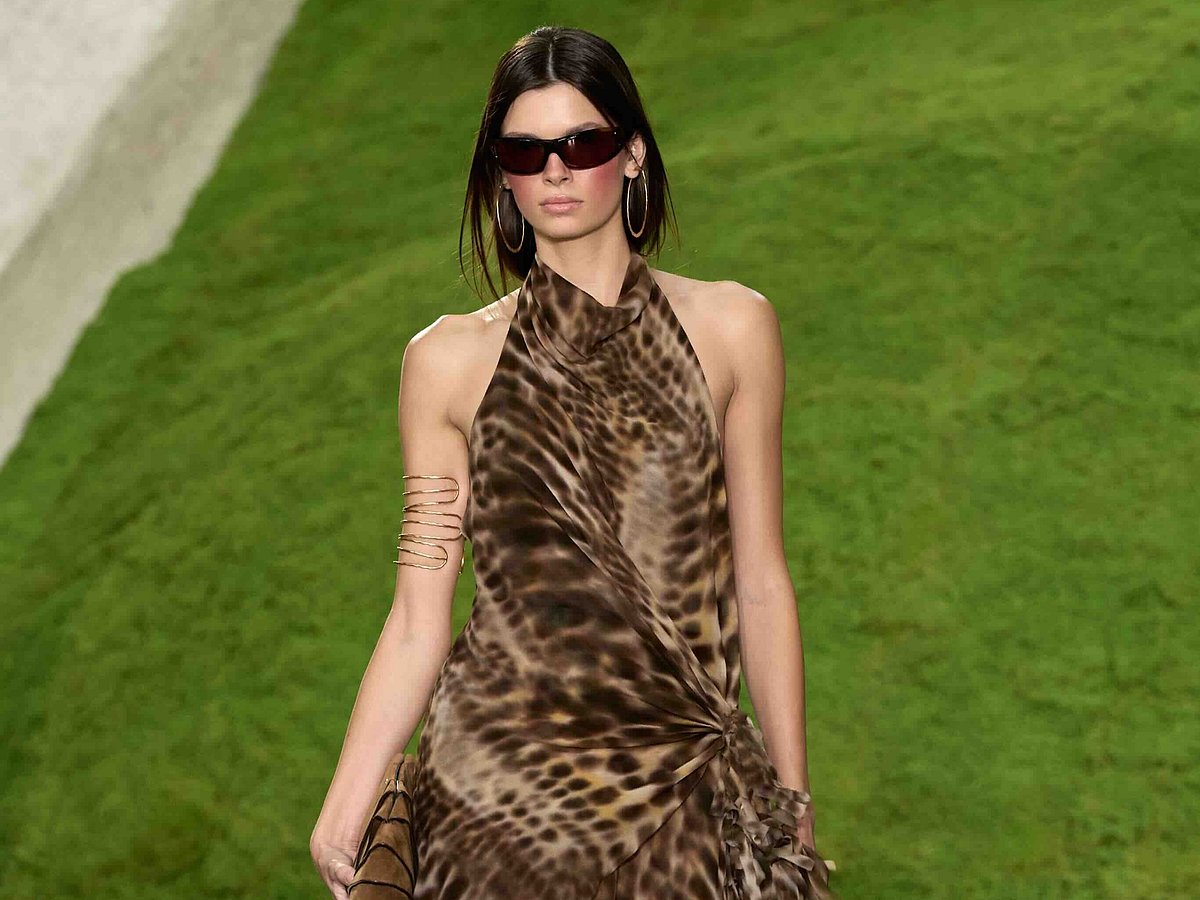
Six days, seventy-odd shows. New York's Spring/Summer 2027 season ran from September 10 to 15, though the grown-ups, as usual, refused to wait for the Council of Fashion Designers of America to open the official calendar and jumped the queue on September 9. What emerged, once the noise cleared, was less a trend than a temperature check: heritage houses turning the magnifying glass on their own archives rather than the competition's, European names finally admitting New York's runway real estate is worth the airfare, and a New York-born expat flying home to interrogate, from the inside for once, what "American" is even supposed to mean these days.
If there's one show this season built to trigger absolute FOMO, look no further than Coach. Stuart Vevers had every excuse to stage a victory lap for the house's 85th birthday and instead staged something closer to an autopsy - in the best, most affectionate sense. Trenches, leather jackets, tuxedos, bias-cut dresses, Western boots: the house's foundational vocabulary got flipped, its seams and linings put on show, while soft nappa leather and sun-bleached jersey made the tailoring feel worn-in rather than newly bought. The anniversary showed up hardest in the accessories, where metallic finishes and scattered confetti gave bags and shoes the look of props salvaged from a party still technically in progress. A new Turnlock Tote, borrowing its hardware from a Bonnie Cashin design first seen in 1970, carried the leather goods alongside an Inside-Out Brooklyn bag turned deliberately inside out. By the time young musicians from the Bronx-based UpBeat NYC and a troupe of voguing dancers took over the runway under falling confetti, Vevers had made his point without needing to say it: eighty-five years on, Coach can still throw a party without turning into a museum piece.
If Coach was interrogating restraint, Tory Burch spent that same evening - September 10 - arguing against the very concept of it. Staged inside Isamu Noguchi's Sunken Garden, the Financial District's basalt-and-water homage to Kyoto's Ryōan-ji, tucked beneath a sixty-storey tower like a Zen koan nobody asked for, the show opened on a sweater in acid green, its embroidery so dense and ornate it could pass for wallpaper, and only escalated from there. Burch has spent several seasons circling this collector's eye idea - where opulent femininity meets American pragmatism, the logic of women who accumulate and layer their wardrobes rather than replace them. This season translated that into two competing registers running side by side: disciplined military dressing and sharply cut suiting on one end, colour-blocked sportswear - cropped knits, pleated skirts - in coral, turquoise and butter yellow on the other, with unexpected fabric swaps (terrycloth standing in for chenille, silk softening heavy wool) threaded through both. Drawstring trousers, coats with the ease of a favourite trench, and tailoring set slightly off its axis kept the whole thing feeling worn rather than staged. Amanda Seyfried, Emily Ratajkowski and Alexa Chung watched from the front row to a post-punk score, an oddly discordant soundtrack for a collection built on things that shouldn't work together, working together anyway.
Jasmin Larian Hekmat took the harder route this season, staging Cult Gaia's "Behesht" - Persian for heaven - inside the Gilder Center at the American Museum of Natural History, and building the entire collection out of grief rather than around it. The clothes process the loss of her grandmother, Mommy Aghdas, who also inspired an earlier Cult Gaia collection, "Shirzan," and the palette tracked that arc directly: charcoal and neutral tones at the start, giving way gradually to green, sky blue, red and, by the close, a soft pink - grief loosening its grip in real time. The construction carried the same weight as the concept: architectural woven cotton, silk jacquard, coarse-textured knits, and petals of hand-painted silk and organza built up into sculptural forms, while sheer organza layered on itself created shapes that visibly moved and reformed as the models walked, and metallic thread run through tweed kept the softness from tipping into sentimentality. The accessories pushed the same fragile-versus-strong idea to an extreme - a line of hand-forged rings, several built from more than 2,000 individually joined metal links, wearable objects that took as much endurance to make as to wear. Katie Holmes, Iman and Helena Christensen watched from the front row. Heaven, in Hekmat's telling, isn't the absence of hardship. It's what comes after it.
Nearly a decade after her last real runway moment, Diane von Furstenberg handed the keys to Henry Zankov and let him open the entire official calendar on her behalf, on September 10 - a bet that could easily have not gone to plan and instead acted as the smartest piece of succession planning New York has seen all week. Zankov, in his debut as artistic director, used the house's wrap dress not as a museum piece to be reverently restaged but as a working template: saturated colour, animal print, bold graphics and metallic detailing gave the clothes a jolt of genuine newness rather than a curated nostalgia trip, and the metallics did the heaviest lifting, catching light in a way that connected DVF's day-to-night practicality to the sheer theatre a comeback of this scale required. Familiar enough to reassure the loyalists, different enough to make the trade press sit up. Not every legacy house pulls off both on the first attempt.
There's something almost too neat about a New York-born designer building his entire reputation in London only to fly home and stage a meditation on Americanness - but Conner Ives has never been precious about symbolism, so the Edison Ballroom got exactly that on September 12. Since debuting on the London Fashion Week schedule in 2022, Ives has built a name reworking the visual language of America through upcycled and repurposed materials; forced here to actually confront the country he left, he settled on a single word, repeated throughout his post-show remarks, to describe the national character he was chasing: flamboyance. Denim dressed up with embellishment, pleated skirts printed with horse-and-saddle motifs, Spanish-inspired fringe collapsing into East Asian floral patterning - the references piled on top of each other rather than sitting politely side by side - and the finale sent out a floor-length, drop-waisted chiffon gown in a weathered, verdigris green that more than one attendee connected, unprompted, to the patina on the Statue of Liberty.
Catherine Holstein marked Khaite's tenth anniversary the way she apparently marks most milestones - by declining to make it about the milestone. Staged inside a stripped-back warehouse at the Brooklyn Navy Yard on September 13, with PJ Harvey's "Rid of Me" playing loud enough to make clear nobody was in the mood for restraint, the show opened on Kaia Gerber in a plain white bra and a punishingly high-waisted leather skirt, its back split open to reveal hand-finished corset boning underneath - an early signal that this collection had been built outward from its internal structure rather than dressed up afterward. What came next pushed further into a soft, romantic mode than Holstein has previously allowed herself: hand-embroidered floral lace, pale shift dresses trimmed in delicate tatted lace with decorative openwork cut into the fabric (an idea she has said she took from architectural details spotted on a recent trip to Venice), and sheer, floaty tops and skirts finished with horsehair-stiffened ruffles that swayed with each step. Boned corsetry and full, structured underskirts - largely dormant in fashion for years - returned throughout, worn alongside the tight, minimal leather pieces the label built its name on, a reminder that even mid-romantic-turn, Khaite hadn't abandoned its instincts.
Magda Butrym has been dressing New York for years without ever formally showing there, so her official NYFW debut - "Natalia," staged on a runway scattered with roses, timed to the opening of the brand's first US flagship on Mercer Street - felt overdue rather than opportunistic. The Warsaw-based designer built the collection around a woman entirely in possession of her own image: strong-shouldered tailoring set against sheer layering and underwear-as-outerwear touches, a leather jacket worn over a translucent, sirenesque gown, a black trench with broad, structured shoulders opening onto lace and sheerness beneath. Domestic, decorative references - florals lifted straight off wallpaper, crochet edging - traced back to childhood memories of women in her family dressing up simply to be at home, while the eveningwear settled into slip dresses in bedroom white and tea-stained beige. A decade spent building the US side of the business through wholesale and appointment-only showrooms, and additional seasons on the Paris ready-to-wear schedule, finally gave way to a runway show of her own - in the one city, it turns out, she'd been dressing all along without anyone officially noticing.
At the Jack Shainman Gallery in lower Manhattan, with Viola Davis, Cynthia Erivo and Elizabeth Debicki arranged in the front row like a well-cast ensemble, the house's eighty-six-year-old founder proved he still knows exactly which levers to pull and in which order. The navy blazers and crisp white shirting turned up on schedule, but this was classicism with the top button undone: feathers, brocade, corset-like construction and a painter's hand with colour gave the tailoring a charge it hasn't had in years, while voluminous, low-slung trousers did the quiet work of modernising a silhouette that has not needed modernising in decades. Draped floor-length gowns closed things out on the requisite note of old-world glamour.
Sign up for the Daily Briefing
Get the latest news and updates straight to your inbox
Network Links
GN StoreDownload our app
© Al Nisr Publishing LLC 2026. All rights reserved.