The King Abdulaziz Centre for World Culture (Ithra) has been designed by
Norwegian architectural firm Snøhetta.
How Farah Abushullaih turned Ithra into a global cultural powerhouse
Saudi curator blends heritage and innovation to reshape museums and global dialogue
Last updated:
4 MIN READ
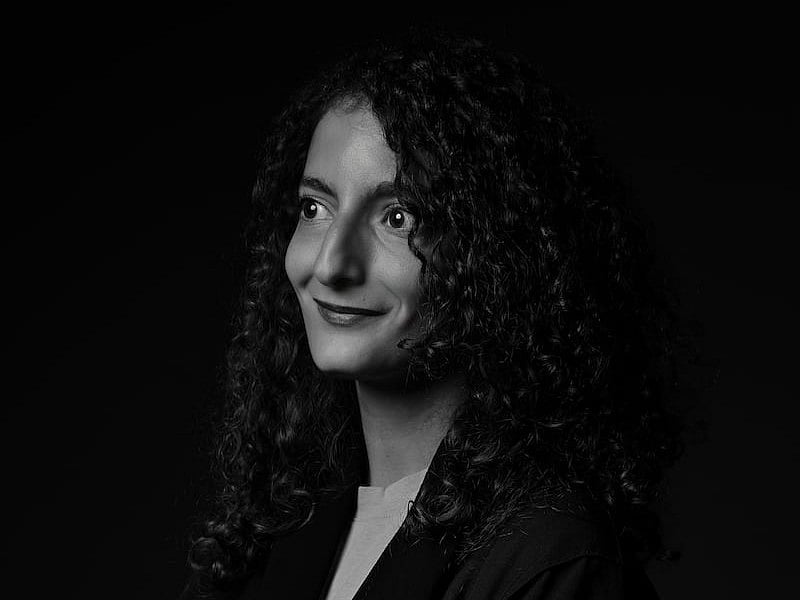
Farah Abushullaih - Head of Ithra's Museum.
Ithra
From global masterpieces to Saudi artists on the world stage, Farah Abushullaih has transformed the King Abdulaziz Center for World Culture, known as Ithra, into a hub of cultural exchange and creativity. Over more than a decade at the helm, she has redefined what a museum can be: a space where heritage converses with innovation and audiences are invited not just to observe, but also to participate, reflect and imagine.
When Abushullaih joined Ithra in 2012, the center was still a concept on paper. She recalls the early days with a sense of purpose: “I saw a museum as a space for display and archive. Over time, I’ve come to appreciate that a museum must be interactive, participatory and globally connected. For both local communities and international visitors, our role is not just to present collections, but to foster engagement, conversation, and shared experiences.”
Her philosophy resonates throughout every gallery, exhibition, and program at Ithra. “At Ithra, our curatorial vision is about connecting the past with the future and promoting cross cultural exchange. We seek to create exhibitions and programs that celebrate Saudi Arabia’s rich cultural roots while inviting global conversations about art and identity,” she explains. She has been credited with bringing international masterpieces to Saudi Arabia for the first time, including works by Edvard Munch and Leonardo da Vinci, while simultaneously championing Saudi artists abroad. Initiatives such as Ithra Bridges have sent more than fifty local talents to exhibitions at the Los Angeles County Museum of Art and the Brooklyn Museum. “Our collaborations with institutions like the Barjeel Art Foundation, LACMA and Brooklyn Museum have taught us that storytelling in culture thrive through exchange. These global connections expand the way we see our own region, they bring fresh vantage points and remind us that our local contexts matter on a world stage,” she says.
Her curatorial approach is rooted in academic research yet designed to spark emotional and sensory engagement. “Materials themselves are powerful storytellers in our curatorial practice. Whether it’s fibers, pigments or natural resources, they carry stories of provenance, craft and context. At Ithra, we treat materials not just as mediums, but as voices that speak, connect, and resonate with audiences,” she notes. This philosophy is evident in the current season’s exhibitions, which explore heritage, innovation, and identity.
“Horizon in Their Hands”, created with the Barjeel Art Foundation, celebrates women artists who redefined Arab modernism. “The story we tell feels both timely and long overdue. These pioneering women artists’ contributions have often been under recognised. We hope the exhibition sparks conversations about authorship, gender, and the intersections of art and everyday life in the Arab world,” Abushullaih observes. Complementing this is “Baseqat: The Palm Tree”, which draws from nature and tradition to explore sustainability and continuity. “We hope visitors leave with an appreciation of the palm tree not only as a cultural symbol, but as a vital, ecological, and future-oriented resource. It embodies sustainability, continuity, and the idea that heritage can inspire responsible innovation,” she explains.
Partnership is central to her vision. “Collaboration and community are embedded in the way we exhibit, not just what we exhibit. At Ithra, we create with makers, audiences and institutions, as we believe the best cultural outputs emerge when we engage communities in conversation, not just presentation,” she says.
'Baseqat: The Palm Tree' exhibition
Abushullaih’s leadership is also defined by her perspective as a Saudi woman at the forefront of a major cultural institution. “I’m guided by the principles of curiosity, inclusion and future thinking. The horizon I envision for Ithra is one where we are catalysts for creativity, where our walls reflect not just what has been, but what can be,” she reflects. Sustainability is another guiding principle: “In Baseqat: The Palm Tree Exhibition, the dialogue between past materials and contemporary design reveals a Saudi ingenuity that is global in ambition but local in roots. It tells us that our future lies in honouring where we come from and imagining where we can go,” she explains.
She has also reimagined the museum itself, viewing Ithra not merely as an archive or exhibition space, but as an incubator for ideas and a catalyst for cross-cultural dialogue. The annual Tanween creativity conference embodies this vision. She oversaw its eighth edition in 2025, featuring international collaborations, workshops, and design hackathons, and announced that in 2026 it will return as Ithra Design Week, expanding across Ithra’s facilities and public spaces to connect local and global creative communities. “Tanween complements the Museum’s mission by bridging creativity and innovation through design mediums. It’s a time when ideas converge across disciplines, reinforcing our belief that culture is ever evolving and thrives through exchange,” she says.
Through her leadership, Ithra has become a space where Saudi Arabia’s cultural identity is dynamic, modern, and globally engaged. “Ithra helps redefine Saudi cultural identity as a living, evolving practice, one that goes beyond heritage as something to simply observe. We aim to share the multiplicity of Saudi narratives and invite meaningful engagement, showing that culture is dynamic, interconnected, and future oriented,” she explains.
Farah Abushullaih’s extensive work illustrates how strategic vision, thoughtful curation, and active community engagement can shape an institution that is both deeply rooted locally and resonant on an international scale.
Sign up for the Daily Briefing
Get the latest news and updates straight to your inbox
Network Links
GN StoreAbout Gulf NewsTerms & ConditionsReach by GNSitemapContact usPrivacy PolicyGN FocusHave your sayWork with usAdvertise with usGulf News epaperPrinting Services
Download our app
© Al Nisr Publishing LLC 2026. All rights reserved.