Design Doha shifts focus from mapping talent to exploring ideas
Director Fahad Al Obaidly explains the vision behind the event’s second edition
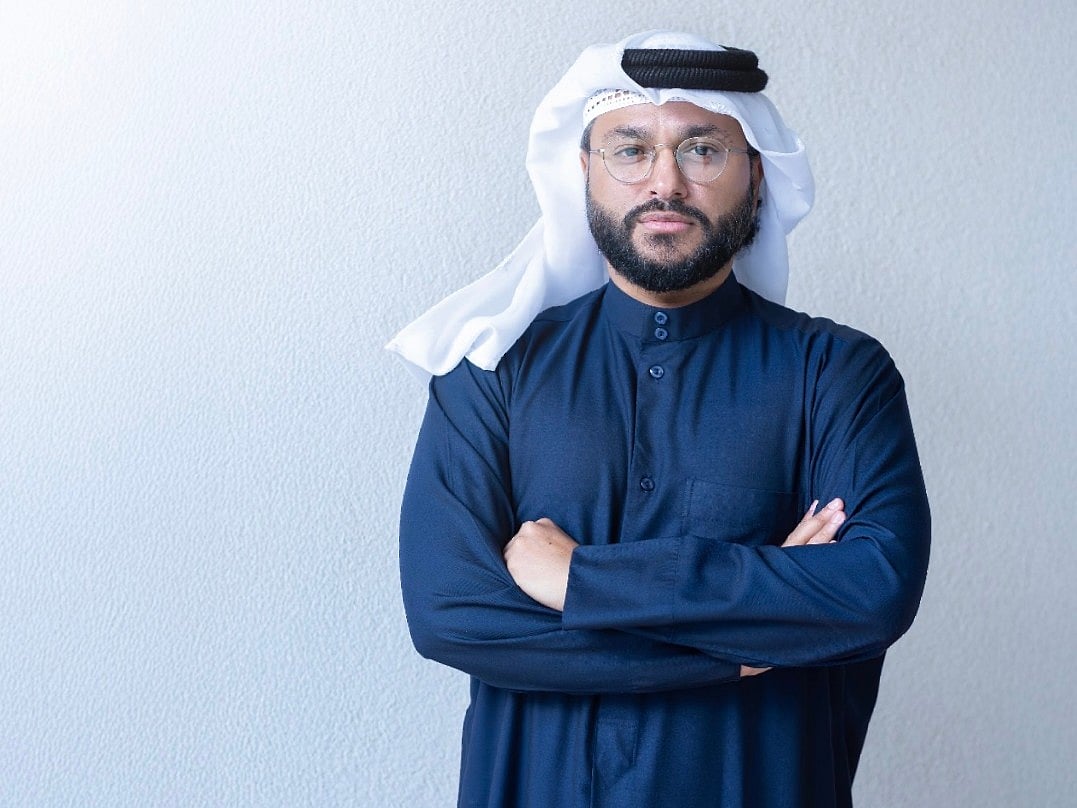
Al Obaidly, Director of Design Doha, discusses his vision for the biennial’s second edition, moving beyond mapping the region’s design landscape to explore the systems of knowledge within it.
At the heart of one of Doha’s most significant heritage districts, Fereej Al Asmakh, Design Doha returns from 5 November 2026 through 31 January 2027 for its 2nd edition, bringing together the work of over one hundred multidisciplinary -designers and studios from across the MENASA region. Ahead of the biennial, we sat down with Fahad Al Obaidly, Director of Design Doha, to reflect on the region’s evolving design landscape, and the role that platforms such as Design Doha can play in nurturing local and regional talent and fostering global exchange.
How has design been part of the culture and identity in the region?
Design has always been embedded in how people in the Middle East, North Africa, and South Asia region have organised daily life, from the geometry of a majlis, the logic of a wind tower, the patterns worked into textiles and metalwork. For a long time, this knowledge was not framed as “design” in the contemporary, disciplinary sense; it was simply how communities solved problems of climate, material and gathering. What has changed over the past decade is the emergence of an -infrastructure of schools, studios, platforms and collectors that allows this inherited intelligence to be studied, tested and carried forward alongside international discourse.
Alongside that infrastructure has come confidence. There is greater confidence in developing a design language from within the region rather than looking elsewhere for validation. The numbers bear it out: nearly 500 open-call applications for the 2026 programme. That evolution is particularly exciting because it allows us to see our heritage as living knowledge that can inform what comes next.
What makes Design Doha different?
There are now several excellent design weeks and fairs across the region. That plurality is healthy, and no single platform should carry the whole conversation. What distinguishes Design Doha is its scale of ambition paired with a research posture: we are not a trade fair, we are a biennial built around exhibitions, commissions and publishing that ask what design in this region actually is, on its own terms.
Grounding the 2026 edition in Fereej Al Asmakh, one of Doha’s oldest neighbourhoods and home to 61 historic houses, is part of that distinction; the city itself becomes the site of inquiry. Commerce has a place in that ecosystem, through Design Doha Connect and the House of Objects, which carries more than 550 pieces by designers from across the region, but it follows the research rather than leading it.
Why are platforms such as Design Doha important to the design scene?
The role such a platform should play is not to declare a single regional style or to package identity for export. It is to provide the conditions, through funding, curatorial rigour and critical dialogue, under which designers can develop ambitious, specific work and be judged on its own merits, in dialogue with peers from Latin America, Asia and Europe as much as with one another. The Design Doha Prize puts QAR 800,000 in grants behind four winners, chosen by a jury of 24 headed by India Mahdavi.
What is your vision for this 2nd edition?
The inaugural edition in 2024 helped us map the contemporary design landscape of the region and understand the extraordinary depth of practice already here: more than 300 designers and studios and 24 exhibitions across 310,000 square metres of Msheireb Downtown. For 2026, we are moving from mapping that landscape towards understanding the systems of knowledge within it.
Fereej Al Asmakh is especially significant to this edition. We are engaging with it as a living part of the city, where heritage, contemporary design, community and urban life can meet. The biennial is a proof of concept for its future as a living heritage district, built on four pillars: heritage houses opened as workspaces to make, venues to show, markets to sell and a reimagined majlis to connect. The Public Design Commissions take this thinking further by asking designers and architects to respond directly to spaces across Qatar. Five projects were selected from more than 320 applications from 32 countries.
You have also spoken about design as a -system of knowledge.
Treating design as a system of knowledge means paying attention to what a technique, a material choice or a spatial arrangement carries with it: agricultural practice, migration history, craft lineage, ecological adaptation. Arab Design Now’s five thematic frameworks are structured around this: land and agrarian practices, landscapes of production and extraction, crafts, technology and community, narration and ornamentation, belonging and migrating.
Each shows how communities have encoded knowledge into physical form. Falajscape, one of our public commissions, shows what that means: the falaj distributes water through timed shares under collective rules, so reinterpreting it as a network of stainless-steel channels in an urban space also carries a social system. Palm Construct does the same with the arish, where trunks became beams, fronds became roofs and leaves became woven mats.
There appears to be a stronger emphasis on site-specific and material-led work. Why was this approach important?
Site-specific and material-led work forces a different kind of accountability. A designer responding to Fereej Al Asmakh, or to a specific public space through the commissions programme, cannot simply insert a finished object; the proposal must answer to the history, the climate and the community already present. That discipline produces work that is harder to replicate elsewhere and, in turn, harder to dismiss as decorative.
It also means the biennial leaves something behind in the city itself: five public design commissions activating public space across Doha, and a heritage district reconsidered as a site of production as well as preservation. That is a different legacy from a set of objects that travel to the next fair.
Regional identity, craft, and contemporary design are three important threads running through the region’s design landscape. How can these elements be brought together in a way that feels both rooted and relevant to the present?
The starting point has to be authenticity of process, with aesthetics following from it. Regional identity cannot be reduced to a pattern, motif or material applied to a contemporary object. It comes from a more considered understanding of why things were made in certain ways, what conditions shaped them and what knowledge sits behind those decisions.
Craft is particularly relevant to this conversation because it carries generations of material intelligence. Contemporary designers can engage with that intelligence without copying historical forms. They can work with craftspeople, reinterpret techniques, question established methods and introduce new materials or technologies. Several exhibitions show how: Aslan’s Love Story follows a fourth-generation Nabulsi tile workshop, Design Labs II from IRTHI pairs regional and international designers with artisans, and The Thread That Binds traces the palm, reed and cane weaving shared across the Arab region.
When this exchange is genuine, heritage becomes a source of knowledge, not a fixed visual reference. That is where contemporary regional design becomes most interesting to me: when you can understand where something comes from, while the work speaks confidently to the conditions of today. It can be firmly rooted in its local context and still resonate internationally.
Finally, how can creativity and design be positioned as forces for hope, possibility, and positive change?
Design is one of the few disciplines that has to propose something concrete in response to a difficult condition, whether that is a shortage of water, a displaced community or a damaged landscape. It responds by proposing possible solutions while remaining grounded in the realities of the challenge. It asks a practical question: given the conditions we have, what else could be possible?
I think there is hope in that way of thinking because it is active. It asks people to observe carefully, work collectively, test ideas and make alternatives tangible. Across the Middle East, North Africa, and South Asia region, there is a generation of designers who understand their histories while thinking confidently about the future. We see this in Arab Design Now’s agrarian practices thread, in Ithra’s Design from Oasis, which takes the date palm as a cultural and ecological anchor, and in commissions designed for public space and shared experience.
Hope is not abstract here. It is built, crafted, designed and shared.
Sign up for the Daily Briefing
Get the latest news and updates straight to your inbox
Network Links
GN StoreDownload our app
© Al Nisr Publishing LLC 2026. All rights reserved.