Cultural dives into the Gulf: museums redefining regional identity
From Doha to Abu Dhabi and Jeddah, landmark museums blend heritage, art and storytelling
The Gulf isn’t just finding its place on the global cultural map, it’s defining it. Decades of strategic investment, nurturing talent, and building institutions have turned the region into one of the world’s most exciting cultural hubs. The opening of three major museums this year isn’t just another milestone; it’s proof that the Gulf’s cultural identity is already shaping global conversations, increasingly magnetic for artists, scholars, and collectors. These new institutions are more than architectural showpieces; they are the latest expressions of a mature cultural ecosystem, one bold enough to tell its own stories.
1. Lawh Wa Qalam M.F. Husain Museum
Qatar Foundation’s Monument to a Modernist Visionary
The first impression of the Lawh Wa Qalam: M. F. Husain Museum is its rhythm—intimate and quiet—echoing the artist’s restless, curious spirit. Designed by Martand Khosla from a sketch Husain drew in 2008, the building feels like a conversation across time, a collaboration that honours the imagination of its creator.
Inside, more than 150 works trace the arc of Husain’s final decade, much of it spent in Doha. The galleries don’t follow a tidy chronological path; instead, they create an atmosphere, the symbols that preoccupied him, the real and imagined worlds that animated his vision. “A legendary artist,” said Her Highness Sheikha Moza bint Nasser at the opening, “whose works transcend borders and connect cultures, histories, and identities.”
At the heart of the museum is Seeroo fi al ardh (“Walk in the Land”), Husain’s final masterpiece. Murano glass horses shimmer and rear under shifting light. Vintage cars rise on mechanical arms like relics frozen mid--resurrection. A figure of Abbas Ibn Firnas hangs suspended in a moment of impossible flight. The installation feels like a meditation on humanity’s long, messy, brilliant journey, filtered through Husain’s playful, cinematic lens.
Another anchor is the Arab Civilisation series, 35 large-scale works commissioned by Sheikha Moza. Painted with Husain’s trademark speed and energy, lines that seem to move even when still, the series curates Arab myth, literature, and history into a vivid, contemporary chronicle.
Walking through the museum, you can’t ignore the story beneath the work. Husain spent his final years here after leaving India amid legal and political pressures. Qatar offered him more than refuge, it gave him space, both literal and creative, to work at a scale he had long imagined. He became a Qatari citizen in 2010, and many of the canvases reflect this period of unfettered experimentation, bolder, freer, and fully confident in their ambition.
Project Manager of Art Portfolio at Qatar Foundation and Curator of the museum, Noof Mohammed sees the museum as more than a home for a celebrated legacy: “The museum sits at the crossroads of two cultural worlds that shaped Husain, South Asia and the Arab region. It offers a platform for South-South dialogue, moving beyond traditional narratives to honour the shared histories, aesthetics, and futures of our communities.”
The museum isn’t trying to repackage Husain for a Western gaze, it’s placing him firmly within the geographies that shaped him most deeply. Beyond the galleries, the library, auditorium and Creativity Hub pull students, artists and researchers into the conversation, accentuating that this isn’t a mausoleum for a great artist but a space where his ideas can keep evolving. In the end, Lawh Wa Qalam knows exactly what it wants to be, not a retrospective or a monument, but a living institution built around a life that never stopped searching for new forms, holding Husain’s appetite for the world with a clarity that feels both inclusive and expansive.
2. Zayed National Museum, Abu Dhabi
A Living Tribute to the UAE’s Founding Father
Since opening in this December, Zayed National Museum has already become a landmark at the heart of Saadiyat Cultural District, where history, heritage, and imagination converge. Approaching along Al Masar Garden, the 600-metre path winds through desert, oasis, and urban landscapes dotted with sculptures, installations, and native plants, while a working falaj irrigation system recalls centuries of ingenuity. The garden opens onto an expansive view of the entrance and the building itself, designed by Pritzker Prize-winning architect Lord Norman Foster. Even before entering a subtle fragrance inspired by the UAE’s natural heritage hints that this is a museum to be felt as well as seen.
The garden itself is treated as a permanent gallery. Anchored by the ghaf tree, a symbol of resilience, it showcases plants that have shaped Emirati culture, poetry, and crafts, connecting visitors to the land and its stories. The museum unfolds across interconnected galleries beneath five steel towers inspired by falcon wings, where exhibition halls, educational spaces, and public areas trace more than 300,000 years of the land’s history.
Inside, Our Beginning places UAE Founding Father, the late Sheikh Zayed bin Sultan Al Nahyan at the heart of the story through photographs, letters, voice recordings, and archival footage. Visitors see the land through his eyes, its beauty, challenges, and his vision for a united nation.
Through Our Nature brings the UAE’s landscapes alive. Sounds shift as you walk—from wind across dunes to water in oases and birds over mountains—blended with the signature fragrance. To Our Ancestors and Through Our Connections trace early settlements, trade, technological exchange, and the spread of Islam, making history a lived experience.
By Our Coasts evokes maritime heritage, with waves, creaking boats, and the scent of salt air recalling generations of navigators and pearl divers. To Our Roots leads inland to desert villages and oases, immersing visitors in enduring traditions. Music and scent thread through the galleries. Hamad Al Taee’s orchestral arrangements of the national anthem and Sheikh Zayed’s poetry, alongside compositions by Studio Al Watan and Berklee Abu Dhabi, allow history to be heard as well as seen, while Casa de Oud’s fragrance subtly links memory, land, and heritage.
The museum places young visitors at its core. All Saadiyat Cultural District museums are free for those under 18. Education runs through galleries, workshops, and programs, letting children and teenagers explore history and heritage interactively, fostering lasting connections to the land and its stories.
Mohamed Khalifa Al Mubarak, Chairman of the Department of Culture and Tourism, Abu Dhabi, exclusively sums up the museum’s mission: “Zayed National Museum tells an untold story; the deep history of the UAE and its people, from ancient times through centuries of maritime trade, pearl diving, and cultural exchange that connected this region to the world. Through its exhibitions and galleries, the museum inspires unity, pride, and understanding, offering Emiratis a space to see their heritage celebrated as part of humanity’s shared cultural tapestry and inviting the world to discover how the achievements and traditions of this land have always been intertwined with the broader human experience. Within its narratives, we honour the life and legacy of the UAE’s Founding Father, the late Sheikh Zayed bin Sultan Al Nahyan.”
With cafés, performances, workshops, and educational programs, Zayed National Museum functions as a living space, where stories continue to unfold. Alongside Louvre Abu Dhabi, Guggenheim Abu Dhabi, and the upcoming Natural History Museum Abu Dhabi, it has solidified Saadiyat Cultural District as a center where ideas, creativity, and culture meet, shaping Abu Dhabi’s identity on the global stage.
3. Red Sea Museum, Jeddah
Where land, sea, and stories meet
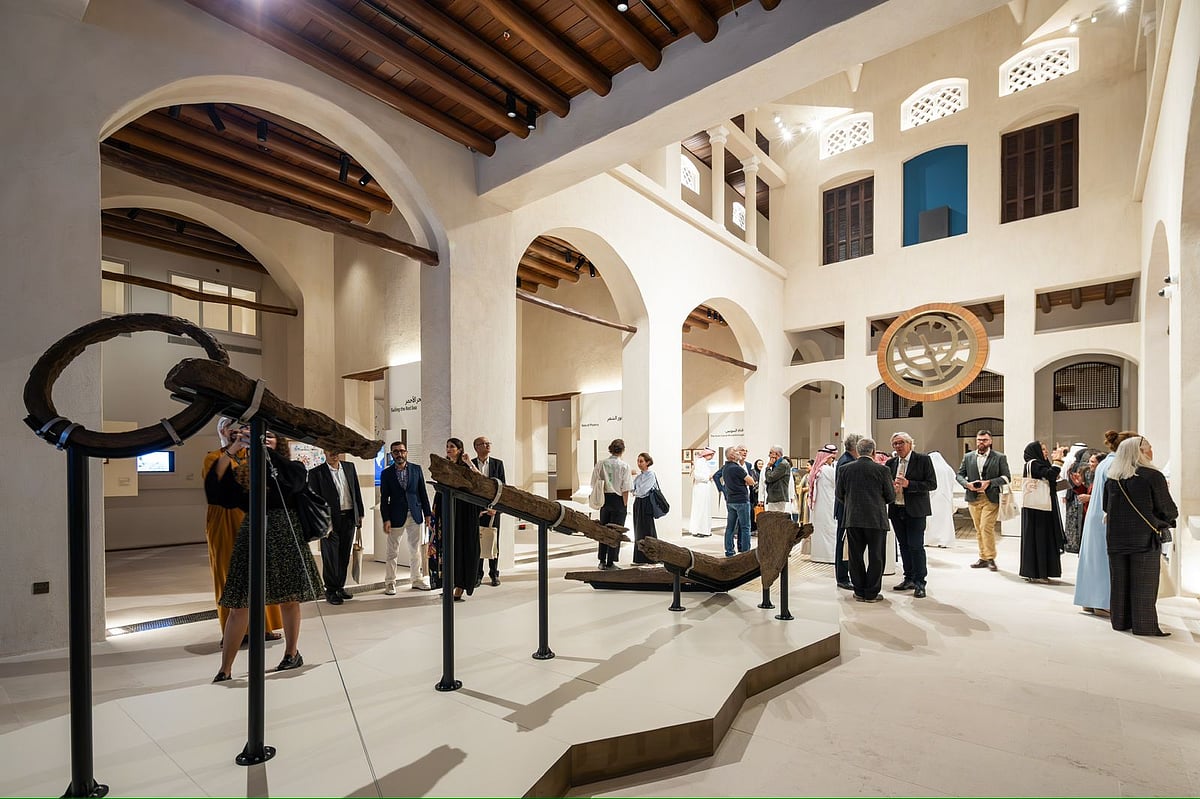
Opened this December, the Red Sea Museum (RSM) sits at a natural point of arrival in Historic Jeddah. Housed in the restored Bab Al Bunt building, once a customs house and one of the city’s most recognisable landmarks, it carries the memory of centuries of movement. Traders, pilgrims, and sailors from Africa, Arabia, Asia and beyond once stepped ashore here. Today, visitors cross similar thresholds, moving from sea to land, past to present.
The museum unfolds across seven themes in 23 galleries: Al Bunt, Salam Upon the Sea, Orientation, A Living Sea, Sea of Abundance, Sea of Faith, and Sea of Inspiration. Each has its own focus, but together they form a single narrative shaped by currents, encounters, and the steady movement of ideas across these waters. The collection spans centuries and disciplines. Chinese porcelain, coral jewellery, navigational tools, manuscripts, and textiles reveal the material history of exchange along the Red Sea, while contemporary works by Manal Aldowayan, Abdulhalim Radwi, Anish Kapoor, Faisal Samra, Ali Cherri, Amina Agueznay, and Hicham Berrada open new conversations about belonging, migration, and ecology. Much of the curatorial work involved collaborating with local communities, artisans, and tradition-bearers, ensuring the museum reflects a living heritage rather than a static archive.
Some objects stand out not for their grandeur but for their unexpected intimacy. Such as a vintage Game of Goose board (part of the RSM’s permanent collections), where players aim to reach Mecca while navigating treacherous obstacles like pirates and sharks. This European-made game, crafted in the first half of the 20th century, features exquisite and intricate illustrations that perfectly capture the style of its era. It is a reminder that stories of the Red Sea have circulated in many directions, often taking forms far beyond the region itself.
Ibrahim Alsanousi, acting CEO of the Museums Commission, defined the museum as a place of connection and stated: “This museum is a testament to the Ministry of Culture’s dedication to developing museums of global significance in Saudi Arabia. Through world class exhibitions, research, and programming, the Red Sea Museum will serve as a hub for knowledge, creativity, and cultural exchange.”
The inaugural temporary exhibition, The Gate of Gates by Moath Alofi, documents the layered history of Bab Al Bunt, treating the building as a witness to centuries of arrivals and departures. It anchors the museum’s contemporary identity in its historical role as a point of entry.
The building itself amplifies this dialogue between past and present. Painstakingly restored using traditional Hijazi techniques including coral stone walls, rawasheen latticework, and natural ventilation alongside modern sustainable systems, it preserves its original character while supporting a modern museum experience. The first gallery introduces the story of Bab Al Bunt, setting the tone for the journey that follows.
Movement shapes the museum, both literally and conceptually. Sea of Abundance traces maritime trade, Sea of Faith follows pilgrimage, and A Living Sea foregrounds biodiversity and coastal knowledge systems. Performances, sound installations, and programs such as Red Sea Art and Music of the Red Sea build on these themes, transforming cultural and ecological memory into lived experience.
Ultimately, the Red Sea Museum reveals a constellation of stories rather than a single narrative. Through its restoration of Bab Al Bunt, its blend of historic and contemporary works, and its commitment to engaging the communities shaped by these waters, it positions historic Jeddah as a bridge between worlds—land and sea, local and global, past and evolving present. It invites visitors not simply to observe the Red Sea’s histories, but to feel the currents that continue to move through them.
Sign up for the Daily Briefing
Get the latest news and updates straight to your inbox
Network Links
GN StoreDownload our app
© Al Nisr Publishing LLC 2026. All rights reserved.