Mahindra phases out Raju legacy
While serious challenges remain, the future looks bright for software giant
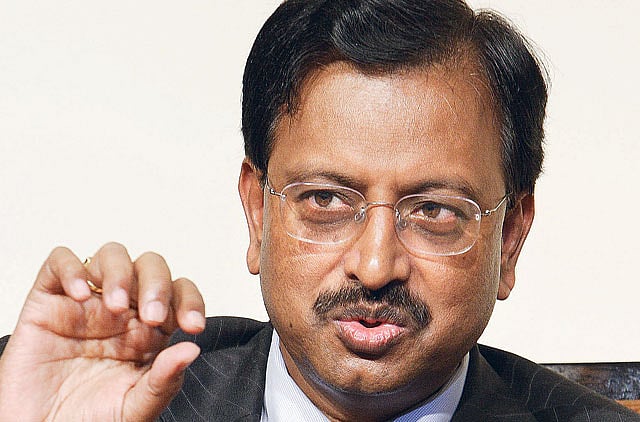
Mumbai : When B. Ramalinga Raju confessed to India's biggest corporate fraud on January 7 last year, most people thought the scandal would be fatal to Satyam Computer Services, the apparently hugely successful outsourcing company he had founded.
Yet, nearly a year later, the company survives — albeit with its name alongside that of the tractors-to-software Mahindra group, the white knight that saved it — in the form of Mahindra Satyam.
One sign that India's fourth-largest information technology outsourcing company has weathered the storm is that it remains the IT vendor for Fifa's World Cup in South Africa and the name Satyam remains as a sponsor on the international football body's website.
The notoriety of the start of the year appears to have diminished too. "We did a formal survey of [the name] and we found that people in their minds have dissociated Satyam [from] its founder," says Chander Prakash Gurnani, chief executive of Mahindra Satyam, speaking by phone while on the road in Delhi. Travel has been a big part of his life since moving from his post as head of international operations at Tech Mahindra, a joint venture with British Telecom.
Satyam's retention of customers of Fifa's standing is just one aspect of what must be one of the world's most surprising corporate survival stories. In April, Satyam became one of the first big companies in Indian corporate history to be sold without any certified financial accounts.
Challenges
While serious challenges remain — including the forthcoming results of a forensic audit, Raju's trial for fraud, and class action lawsuits in the US from investors in its Nasdaq-listed stock — its future as a going concern looks transformed from 11 months ago. It has even increased its client numbers.
What started as a potentially lethal development — not just for Satyam but for India's multibillion-dollar IT industry, whose existence relies on foreign clients trusting its integrity — has also become a case study of successful government and private sector co-operation in India to solve a crisis.
The Satyam scandal began when Raju told his board by letter he had been falsifying revenue and profits for about six years to create a fictitious cash balance of $1 billion (Dh 3.67 billion). He described the fraud, which he claimed was perpetrated merely to hide poor performance, as like "riding a tiger" — hard to get off without being eaten.
The ramifications spread. Manmohan Singh, India's prime minister, realised the news could threaten international confidence in the nation's outsourcing industry, which handles vital computer systems and business processes of huge numbers of customers half a world away. That presented a potential disaster for Singh's Congress party-led ruling coalition, which was preparing for a general election in May.
Singh raised the issue in cabinet and replaced Satyam's board with leading Indian businessmen, including banker Deepak Parekh and Kiran Karnik, former head of Nasscom, the IT industry association, who was appointed chairman of the caretaker board.
On a Sunday morning, days after Raju's letter, Karnik was asked to join the board, and at 10.30pm met his fellow directors. "The first day, I felt like I was part of a bomb disposal squad, which was sent in not knowing too much about bombs and then deciding whether to cut the red wire or the white wire," he says.
They hired KPMG and Deloitte to start the long task of restating the accounts, which is expected to be completed in the first half of 2010. Next they set about putting out fires.
Bank loans
If employees were not paid, they would desert the company, so the board appealed to clients to pay receivables early and arranged bank loans. They had to decide quickly which managers to trust. Few beyond Raju's closest circle seem to have been involved.
Karnik appealed to employees' courage in the face of adversity. "I said, ‘Look, this is a scam, it's a huge scam — but it's not a Satyam scam, as people say, it's a Raju scam'."
To reassure clients, the board offered to help them switch to another vendor if they were not satisfied with service levels, but most stayed. Raju had, ironically, developed some of the highest service standards in the sector.
The board also set out to sell Satyam to a reputable owner within 100 days in order to pre-empt defections by clients, most of whom had a 90-day cancellation clause in their contracts. Goldman Sachs volunteered to arrange the sale.
Tech Mahindra was an early bidder. Gurnani, who was chosen to take over at Satyam because of his industry experience, especially in mergers and acquisitions, says Mahindra had been considering a takeover before the scandal. It beat rival Indian bidder Larsen & Toubro and US investment company Wilbur Ross, with a bid worth $585 million.
Healing wounds
Gurnani has focused on healing wounds. Some big clients defected, but since the sale Satyam has lost three clients and added 35, to bring the total to 380. It is "cash flow positive", he says, though he declines to reveal further figures until the accounts are restated.
To re-engage the young workforce, he has ap-pointed a nine-strong "shadow board" of employees to whom he "reports" every month. "I am not the CEO, I'm the chief happiness officer," he says. He tells his staff: "I understand the [scarring] you've gone through. Let's work together to redefine happiness."
The scars, however, remain raw. Raju had hired thousands of surplus staff and in December 8,500 were laid off. The workforce of about 50,000 in January last year has since dropped to "30,000-plus", says Gurnani.
Satyam faces further knocks when Raju comes to trial, although the date remains uncertain. He and nine other suspects in the case are mouldering in jail, including two PwC auditors who have yet to be charged.
For Gurnani, the task is to remove the last traces of Raju's legacy from the Satyam name. The former chairman's plush penthouse suite at Satyam's offices remains as he left it, unoccupied and unchanged. "It is known as ‘Raju's room' and no one sits in that room. Once we increase sales, we will probably convert it into a software development centre and make it productive," Gurnani says. Then, perhaps, Satyam will be purged of the Raju legacy.
— Financial Times
Sign up for the Daily Briefing
Get the latest news and updates straight to your inbox
Network Links
GN StoreDownload our app
© Al Nisr Publishing LLC 2026. All rights reserved.