The new glasses — born from collaborations with Warby Parker, Gentle Monster and Samsung — will reportedly come in two variants.
Google bets on smart glasses in 2026 — can Android XR beat Apple and Ray-Ban Meta?
Android XR with AI could redefine wearable computing, challenge smartphone dependency
Last updated:
4 MIN READ
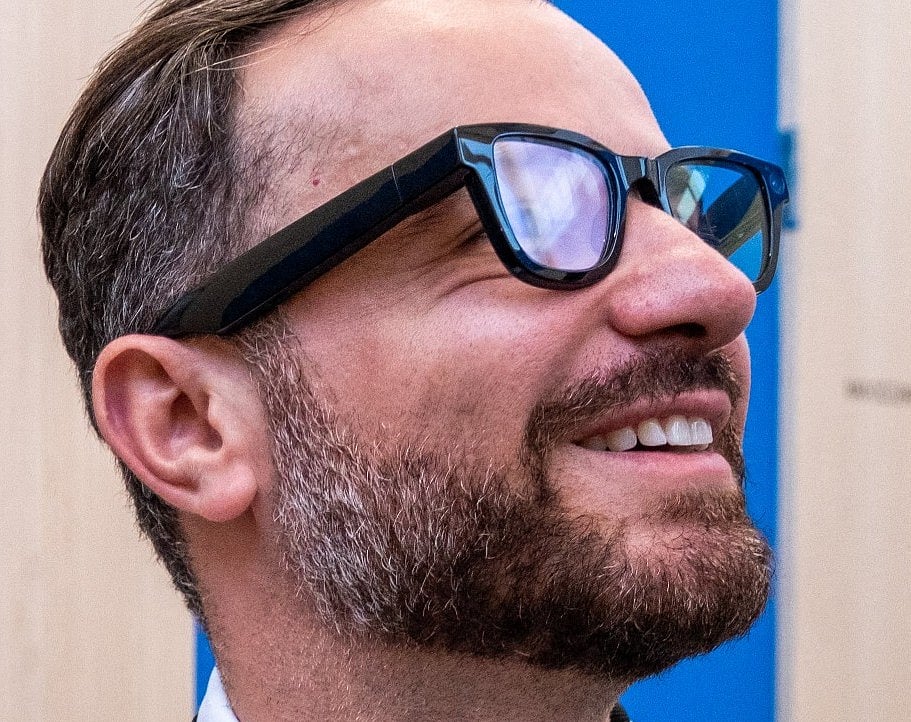
An attendee tries out a prototype of the Android XR glasses, equipped with Gemini AI during Google's annual I/O developers conference in Mountain View, California on May 20, 2025.
AFP
Google is poised to revive smart glasses in 2026. But why only now?
And whatever happened to Google Glass, with the "Explorer Edition" from 2013–2015 and later "Enterprise Edition"?
Update (ICYMI): Both had been fully discontinued, with support ending in 2023.
And now, Google is re-entering the smart glasses market with AI-powered eyewear, called Android XR.
Could Google to nail it this time? Could 2026 mark the year smart glasses go mainstream?
New products
No, these are not the old-school Google Glass — they're new products built on the modern Android XR platform and powered by Google’s Gemini AI assistant.
Tech news site MacRumors reported that Google is partnering with Warby Parker and Gentle Monster to make them both stylish and wearable.
Unlike the original Glass from 2013, these are designed to be lightweight, all-day wearables.
Wearables + AI
Unlike early Google Glass controversies (kicked up by privacy issues, awkward design), the new Android XR is designed to be fashionable, lightweight, and socially acceptable.
And this time, Google is leveraging Android XR to integrate AI capabilities.
Tech mag The Verge stated that the Android XR (extended reality) could edge toward AR (augmented reality) functionality with in-lens visuals, as per.
The Android XR competes directly with AI smart glasses like Ray-Ban Meta glasses (which focus more on audio + basic HUD features), which has already sold 2 million pairs (since October 2023 launch), with demand still "accelerating", as per CNBC.
An attendee tries out a prototype of the Android XR (extended reality) glasses, equipped with Gemini AI, during Google's annual I/O developers conference in Mountain View, California on May 20, 2025.
Two versions of Google AI glasses
Google plans to roll out two models:
1) Audio-first / Screenless AI Glasses
Built-in speakers, microphones, and cameras but no display.
Works with Gemini — you can ask questions, get help, take pictures, and get contextual information.
Designed for hands-free, everyday use without blocking your vision.
Voice interaction is central (like Google Assistant, but always available).
2) In-Lens Display Version
Adds a discreet display inside the lens —
Not a full AR headset, but enough for things like navigation cues, live translations, subtitles, notifications, and contextual info.
Lightweight
Closer to normal glasses than heavy headsets.
Connectivity with your phone
Both variants will connect to your smartphone for processing power (so the glasses themselves stay light).
With these two models, Google is joining the fray in smart glasses.
The market for smart glasses is heating up: Ray-Ban Meta already sold over 2 million pairs worldwide as of mid-2025, as per Accio.
Sales momentum has been strong enough that the company is planning to scale annual production capacity to ~10 million units by end of 2026 to meet expected demand.
In the first half of 2025, revenue from Ray-Ban Meta glasses more than tripled compared with the same period last year, indicating accelerating demand, per CNBC.
Other strong options
Google’s entry will directly challenge Meta’s dominance. This could redefine wearable computing and challenge smartphone dependency, say tech industry media. There other options out:
Xreal (AR displays)
Viture (AR displays)
Snap Spectacles (social/AR fun)
Rayneo (budget-friendly).
Meta's Ray-Ban glasses come with strong AI features like real-time assistance and stylish Ray-Ban frames.
Could it succeed now?
Advancements in AI — particularly Google Gemini integration — enable lighter, more subtle hardware with features like hands-free navigation, real-time translation, and contextual notifications.
Partnerships with Warby Parker, Gentle Monster, and Samsung yield two variants: an audio-first, screen-free model and one with in-lens displays.
Android XR provides a mature platform, addressing past flaws amid rising demand for AR alternatives to phones. Analysts project strategic timing as the AI/AR glasses market heats up.
| Product | Price | Key Functions |
|---|---|---|
| Ray-Ban Meta | $299 | Camera, AI audio, calls, music |
| Apple Vision Pro | $3,499 | Full AR/VR immersion, spatial computing |
| Xreal Air 2 | $399 | Display mirroring, lightweight AR |
| Google Android XR (upcoming) | ~$400–600 est. | AI assistant, XR apps, ecosystem integration |
What we know so far:
Platform: Android XR
These glasses run Android XR, the same platform behind Google’s extended reality ecosystem (used in mixed reality headsets like Samsung’s Galaxy XR).
Android XR aims to unify apps for XR glasses, headsets, and other spatial devices, making development easier, Android Central reported.
What this means: Developers will be able to build apps that leverage AI + spatial awareness.
AI & functionality
Gemini AI integration
Gemini provides multimodal AI comprehension — voice, image, and environment understanding.
You’ll be able to ask questions about what you’re seeing (“What is this?” / “Translate this sign.”) and get real-time answers.
Real-time language translation and contextual awareness are core features.
The glasses may offer real-time guidance, object recognition, and situational assistance without pulling out your phone.
Strengths vs weaknesses
Strengths include AR overlays for productivity, seamless assistance, and photography as intuitive as blinking.
Early reviewers say this could potentially shift users from handheld screens to always-on eyewear.
Challenges
A big one is battery efficiency.
There are also concerns about privacy safeguards, social acceptance, and risks like eye strain — issues that demand rigorous testing for mainstream viability.
Why Android XR glasses
✅ AI all the time — speaks to Gemini anywhere without opening a phone
✅ Hands-free contextual help — real-world assistance like translation or navigation
✅ Better design — modern materials, normal glasses form factors
✅ Platform synergy — Android XR + Google apps + smartphone connectivity
Launch
Launch is expected in 2026.
Google has confirmed production timelines and partner product plans.
Pricing
Still early: Google hasn’t announced pricing or exact specs yet as of now.
Sign up for the Daily Briefing
Get the latest news and updates straight to your inbox
Network Links
GN StoreAbout Gulf NewsTerms & ConditionsReach by GNSitemapContact usPrivacy PolicyGN FocusHave your sayWork with usAdvertise with usGulf News epaperPrinting Services
Download our app
© Al Nisr Publishing LLC 2026. All rights reserved.