Deep-sea breakthrough: Japan becomes first to find rare earths on the ocean floor
Chikyu, Japan’s deep-sea drilling vessel, explores the ocean floor for rare earths
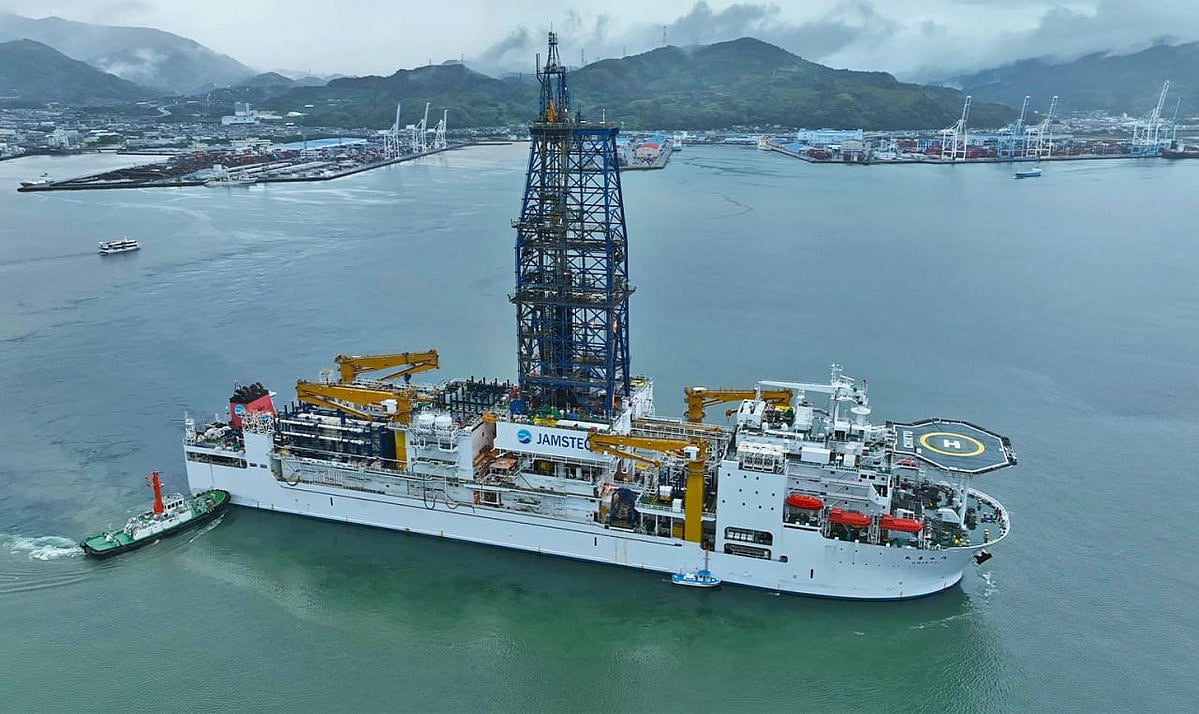
In a thrilling leap into the abyss, Japan announced on Monday (Februray 2, 2026) that it has successfully hauled up sediment laced with rare earth elements from the crushing darkness nearly 6,000 metres beneath the Pacific waves — a feat never before achieved on Earth’s ocean floor.
This astonishing sample came not from a miner’s pit, but from the deep ocean itself, captured by Japan’s formidable deep-sea scientific drilling vessel, the Chikyu — a ship built for exploration at extremes and now at the forefront of a geopolitical scramble for critical resources, Nikkei Asia reported.
Meaningful achievement
“Details will be analysed, including exactly how much rare earth is contained in the sample,” government spokesman Kei Sato said, framing the discovery as both an economic and strategic milestone.
The find is dubbed as “a meaningful achievement both in terms of economic security and comprehensive maritime development.”
World-first
Japan’s government said this mission — the world’s first attempt to retrieve rare earth-rich sediment from such crushing depths — marks a potential turning point in securing metals critical to modern life.
The ship at the heart of the mission
The Chikyu (literally “Earth” in Japanese), operated by the Japan Agency for Marine-Earth Science and Technology (JAMSTEC), set sail last month from Shimizu Port toward the remote waters surrounding Minami Torishima Island, more than 1,900 km off Japan’s east coast.
Equipped with advanced drilling systems and sediment-lifting technology, the vessel reached depths where light never penetrates and pulled up muddy deposits believed to hold rare earth elements — the metals that power everything from electric vehicle motors and wind turbines to smartphones, lasers and missiles.
What this breakthrough means
The implications of this underwater breakthrough are vast:
Strategic independence
Japan has long relied on imports, especially from China, which dominates global rare earth processing. By unlocking its own seabed deposits, Tokyo may reduce vulnerability to supply disruptions — a pressing concern amid rising regional tensions.Economic and technological edge
Rare earths aren’t actually rare, but they are difficult and expensive to extract and refine. Japan’s success could spur new industries in deep-sea resource technology, creating jobs and boosting high-tech supply chains.Environmental questions loom
Deep-sea mining technology remains experimental, and environmental advocates warn that disturbing deep ecosystems could have unknown consequences for marine life and ocean health.
As the world watches, officials plan to analyse the haul from the Chikyu to determine how rich the sediments really are — and whether this daring ocean mission will herald a new era of resource independence… or unleash new, deeper challenges beneath the waves.
Sign up for the Daily Briefing
Get the latest news and updates straight to your inbox
Network Links
GN StoreDownload our app
© Al Nisr Publishing LLC 2026. All rights reserved.