Tablets translated
Overwhelmed by the sudden deluge of tablets? Not feeling the love for the iPad any more? GN Focus technophiles Priya Mathew, Gareth Kurt Warren, Farhan Hasan and Anirban Bagchi tell us what's impressed them
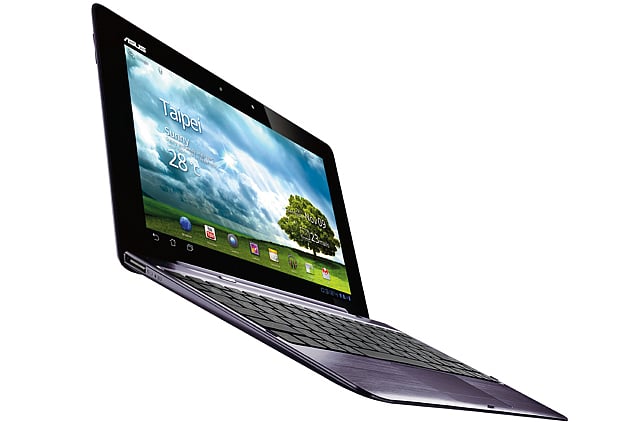
Asus Transformer Prime
iPad users have tormented the rest of us with claims of their tablet being the best in the world, while other prospective tablet buyers nodded silently, waiting patiently for someone to come along and redeem us. Thankfully, Asus answered our pleas with the NVIDIA Tegra 3 quad core-powered, Ice-Cream-Sandwich OS Transformer Prime.
Available soon in the UAE, (at Emax and leading retailers), the Prime comes in Amethyst Grey or Champagne colours; fancy names for purple and gold. The Prime feels as a superior tablet should — solid and meaty at 586g. Unfortunately, when docked in its keyboard, it is rather top-heavy and can tip over if we get too excited while swiping the screen.
Around the edge of the tablet is a mini HDMI port, a volume rocker, a microSD memory card slot, reset and microphone pinholes, the on/off button and a 3.5mm audio jack. The Prime is slightly heavier than the Samsung Galaxy 10.1 but slimmer than the iPad by 0.5cm, and lighter by 27g. The 1.2-megapixel front camera is accompanied by an eight-megapixel rear camera with flash that can record 1080p high-definition video.
The keyboard is chock-full of surprises — it runs on a second battery and has a USB2.0 slot as well as an SD card reader around its edge. The keyboard battery has quite an impressive feature — it helps charge the tablet when the battery is low.
Among the different tablets of all shapes and sizes that have been lying around the office over the past few weeks, I feel the Prime trumps them all. It would even give the Samsung 10.1 a run for its money. If you are in the market for a laptop, pick up the Prime, and if you are in the market for a tablet — pick up the Prime.
— G.K.W.
Sony Tablet S review
Considering how late an entrant Sony is to the global tablet market, it had to come up with something a little different. Ever since Apple first sprang the iPad on the world, almost every major manufacturer has put its own variation of the tablet out there — and some of them have been brilliant ones. And even some not-so-major others, made perhaps in the back alleys of Taipei or in a cottage in a Shanghai suburb, have beaten the Japanese giant to the market with a gadget that is fast becoming the most ubiquitous after the mobile phone.
Looking at the Tablet S, however, you realise that in the two years it has taken Sony to enter the tablet market, the company's boffins have been holed up somewhere trying to cut down in one fell swoop the lead that the company had conceded.
The first thing they addressed was the form. While everyone and his Taiwanese cousin was running after the iPad's slim silhouette — with some such as Samsung beating Apple at its own game — Sony has taken itself out of the slimming race by opting for a chunky, ergonomic wedge-shaped design.
Instead of razor blade thinness, the Tablet S is a curvaceous device that looks very much like a magazine with the cover folded back. This makes it thin on one side and thicker and rounded on the other. Which means when you lay it down on a flat surface, such as a table top, it does not lie flat but inclines upwards towards you. This ergonomic feature enables better viewing and also makes typing easy on the on-screen qwerty.
Paradoxically, the bulk improves ease of portability as its grooved black plastic back — coupled with a 600g weight and the book-like design — makes it easy to grip with one hand for browsing or reading e-publications — especially useful while using public transport.
The innards of the tablet, however, sport the same run-of-the-mill tablet architecture — a dual-core 1GHz Tegra 2 processor running Android 3.2.1, 1GB of RAM, a 9.4-inch capacitive touch screen, an SD expansion slot and a 16GB (Dh1895) or 32GB (Dh2295) storage capacity.
But the winning feature would be the S making use of its unique Sony advantages — such as a PlayStation certification, which enables users to access a range of exclusive titles on the website and play them on the device. When you consider that there is also a fast-expanding game collection on the Android marketplace, the combination of Android and PlayStation games makes the Tablet S the undisputed king of gaming in the tabletosphere.
Another outstanding feature is the universal remote app, which transforms the tablet into a remote commander for all of your Sony gadgets. Sit back in your favourite armchair and control your Sony TV, BluRay player and even your PS3 with the swish of a finger.
The coup de grâce of all features was the DLNA-enabled wireless throwing of content. Connect the tablet to a home network of DLNA-enabled devices and just swipe content from one device to another. For example, you can throw that viral video saved in your laptop to the TV screen to view. This feature effectively turns the Tablet S into your home's entertainment hub.
In conclusion, the Tablet S is a product that competes well with others in its league on features and quality, and outcompetes them in certain spheres such as design and features such as the PlayStation and content ‘throwing'. It is a product that joins the bandwagon but keeps a distinct identity; it's a Sony first and a tablet next. Whether that will pull in buyers remains to be seen.
— A.B.
Samsung Galaxy Tab 7.7
So Samsung has released yet another tablet. The 7.0, 8.9, and 10.1-inch versions have now been joined by a sleeker yet similar 7.7-inch one (prices start at Dh2699). One can't help but feel a little curious about their business strategy; surely it's pretty expensive to produce lots of different tabs frequently.
In any case, lack of consistency aside, this tablet looks and feels more serious than its predecessors, with a reduced border and steely back. Visuals are enhanced with a 1280x800 display (more pixel density than any other tab on the market) and a super AMOLED plus panel. Remarkably it weighs only 335g compared to the 600g iPad 2. Battery life is a stunning ten hours. The 7.7 is a supercharged version of sorts and almost makes the first generation Galaxy tab seem prehistoric. The dual-core processor enables full 1080p HD playback and a theoretical (depending on your region and telecom provider) download rate of 21Mbps — not likely in Dubai but still enough to turn up the speed a few notches.
It also runs Android 3.2, a more refined version of Honeycomb, and is also overlaid with TouchWiz UX, Samsung's own optimised operational variation. As a result, apps and games that would not feel at home in a small tab flourish. This tablet is as portable as they get — pocket-sized unless you wear skinny jeans, but the capability of the device rivals that of those twice its size. Its closest competitor is probably either the 8.9-inch tab or the Samsung Note — cannibalism, anyone?
— F.H.
Lenovo ThinkPad
Chunkier than most tablets at 10.3x7.2x.6 inches, Lenovo's ThinkPad may not go down too well with people who have an eye for things small and beautiful. Neither will operating the four clunky buttons on the side for those clamouring for performance. But once you start exploring, things take a turn for the better. With about 25 preloaded apps, you are good to start from the word go. For better control, there's the digitiser pen, though the intermittent unresponsiveness of the display may jar. So will the five-to-ten second delay in registering orientation change from landscape to portrait for people used to the iPad. But with 3G connectivity, Wi-Fi and access to business apps and virtual desktops through Citrix, ThinkPad can effectively act as an extension of your work PC/laptop. The tablet also meets data protection and security needs with full-device and SD card encryption and a pre-enabled Computrace Mobile app that tracks down lost devices and deletes confidential data.
The ThinkPad uses the extra input options available with the Android 3.1 Honeycomb OS to its best advantage. That explains the bulkiness, but with two USB ports and a built-in SD card for easy transfer of files, as well as an HDMI port, people looking for functionality won't complain.
If your job involves handling reports and presentations, pre-installed app Documents to Go helps edit or create Office documents on the move. If you would rather write than type with the touch screen, you can fall back on the digitiser pen, which converts your handwriting into digital text with the FlexT9 application — that is if you are blessed with good penmanship; its Optical Character Recognition is good, but not that good. If writing seems like too much work, buy the Keyboard Folio Case for easy typing. Or send a handwritten note to someone by using Notes Mobile to retain the personal touch.
All in all, with a Nvidia Tegra 2 dual-core 1GHz processor, a decent battery life of eight hours and a sturdy design, ThinkPad has the makings of a good companion for professionals on the move. But at about Dh2,900 for a 32GB tablet, you would want a lighter, sleeker and a better-performing one.
— P.M.
Sign up for the Daily Briefing
Get the latest news and updates straight to your inbox
Network Links
GN StoreDownload our app
© Al Nisr Publishing LLC 2026. All rights reserved.