1 million AI satellites: SpaceX's insane plan unveiled
Elon Musk's team pushing to transform outer space into the ultimate AI powerhouse
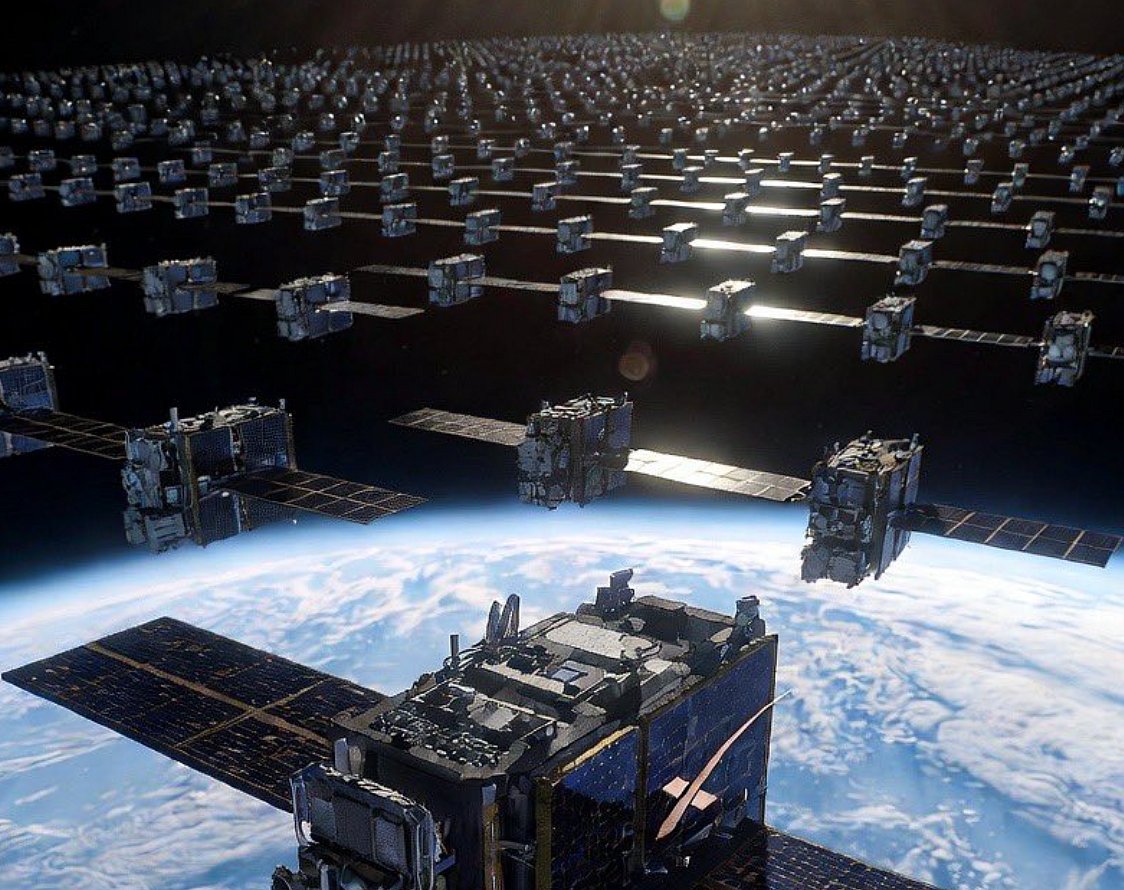
SpaceX is pushing to transform outer space into the ultimate AI powerhouse, a move that has sparked both excitement and alarm.
The groundbreaking plan: send up to 1 million satellites that will work as data centres.
It's a sweeping new request with US regulators.
The plan forms part of Elon Musk's vision that would transform Earth’s orbit into a vast network of AI-powered orbital data centres with unprecedented computing capacity.
Based onthe filing with the Federal Communications Commission (FCC), the proposed constellation would go far beyond communications.
SpaceX says the satellites would function as space-based computing nodes, designed to power advanced artificial intelligence applications on a global scale while laying the groundwork for humanity’s long-term expansion into space.
Solar powered high-tech birds
These high-tech birds would harness near-constant solar energy, slashing costs and environmental footprints compared to Earth-bound facilities, as per FinTech Weekly.
That would amount to a vast constellation orbiting between 500 and 2,000 km above Earth, processing massive AI workloads, machine learning, and edge computing.
High-speed laser links would weave them into the Starlink network, enabling petabit-level data transfers zipped to ground stations worldwide.
AI data centre demand explodes
Why 1 million AI satellites?
SpaceX argues that terrestrial infrastructure can't keep pace with exploding AI demands, positioning this as a leap toward multi-planetary humanity.
In unusually grand language for a regulatory submission, SpaceX framed the project as a civilizational leap.
“Launching a million satellites that operate as orbital data centers is a first step towards becoming a Kardashev II-level civilization—one that can harness the Sun's full power—while supporting AI-driven applications for billions of people today and ensuring humanity's multi-planetary future amongst the stars,” the company said.
Reactions
Reactions are pouring in fast.
Tech enthusiasts hail it as a "gateway to Mars," while skeptics joke about birthing Skynet from Terminator lore – an always-on AI with lasers?
“I've seen this movie,” quips one user.
Environmental concerns loom too: fears of light pollution trashing astronomical views and cluttering orbits like a real-life WALL-E scenario.
Critics question Elon Musk's unchecked influence, urging fixes for Earth's hunger and inequality before blasting intelligence into the void.
Space’s untapped potential
Yet, proponents see untapped potential.
Space's cold vacuum and endless solar power could solve energy bottlenecks, accelerating innovations in everything from climate modeling to personalized medicine.
As AI races ahead, this orbital shift might redefine computing – but at what cosmic cost?
If approved, expect launches ramping up soon. Buckle up: the stars are about to get a lot smarter.
Sign up for the Daily Briefing
Get the latest news and updates straight to your inbox
Network Links
GN StoreDownload our app
© Al Nisr Publishing LLC 2026. All rights reserved.