How Infantino and the Kushner family could benefit From FIFA’s controversial proposal
FIFA plans to bring investors into a new commercial entity valued at around $20 billion
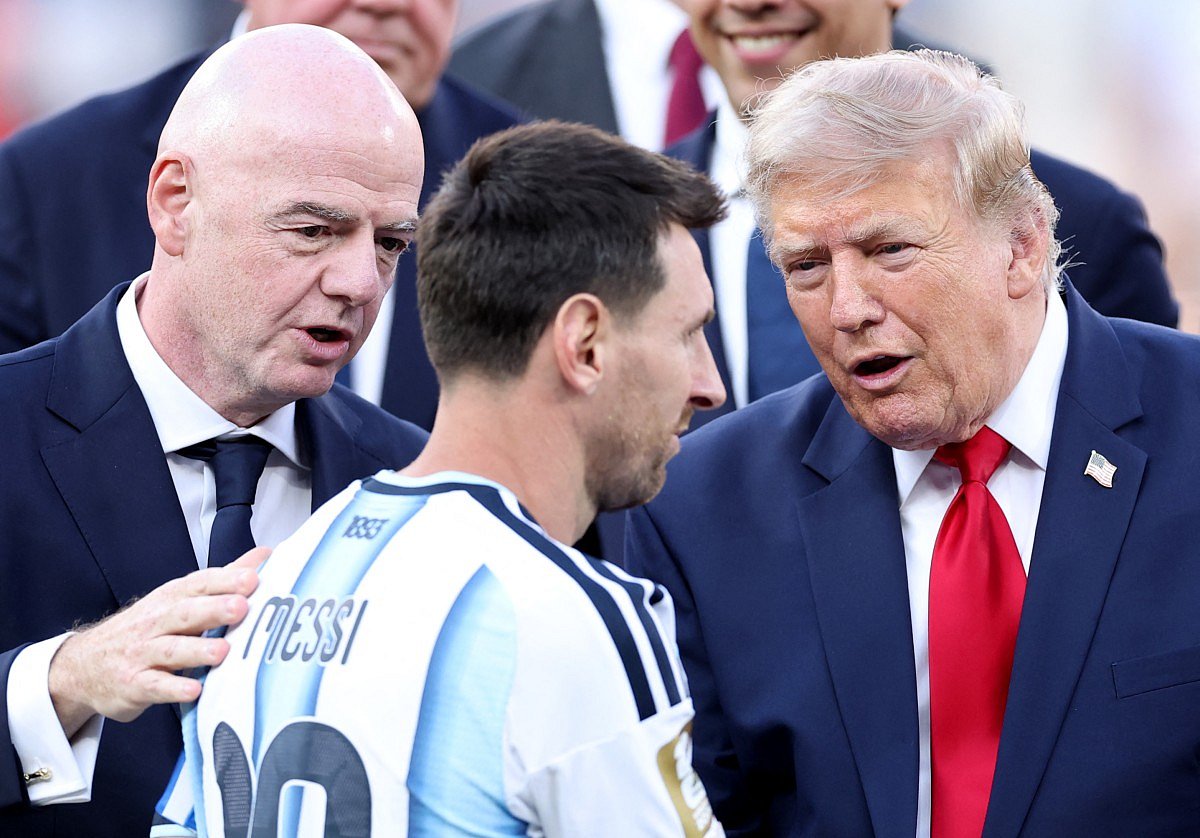
The FIFA World Cup has suddenly found itself at the centre of a heated debate over ownership, private investment and the future governance of football’s biggest tournament.
FIFA’s plans to bring private investors into a new commercial entity valued at around $20 billion have triggered an immediate backlash. UEFA, European football’s governing body, has warned that the sport’s premier competition should not be treated as an asset that can simply be put up for sale.
At the heart of the controversy is a proposal championed by FIFA president Gianni Infantino to establish a new commercial company, known as FIFA Forward Enterprise. The entity would oversee the commercial operations of major FIFA competitions, including the men’s and women’s World Cups and the Club World Cup.
What is being proposed?
Under the proposed structure, private investors could acquire minority, non-controlling stakes in the business. The move could potentially raise billions of dollars for FIFA, with Joshua Kushner’s investment firm, Thrive Capital, reportedly among the potential cornerstone investors.
FIFA, however, has stressed that it would retain control over football governance and sporting decisions. Critics remain unconvinced, arguing that bringing private capital into the commercial heart of the World Cup could fundamentally change how the world’s biggest football tournament is financed and operated.
Why is the Kushner family involved?
One of the most politically sensitive aspects of the proposal is the reported involvement of Joshua Kushner, the American technology investor and founder of Thrive Capital.
Kushner is the younger brother of Jared Kushner, the son-in-law of US President Donald Trump. The family’s political and business connections have added another layer of scrutiny to an already controversial proposal.
The close relationship between Trump and Infantino has also attracted attention, particularly following the men’s World Cup that concluded this month. Their public association has fuelled questions about the potential political and business interests surrounding FIFA’s plans, including concerns raised in European football circles.
From an investor’s perspective, however, the attraction is clear. The World Cup is one of the most powerful sports brands in the world, generating enormous revenues through broadcasting rights, sponsorships, ticketing, hospitality and licensing.
A minority stake in a business controlling commercial rights connected to the World Cup could potentially become a highly valuable long-term investment.
The opportunity could also give investors a front-row seat to the continued expansion of football’s global commercial ecosystem, particularly as FIFA explores new markets, digital platforms and additional revenue streams.
How could Gianni Infantino benefit?
The biggest questions surrounding the proposal concern Infantino himself.
As FIFA president, he is widely viewed as the driving force behind the organisation’s efforts to restructure its commercial operations. FIFA maintains that football governance would remain firmly under its control, while the proposed commercial entity would focus on increasing revenues and improving their distribution to national associations.
For Infantino, the restructuring could strengthen FIFA’s financial position while creating a new mechanism to generate and distribute more money across the global football ecosystem. But the proposal could also have significant implications for his own future.
Infantino could reportedly take on a senior role, potentially as commissioner or chief executive of the new company, after his final term as FIFA president ends in 2031. While the exact compensation package has not been finalised, sources have suggested that the role could carry a salary comparable to that of the NFL commissioner, reportedly around $64 million a year.
Such a figure would represent a dramatic increase on Infantino’s current FIFA compensation.
According to FIFA’s financial disclosures, Infantino’s annual earnings include a base salary of around $3.3 million and a performance-related bonus of approximately $2.8 million, taking his total compensation to roughly $6 million.
If he were to move into a lucrative executive position at the new commercial entity, questions could inevitably arise over potential conflicts of interest and whether the restructuring could create a financial pathway for FIFA’s current president after he leaves office.
UEFA leads opposition
The strongest opposition to the proposal has come from UEFA, which has reportedly taken a sharply critical stance.
European football’s governing body has argued that football should not be treated as an asset that can be owned, traded or sold by FIFA officials.
“This crosses a line that football’s governing institutions should never cross,” UEFA said in a statement.
“UEFA takes it extremely seriously. So should every national football association. So should every stakeholder: leagues, clubs, players, supporters, governments and everyone who cares about the future of the game.
“The soul and governance of football are not assets to trade – especially with zero transparency as to who gains financially. None of us are the owners of football. It is not FIFA’s to sell.”
The criticism has also extended beyond European football’s governing structures.
UK Prime Minister Burnham reportedly posted on X: “The World Cup is not a product. It is the greatest competition in world sport, and it was never anyone’s to sell. Dress the deal up however you like. Once you have sold a piece of it, you have sold out. Football belongs to the fans. It always has, and it always will.”
Network Links
GN StoreDownload our app
© Al Nisr Publishing LLC 2026. All rights reserved.