World Cup for sale? FIFA is risking football magic for more money
All sports fans should be worried about the commoditisation of the beautiful game
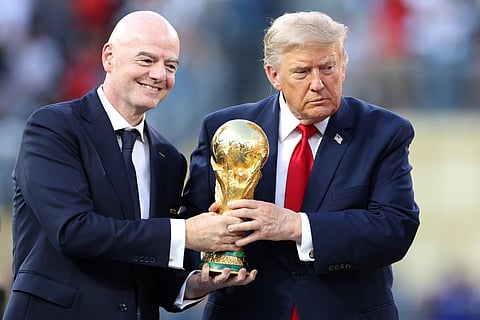
Picture the scene: Gianni Infantino stands on stage and announces that the air footballers breathe during games was being moved into a new commercial entity to "unlock shareholder value". The room doesn't bat an eyelid. Shareholders will be happy.
The latest idea emerging from FIFA's corridors of power is to create a new company to manage the commercial rights to the World Cup and other major tournaments, with a minority stake sold to private investors. The governing body insists it would retain control, while the billions raised would be distributed among its 211 member associations to grow the game.
It all sounds perfectly reasonable; a business case that looks and sounds great on a presentation. I'm sure the boardroom applauded and patted each other on the back. Everyone will be the richer for it.
The problem with these presentations is they rarely include a slide at the end titled "what could possibly go wrong?".
Football has become spectacularly good at convincing us that every decision is about 'growing the game'.
Expand the tournament? Growing the game. More matches? Growing the game. A Club World Cup that lasts longer than some people's summer holidays? Growing the game.
What does 'growing the game' mean anyway? Top-flight football doesn't have a revenue or a scale problem. It has a remembering-what-made-it-special problem.
The World Cup is one of the last truly global sporting events that belongs to everyone. The recent tournament saw nations celebrating together, rich and poor, young and old. It is a brilliant event, but I hear few people say it was better than previous World Cups because, quite frankly, the game hasn't changed. 11 v 11 with two goals and one ball.
More and more noise comes with the tournament every four years. But every four years we all eventually forget and ignore the usual politics, commercial stunts and grand statements, and switch on when the matches kick off. It's just like it's always been. We love the game, not the branding.
Sport is a form of magic. The moments it brings cannot be measured on a spreadsheet. Football grows because people love it, not because of a brand partnership.
And that's where privatisation feels so uncomfortable. Growth won't be measured in the number of people who care about the game, but the number of people paying (and how much they pay) for 'experiences' and merchandise.
Private capital is rarely satisfied with steady returns. Investors don't gather around a boardroom table saying, "Let's keep everything exactly as it is." They demand growth and a return on their investment.
That could mean more tournaments, more games, more sponsorship inventory, more hospitality packages... more of everything. Critics have already warned that commercial interests could place increasing pressure on decisions about tournament expansion and scheduling, even if FIFA insists sporting control will remain with the governing body. How can these world-class players possibly play more games?
Of course, FIFA argues that billions raised from investors would help develop football across the globe, and few would disagree with supporting smaller nations or grassroots facilities. I'd like to see how much of the World Cup money has gone into these projects already. Good intentions don't automatically justify changing the ownership model of the sport's greatest prize.
The World Cup should be a celebration of football and of sport as something that can genuinely change the world for the good. Putting a price tag on it diminishes its value and alienates those who make it so special.
Let's hope common sense prevails before any investment cheques are cashed.


