A view of the Clark International Airport (IATA code: CRK), an aviation gateway in Pampanga and a laureate of Prix Versailles' 2023 list of the World's Most Beautiful Airports. It is set to be linked to Manila via a $15.4-billion commuter railway. CRK forms part of the New Clark City (NCC) designed as an alternative to the notoriously congested Philippine capital.
EXPLAINER
Why the Philippines needs more free port zones — and a change of heart
Few freeports, many inland ecozones, uneven regional development
Last updated:
6 MIN READ
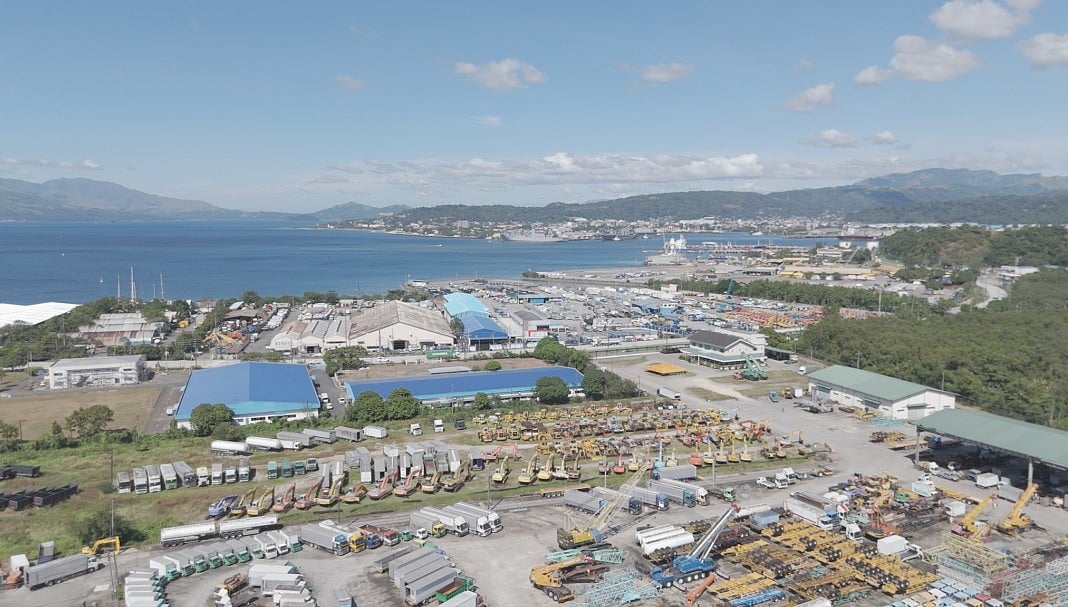
A view of the Subic Bay Freeport Zone (SBFZ) north of Manila is a special economic and tourism hub in the Philippines, located across Olongapo City, Zambales, and Bataan. Built on a former American naval base, it is now a bustling economic zone managed by the Subic Bay Metropolitan Authority (SBMA) offering duty-free shopping, lush rainforests, and safe business environments.
SBMA
The Philippines is a nation of remarkable scale and diversity. Home to more than 116.8 million people, it spans 300,000 km2 — an archipelago so vast that its land area is ten times larger than Belgium's.
The country combines the demographic weight of a major global population with the geographic complexity of one of the world's largest island nations. The country has nearly four times the population of Canada.
More importantly, the country has a staggering 36,289-km coastline, over 15 times longer then Germany's due to its vast archipelago of 7,641 islands of islands.
Filipinos are gritty, resilient people.
By the millions, they pack their bags to work in faraway shores and support loved ones back home.
They face every disaster — natural or manmade — with resilience.
Despite their collective strength, governance is currently weak, owing to a deep-rooted culture of corruption, in part due to overcentralisation.
Things are improving. Recent legislative reforms continue to build on past gains and fill gaps.
The country's economy, marked by underinvestment in agriculture, infrastructure and key industries, is beset by institutionalised dishonesty via "tongpats/balato" on one hand, bureaucratic red tape and "resbak" — impunity — especially toward whistleblowers, who currently lack legislated protections, on the other.
Its laws are designed to keep the primacy of Manila in every major policy and economic decision-making.
Its abundant mines, laden with critical minerals, are currently ringfenced by the mighty. In the provinces as well as the cities, the resentment is palpable.
Kickbacks have become "standard": they're illegal under Republic Act 6713, but state projects are weighed down by "SOP" (standard operating procedure), estimated at up to 40% of the total project cost.
Business rules, and high electricity rates discourage investments; a well-structured financial support for innovation is absent.
Much work needs to be done on these fronts.
Despite being an archipelago, the Philippines has relatively few major "free port" zones.
Mindset issue
It's a cultural baggage: the country's legal and economic systems are historically land-based.
It relies on a token distribution of "ecozones", hundreds of scattered, inland Special Economic Zones for trade.
The result: a highly developed Calabarzon and the National Capital Region, and a dearth of opportunity in the rest, with the rare exception of the special economic zone in Zamboanga, in the country's "far" southwest.
The Zamboanga City Special Economic Zone and Freeport, created by Republic Act 7903 of 1995, is seen as an economic driver in the Zamboanga Peninsula.
Currently, it has 20 "locators" operating across a variety of industries, ranging from industrial manufacturing and agriculture to business process outsourcing (BPO).
The free port zone continues to expand: ongoing development of the West Corporate Centre attracts additional IT-BPM and financial locators, alongside the massive San Ramon Newport project, ₱14.82-billion international seaport in Talisayan, Zamboanga City envisioned as the main trade and industrial centre for the Zamboanga Peninsula.
It would Mindanao's first freeport.
The Zamboanga City Special Economic Zone, created under Republic Act 7903 of 1995, is seen as a key economic driver in the Zamboanga Peninsula by attracting more investors and creating jobs. The zone is seen as a key economic driver in the Zamboanga Peninsula, attracting investors and creating jobs. Currently, it has 20 "locators" operating across a variety of industries, ranging from industrial manufacturing and agriculture to business process outsourcing (BPO).
The scarcity of standalone freeports versus standard ecozones comes down to a land-based economic philosophy.
Historically, the Philippine government has prioritised land development, land transport, and centralised economic growth, despite its vast archipelagic territory.
Its shipbuilding industry is severely underdeveloped, ironic for an archipelago. Even more ironic: most of the 400 or so Philippine "ecozones" are inland.
FREE ZONE vs ECOZONE: Free Zones are specialised, geographically defined jurisdictions that allow 100% foreign ownership and unique tax exemptions. The term Ecozones (or Special Economic Zones) generally refers to industrial clusters or international models (like PEZA in the Philippines).
The Philippines has only five legislated freeport zones with broad customs and fiscal privileges: Subic Bay, Clark, Bataan, Poro Point (La Union), and Zamboanga City.
Here's the rub: Four of these are located on Luzon island, and are clustered relatively close to Metro Manila.
This leaves much of the Visayas and Mindanao (50 million combined population, as per 2024 Census of Population) without comparable freeport-scale investment gateways.
This has created resentments among the "outliers".
General View of Subic Bay, home of the Subic Freeport Zone.
By contrast, the Philippine Economic Zone Authority (PEZA) administers more than 400 operating economic zones (ecozones) nationwide.
These are typically smaller industrial estates, IT parks, manufacturing parks and logistics hubs designed to disperse investments.
Still, most of them are clustered around or near Manila.
A sense of proportion
Elsewhere in Asia, Singapore has built its success around world-class free trade and bonded logistics facilities integrated with one of the world's busiest ports and airports.
General location of "ecozones" in the Philippines, under the Philippine Economic Zone Authority (PEZA). While PEZA zones provide fiscal incentives and streamlined regulation, they generally do not enjoy the broader customs autonomy and freeport powers granted to legislated freeport authorities.
Hong Kong functions as an almost entirely free-port economy with minimal customs barriers and efficient trade facilitation.
Malaysia has likewise established multiple Free Industrial Zones and Free Commercial Zones, including those in Penang, Port Klang and Johor, to attract export-oriented manufacturing and regional distribution hubs.
The concentration of the country's principal freeports contrasts sharply with international competitors.
Dubai, whose land area is considerably smaller than the Philippine province of Camarines Sur, has developed more than 30 specialised free zones, each serving industries such as finance, logistics, aviation, healthcare, media, technology and maritime services.
Across the UAE there are more than 40 free zones competing to attract multinational firms, global headquarters and advanced manufacturing.
In the grip of a Manila-centric mindset, Filipinos have been conditioned to believe their role is merely to watch from the sidelines as their neighbours surge ahead — content to export their talent rather than build prosperity at home.
Filipinos, in turn, flock to these freeport-driven economies in search of work, taking jobs as domestic helpers or skilled tradespeople.
JOB CREATION: The Subic Bay Freeport Zone provides employment for 171,653 workers across 4,744 registered firms as per PIA data. This includes both direct jobs created by these companies and additional workforce growth following significant investments by locators.
Simplifying customs
The World Bank has long cited Singapore, Hong Kong and Malaysia as examples of economies that successfully used free zones and simplified customs regimes to integrate into global supply chains.
International experience shows that well-managed freeports can generate substantial economic benefits.
They help attract foreign direct investment, create export-oriented industries, expand employment, facilitate technology transfer, improve logistics efficiency and strengthen a country's position in regional and global supply chains.
In the Philippines, PEZA reports that its economic zones account for a significant share of merchandise exports while employing well over a million workers.
This demonstrates how investment incentives can support industrial development and joc creation when combined with reliable infrastructure and regulatory stability.
A view of the Port of Zamboanga in southern Philippines. The port itself is located away from the Zamboanga City Special Economic Zone Authority and Freeport. The ₱14.82-billion San Ramon Newport Project, spanning a land area of more than 20 hectares, is being developed as a world-class seaport within the ZAMBOECOZONE, the first such free port in Mindanao, a vast, mineral-rich island group roughly the size of Denmark, Switzerland and the Netherlands combined.
Freeport and special economic zones do present important challenges.
Governments must balance generous tax incentives against potential foregone revenues, ensure that incentives produce genuine new investment rather than simply relocating existing businesses, prevent regulatory arbitrage and smuggling.
There's a need to keep a strong customs oversight, and avoid creating isolated enclaves that generate limited economic spillovers for surrounding communities.
How freeport zones could succeed
International institutions have emphasised that free zones succeed only when they are supported by efficient governance, transparent regulation, modern infrastructure, skilled labour and strong links to the domestic economy.
Tax incentives alone rarely compensate for unreliable (and expensive) electricity, weak transport networks or bureaucratic inefficiency.
In the Philippine setting, the establishment of new legislated freeports generally requires congressional approval because these zones are granted broader customs, taxation and administrative powers than ordinary PEZA economic zones.
Freeports: To limit or expand?
Instead of building massive new freeports to spread opportunity across the archipelago, the current thinking is to limit such hubs, innovation drivers and job mulitipliers, for fear of limiting Manila's authority.
Policymakers have often argued that limiting the number of freeports helps protect the national "tax base" and maintain oversight over customs exemptions.
Critics, however, contend that the concentration of major freeports in Luzon has constrained regional industrialisation and contributed to the continued concentration of investment, infrastructure and economic activity around Metro Manila.
Should the pivot to a new thinking? Must it expand the number of freeports to accelerate development elsewhere?
The answer lies elswhere: it would depend not only on granting fiscal incentives but also on parallel investments in ports, airports, highways, power, water, digital connectivity and improving governance.
Sign up for the Daily Briefing
Get the latest news and updates straight to your inbox
Network Links
GN StoreAbout Gulf NewsTerms & ConditionsReach by GNSitemapContact usPrivacy PolicyGN FocusHave your sayWork with usAdvertise with usGulf News epaperPrinting Services
Download our app
© Al Nisr Publishing LLC 2026. All rights reserved.