Senate walkout rocks Philippine politics: Why minority Senators stormed out — what's next
Rule-change clash sparks rare Senate shutdown amid fears of ‘tyranny of numbers’
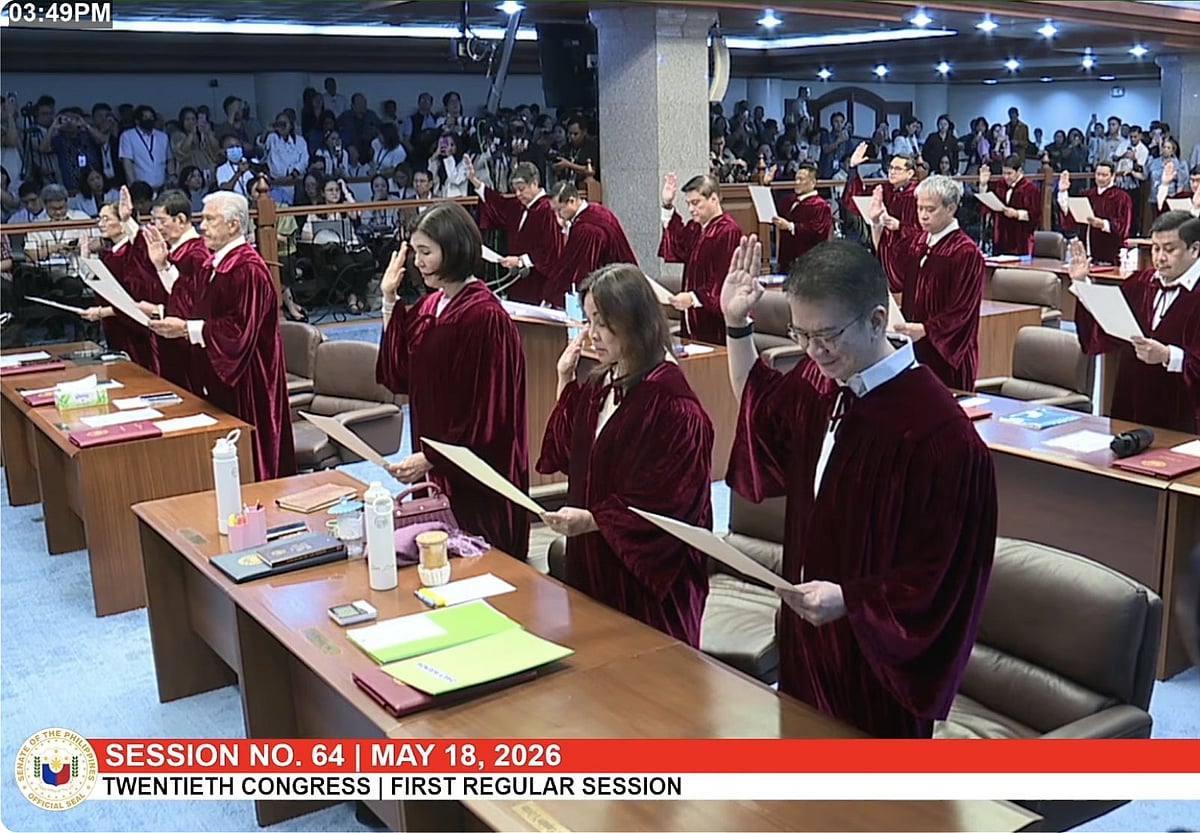
A dramatic walkout by minority senators halted proceedings in the Senate of the Philippines late Tuesday.
It exposed deepening divisions over proposed rule changes that critics say could benefit lawmakers facing legal trouble, including fugitive Senator Ronald dela Rosa.
Get updated faster and for FREE: Download the Gulf News app now - simply click here.
Unprecedented standoff
The standoff is unprecedented.
It erupted after senators allied with the minority bloc accused the chamber leadership of trying to “railroad” a proposal allowing senators to vote and participate in sessions remotely through online platforms.
The proposal, introduced by Senator Rodante Marcoleta, was brought to the Senate floor barely two weeks after it was filed — an unusually fast timeline for a measure involving Senate rules and procedures.
Marcoleta first floated the proposal on May 11, the same day Dela Rosa resurfaced publicly after months away from the Senate amid reports of an arrest warrant from the International Criminal Court tied to the Duterte administration’s anti-drug campaign.
The proposed rule change affects how senators may attend sessions, participate in proceedings, and exercise their mandate through remote means. Such a measure should be opened to healthy public debate instead of being rushed by the tyranny of the majority.
Critics within the minority bloc suspect the remote voting proposal could allow senators facing arrest, hiding from authorities, or unable to physically attend sessions to continue participating in Senate business virtually.
That allegation was never formally stated by the majority bloc, but it hung heavily over Tuesday’s debate.
Why the walkout happened
The confrontation centred on parliamentary procedure — but underneath it was a far more explosive political issue.
Minority senators led by Francis Pangilinan, Panfilo Lacson, Vicente Sotto III, and Risa Hontiveros objected, arguing the proposal should first undergo committee deliberations instead of being rushed directly to plenary voting.
What happened on the floor looked less like orderly deliberation, resulting in the walkout Pangilinan later explained.
The proposed rule change affects how senators may attend sessions, participate in proceedings, and exercise their mandate through remote means. Such a measure should be opened to healthy public debate instead of being rushed by the tyranny of the majority.
The argument escalated after Lacson questioned whether the Senate committee on rules had even been properly constituted before Marcoleta’s proposal was elevated to plenary.
Committee-level hearings
Under Senate practice, measures are generally referred to committees for hearings, amendments, and committee reports before reaching the floor.
“Does this mean we are now disregarding the committees of the Senate?” Lacson asked during the heated exchange.
Alan Peter Cayetano defended the move, citing Rule 51 of Senate rules, which allows amendments through a floor motion approved by a majority of senators present.
But Sotto sharply pushed back, accusing the majority of "brasuhan" (arm-twisting).
As Cayetano repeatedly sought a floor vote, tensions escalated further.
Senator Francis “Kiko” Pangilinan accused the majority of “railroading” the process, while Lacson warned against ramming down something that numbers can dictate.
Moments later, minority senators walked out of the session hall.
Sotto stayed briefly to question whether a quorum remained.
Once it became clear the Senate no longer had enough senators present to continue business, presiding officer Loren Legarda adjourned the session.
Walkouts inside the Philippine Senate are uncommon. They typically signal a severe institutional stress or political breakdown. In the Philippines setting, walkouts are emblematic of something bigger, or major social convulsions.
How rare are Senate walkouts?
Walkouts inside the Philippine Senate are uncommon.
Unlike the more combative House of Representatives of the Philippines, the Senate traditionally prides itself on extended debate, collegiality, and consensus-building among its 24 members.
In 1986, when Commission on Election (Comelec) tabulators walked out of the Philippine International Convention Centre claiming the balloting was rigged to keep Ferdinand Marcos Sr in power after 21 years of iron-fisted rule, it led to the EDSA Revolt, which ousted Marcos Sr and his family.
It also led to a new Constitution.
It happened, once again in 2001, when House Prosecutors walked out during the Estrada impeachment trial in the Senate. This led to "EDSA 2" — Estrada was ousted before he could complete his 6-year watch.
he May 26, 2026 walkout by the Senate minority bloc was more than parliamentary theatre. It exposed the deepening fault lines in Philippine politics, where procedural battles inside the chamber have become proxy wars over the enduring legacy of former President Rodrigo Duterte — and the possibility of another Duterte, Vice President Sara Duterte, eventually reclaiming Malacañang.
2026 Senate minority walkout
The May 26, 2026 walkout by the Senate minority bloc was more than parliamentary theatre. It exposed the deepening fault lines in Philippine politics, where procedural battles inside the chamber have become proxy wars over the enduring legacy of former President Rodrigo Duterte — extrajudicial killings, questionable wealth — and the possibility of another Duterte, Vice President Sara Duterte, eventually reclaiming Malacañang.
At the heart of the confrontation was a proposed rules change that critics viewed not merely as a technical adjustment, but as a political shield: one that could preserve Duterte-era influence represented in the Senate by the 13 pro-Duterte Senators, blunt accountability efforts, and consolidate alliances ahead of the next presidential cycle.
The dramatic exit by opposition senators underscored how legislative procedure in the Philippines often masks a far larger struggle involving dynastic survival, elite power dynamics, and competing visions of governance.
What unfolded on the Senate floor revealed a political system caught between private interests and public welfare — where institutional rules, loyalty blocs and succession politics increasingly shape national policy as much as ideology or public debate.
Uncharted territory
The Philippine Senate's move is uncharted territory.
Even during contentious national crises — including impeachment trials, coup rumours, constitutional debates, and anti-terror legislation — senators have generally stayed on the floor to continue deliberations rather than stage collective exits.
Political analysts noted that the May 26 walkout recalled some of the Senate’s most turbulent institutional confrontations in recent years.
One major episode occurred in 2020 during debates over the controversial Anti-Terrorism Act of 2020, when opposition senators accused the Duterte administration’s allies of suppressing debate and weakening civil liberties.
Another came during the 2021 Senate investigations into overpriced pandemic medical supply contracts involving Pharmally Pharmaceutical Corp., when clashes erupted between senators and Duterte allies over executive accountability and alleged corruption.
More recently, Senate tensions intensified following the 2025 leadership shakeup that installed Cayetano as Senate president amid divisions tied to the ICC investigation into former president Rodrigo Duterte and his allies.
Why the dispute matters: Supporters vs critics
Beyond procedural questions, the clash reflects broader political anxieties over the future of the Senate.
Critics fear that allowing remote participation without stricter safeguards could weaken institutional accountability, especially if lawmakers facing criminal charges continue exercising legislative powers while outside Senate custody.
Supporters of the proposal, meanwhile, argue modern technology should allow senators to participate remotely during emergencies, travel, or security threats — similar to temporary arrangements adopted by legislatures worldwide during the COVID-19 pandemic.
For now, the controversy has left the Senate deeply divided, with both camps accusing the other of undermining democratic norms — one warning against majority “tyranny,” the other insisting parliamentary rules permit the move.
The walkout itself may not change Senate rules immediately.
But politically, it marked one of the clearest signs yet that the chamber’s internal tensions are no longer confined to closed-door caucuses — they are now spilling dramatically onto the Senate floor.
What happens next
In the short term, analysts expect backchannel negotiations between the majority and minority blocs to continue before the proposal resurfaces.
The majority still has the numbers to potentially pass rule changes.
But Tuesday’s walkout demonstrated that procedural legitimacy — not just numerical strength — may now become a major political issue.
Some senators may also push for clearer rules defining when remote participation is constitutionally permissible, especially after the Senate relied heavily on hybrid arrangements during the COVID-19 pandemic.
Political analyst Richard Heydarian said the majority bloc is unlikely to abandon the proposal entirely — because the issue goes beyond technology and touches directly on political survival.
As legal pressure mounts against Duterte allies and as the chamber becomes increasingly polarised ahead of the 2028 presidential race, Senator Pangilinan said the Senate minority bloc will continue to push for another change in Senate leadership, backing Senator Win Gatchalian to become the next Senate President.
Professor Jean Franco of the University of the Philippines, who previously served for 15 years as the Director of the Senate Economic Planning Office, said the Senate risks becoming increasingly divided between blocs aligned with former president Rodrigo Duterte and senators trying to distance themselves from potential international legal consequences.
The reason: The ICC issue has become a loyalty test inside Philippine politics.
Other analysts say the majority may now try to avoid another public confrontation by formally constituting the Senate rules committee and processing the measure through regular procedures before bringing it back to plenary.
That could reduce accusations of “railroading” while still preserving the possibility of remote participation for senators unable — or unwilling — to physically appear in the chamber.
Observers say any revised version may include stricter limits, such as requiring medical, security, or judicial justification before remote attendance is allowed.
Political symbolism
Whatever happens next, the political symbolism of the walkout itself cannot be discounted.
It is expected to linger.
The so-called “Magic 13” majority bloc in the Philippine Senate has cast its political battle as a crusade against “big fish,” corruption and the lingering machinery of the old regime — a dramatic narrative of reformists confronting entrenched power.
Manila’s traffic still consumes hours of workers’ lives each day. Key infrastructure projects continue to face grinding delays, cost overruns or allegations of “tongpats” and kickbacks.
But across the aisle, the minority bloc has challenged not only the majority’s methods, but also its motives, accusing some of its members of selective outrage, political opportunism and protecting rival elite interests under the banner of accountability.
Meanwhile, everyday frustrations remain stubbornly familiar.
Manila’s traffic still consumes hours of workers’ lives each day. Key infrastructure projects continue to face grinding delays, cost overruns or allegations of “tongpats” and kickbacks.
Businesses still complain about bureaucratic red tape and unpredictable regulation, both at LGU and national level, i.e. disjointed EV charging regulations, one for every city.
Consumers continue to endure some of Southeast Asia’s highest electricity prices, while scandals involving ghost projects and politically connected contractors repeatedly resurface with each administration.
For many Filipinos, the deeper question is whether the deepening Senate war represents genuine institutional reckoning — or simply another elite power struggle dressed in reformist language.
Because after the speeches fade, hashtags disappear and alliances shift once again, the public will judge their leaders by the same enduring metrics: whether roads improve, corruption declines, electricity rates becomes cheaper, government services work, and the powerful are held to the same standards as everyone else.
So far, many fear the outcome may simply be more of the same.
Sign up for the Daily Briefing
Get the latest news and updates straight to your inbox
Network Links
GN StoreDownload our app
© Al Nisr Publishing LLC 2026. All rights reserved.