Philippine impeachment: Follow the money. It has always led to the verdict
Financial trails, not lofty rhetoric, have shaped the nation’s impeachment verdicts
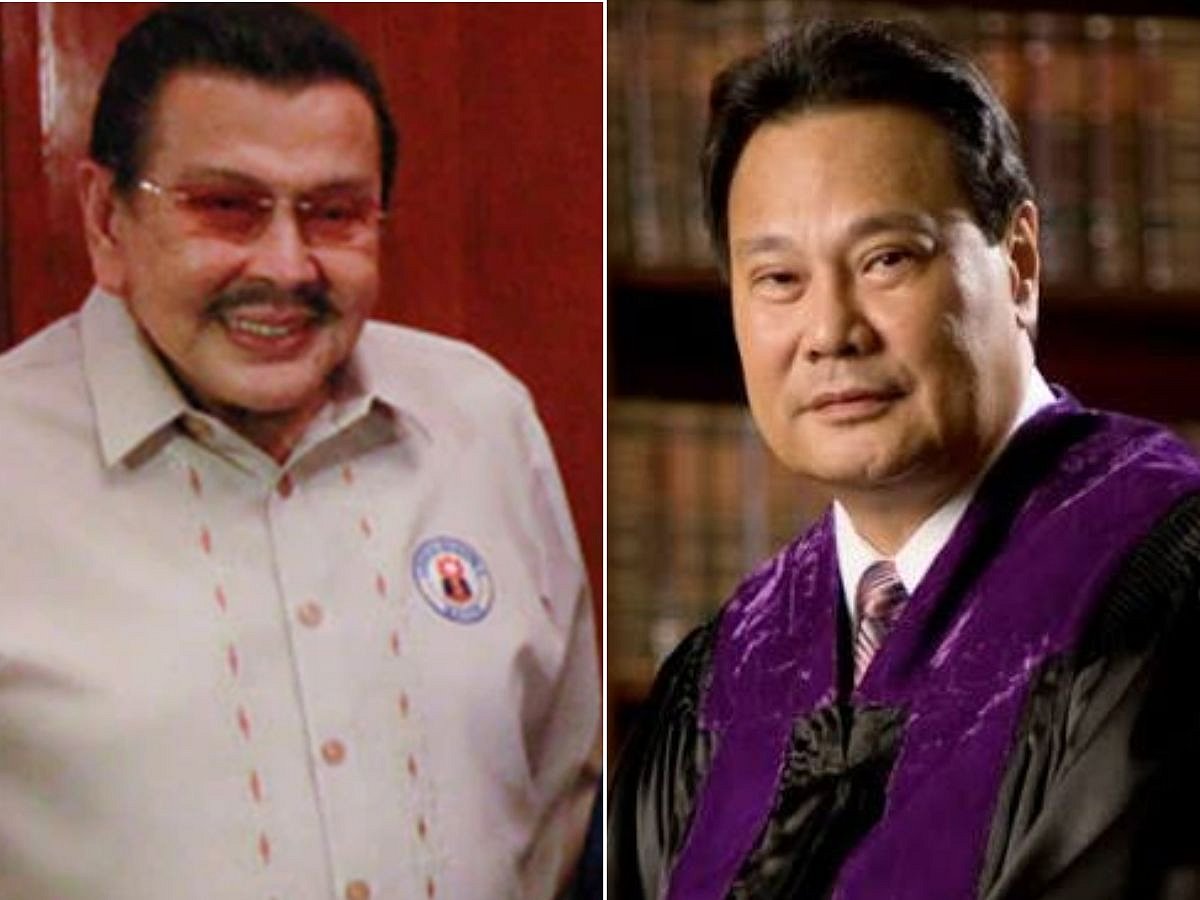
When history remembers the Philippines' most consequential impeachment trials, it may not recall every argument or motion.
But it will remember the money.
And it's not just because money was allegedly stolen or hidden, but because financial evidence became the language through which the nation judged the integrity of its highest officials.
The impeachment of President Joseph Estrada in 2000 and that of Chief Justice Renato Corona in 2012 unfolded more than a decade apart, under different administrations and vastly different political climates.
One ended in street protests before the Senate could reach a verdict.
The other concluded with a historic conviction inside the Senate chamber.
Different circumstances, similar questions
Yet both trials converged on a remarkably similar question: Can a public official explain the money?
The answer determined their political fate.
Estrada's impeachment was, at its core, a story about alleged enrichment through public office.
Prosecutors accused the president of collecting protection money from illegal gambling syndicates, receiving tobacco tax kickbacks and concealing hundreds of millions of pesos in bank accounts allegedly held under the alias "Jose Velarde."
The constitutional accusations were serious, but the public's attention gravitated toward something more tangible: secret deposits, suspicious transactions and unexplained wealth.
Then came the moment that would alter Philippine political history.
On Jan. 16, 2001, senators acting as judges voted not to open what became known as the "second envelope," believed to contain banking records linking Estrada to the disputed accounts.
The legal significance of the envelope was almost immediately eclipsed by its political symbolism.
Presidency decided on the streets
To millions of Filipinos watching live TV, the vote appeared less like a procedural ruling than an attempt to shield financial evidence from public scrutiny. Within hours, prosecutors walked out.
Within days, thousands filled EDSA once again.
Before the Senate could deliver a verdict, the presidency itself had been decided on the streets.
Years later, the Sandiganbayan would convict Estrada of plunder.
The money that impeachment never fully examined in open court ultimately became the centerpiece of a criminal conviction.
Bank accounts in focus
A decade later, another impeachment would again revolve around bank accounts. This time, however, no one accused Chief Justice Renato Corona of stealing public funds.
Instead, prosecutors advanced a different theory: that the country's highest magistrate had failed to disclose substantial assets in his Statement of Assets, Liabilities and Net Worth, or SALN, violating both the Constitution and the public's trust.
It was a subtler allegation, but no less consequential.
The issue was not where the money came from.
It was whether the public official had honestly declared that it existed.
Corona argued that portions of his foreign currency deposits were protected by banking secrecy laws.
His defence raised difficult questions about the intersection of privacy rights and constitutional transparency.
The Senate, however, concluded that the constitutional obligation of disclosure prevailed.
Corona removed from office via impeachment
By a vote of 20-3, Corona became the first — and so far only — Philippine official removed from office through a completed impeachment trial.
Again, money had proved decisive.
Not because prosecutors demonstrated theft, but because they persuaded senators that unexplained or undisclosed wealth was incompatible with public trust.
Taken together, the Estrada and Corona cases reveal an enduring truth about Philippine politics.
Impeachment is often described as a legal process. In reality, it is equally a political judgment.
Impeachable offences
Constitutions define impeachable offenses in broad language — "betrayal of public trust", "culpable violation of the Constitution," "graft and corruption."
These concepts can appear abstract to the public.
Money is not. Money transforms political accusations into evidence that ordinary citizens can understand.
That explains why financial questions continue to dominate modern impeachment proceedings around the world.
They are often easier to investigate than intent, more persuasive than speeches.
More significantly, they are less vulnerable to partisan interpretation than ideological disagreements.
Money is the language everyone understands: collective wisdom of the nation emerges as a result.
Whether the issue is illicit enrichment, hidden assets or unexplained transactions, financial evidence provides something impeachment trials desperately need: an objective anchor amid partisan conflict.
This does not mean money alone determines guilt.
Political context matters
Political context always matters. Public opinion matters. Institutions matter.
Estrada's impeachment collapsed despite extensive financial allegations because the political system itself fractured before judgment could be rendered.
Corona's impeachment succeeded because both the evidence and the institutional process reached a conclusion accepted by the Senate.
The outcomes were different. The lesson was the same.
In Philippine impeachments, constitutional debates may shape the courtroom. Political alliances may shape the vote.
But history suggests that the case often turns on a simpler question — one that resonates far beyond legal doctrine:
Can those entrusted with public office fully account for their wealth?
Amid the on-going impeachment trial of Philippine Vice President Sara Duterte, the front-runner in the 2028 elections and whose popularity runs high particularly in the Visayas and Mindanao, the answer to this simple question is capable of deciding not only impeachment trials, but political legacies.
Sign up for the Daily Briefing
Get the latest news and updates straight to your inbox
Network Links
GN StoreDownload our app
© Al Nisr Publishing LLC 2026. All rights reserved.