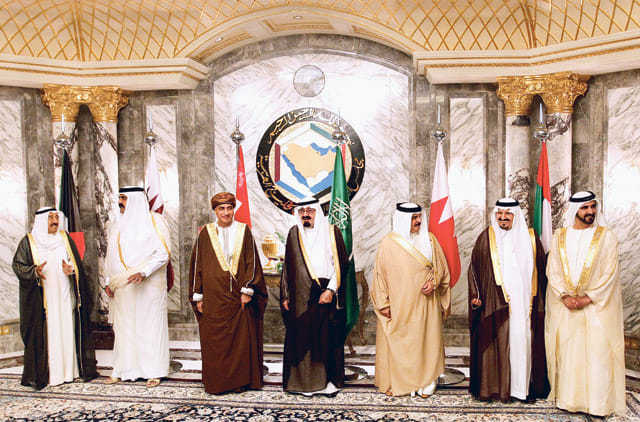
The GCC-Asia relationship is built upon a foundation of mostly economic and trade-based exchanges. But what does it hold for the environment and what can we do to create useful relations between the two regions that can benefit environmental causes?
Environmental issues have attained global significance and that calls for more than unilateral action. It is no longer effective to work in isolation on the problem; sharing knowledge on environmental management and having joint projects between countries is probably the first step towards a holistic solution.
Although a major concern, global warming is not the only source of worry when it comes to environmental protection; the global food crisis has led to emerging nations trying to profit from the food shortage by getting big importers of crops to effectively lease their farmlands. It comes as no surprise that a majority of investors are from the GCC and that most of the countries leasing out their farmland are in the Asia region.
GCC countries are classified to be suffering from desertification. A current concern is the distribution of water resources for different uses. Agriculture remains the prime water-consuming sector in the GCC despite its meagre contribution towards the GDP.
On top of that, they still import most of their food products from other countries and are nowhere near achieving self-sufficiency in terms of food resources. Many parts of Asia suffer from the same problem according to the United Nations Convention to Combat Desertification). In this regard, it makes sense for Asia and the GCC to cooperate on environmental projects and techniques to tackle desertification.
With regard to water issues, according to the UN, all GCC countries except Oman fall in the category of ‘acute scarcity.' And even Oman is at medium risk on the Water Security index. Apart from the Arabian Gulf region, Central Asia, South Asia and parts of Southeast Asia seem most susceptible to water security risks. There is a huge scope for cooperation between GCC and some Asian countries, like Singapore, in the area of desalination, for instance.
The nature of air pollution makes it trans-boundary and regional; unlike land pollution that can be confined within national boundaries, the fluidity of air means that pollution is easily carried over large distances over land and water to affect other countries.
In Southeast Asia, forest fires from Indonesia create haze which is hazardous to health and also lowers visibility rates. The haze is carried by winds to the rest of the region, and the nearest countries, Brunei, Malaysia and Singapore are most affected by this trans-boundary air pollution.
The same happens in the GCC across the Arabian Gulf, with air pollution from sandstorms in specific seasons. As is with all global commons, it is the large players with critical mass from the sheer size of their countries that will have the greatest effect on air pollution.
This is a key reason why rapidly industrialising giants like China and India are now in the limelight for their energy consumption and practices. The pace of development is spurring on higher amounts of emissions and neighbouring countries could easily become victims of air pollution from heavy industry. The current concerns for India and the GCC countries are very similar: how to accommodate economic growth while ensuring environmental sustainability.
Alternative energy
Despite the similarities in the nature of environmental problems of the GCC and some parts of Asia, there has been little collaboration between these countries on environmental issues. In the past decade, however, there has been a marked improvement with countries like Japan taking the lead in bridging the gap between the problems and the available support and solutions.
A prominent example is the "Initiative for Kuwait-Japan Cooperation on Environmental Issues and Technology Transfer" in December 2002, one of whose achievements is the Environmental Rehabilitation of Kuwait Bay. Many Asian companies are investing in clean technology projects in GCC countries.
With the push for alternative energy solutions, the growing market for renewable energy could prove to have strong commercial interests for businesses in the energy industry. Joint environmental projects to improve renewable energy technology could expedite the process of development and provide markets for these new technologies.
When looking at the market leaders for renewable energy technology, three Asian countries stand out for solar-thermal and wind energy: Japan, China and India. By cooperating with these three countries, the GCC can further its renewable energy ambitions with collaborations at the government, institutional and industry levels.
As countries become more directly involved with each other through trade or otherwise, they will have a greater impact on each other. Collaboration between GCC and Asian countries needs to move beyond economics or politics and into a realm previously neglected: environment and renewables.
In fact, cooperation in the environment and renewables is a win-win situation for both sides and will eventually strengthen other economic and political relations. A joint technical committee on environment and renewable cooperation will help to push cooperation, explore ways of joint activities (missions, exhibitions, etc) and projects.
It is a must that countries cooperate on environmental issues that will not only make our planet a better place to live in but also create business opportunities for both sides, help fight climate change, food crisis, energy crisis, desertification and so on.
Dr Mohamed Abdel Raouf is an independent environmental researcher.
Sign up for the Daily Briefing
Get the latest news and updates straight to your inbox
Network Links
GN StoreDownload our app
© Al Nisr Publishing LLC 2026. All rights reserved.