Why the UK-GCC trade deal could reshape business flows
Landmark agreement promises deeper investment, freer trade and new growth across sectors
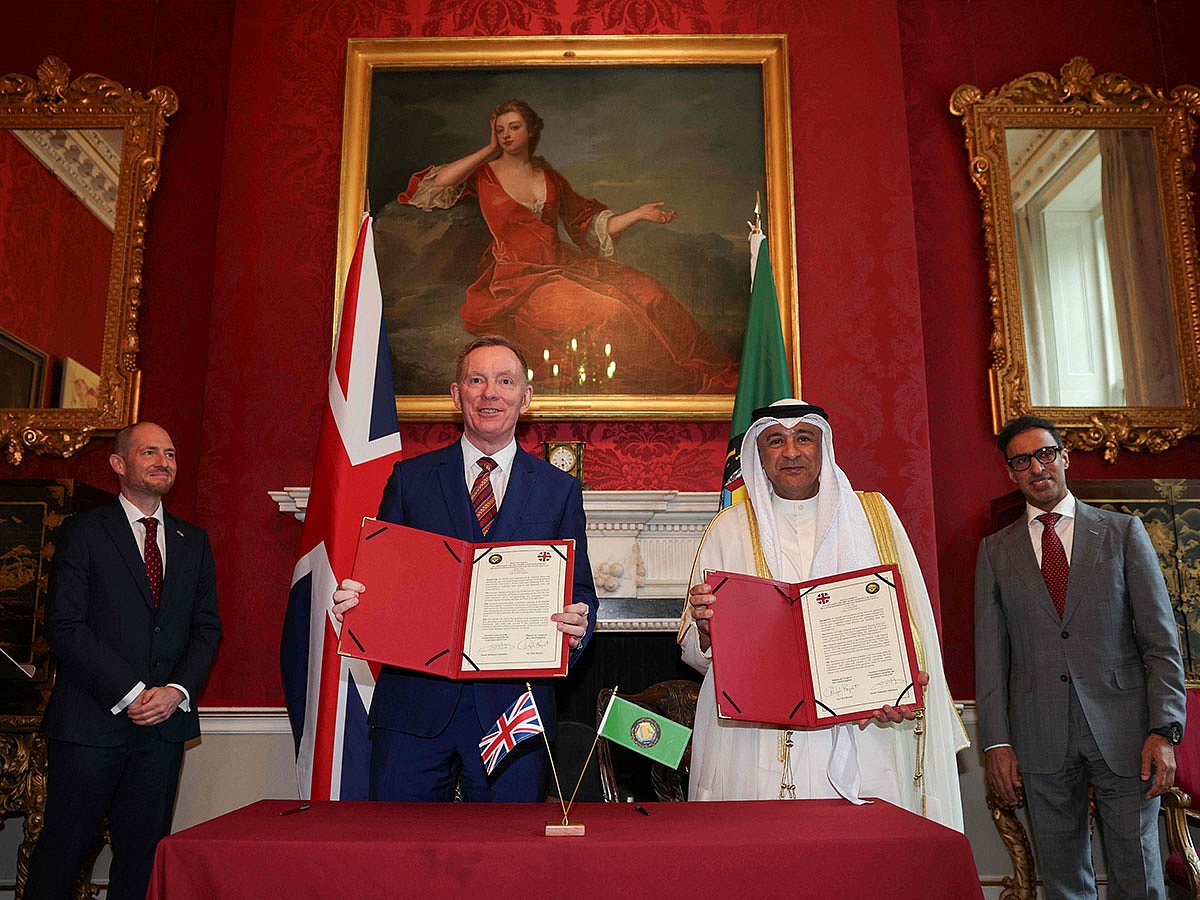
The new free trade agreement between the UK and the Gulf Cooperation Council (GCC) will deepen an already booming channel of trade and investment between corporates on both sides of the corridor.
The UK and the six countries of the GCC are not starting from zero. They are already deeply connected through capital, people, supply chains and shared commercial ambition. The signing of the free trade agreement will now transform these economic ties into an even stronger, freer and more investable relationship that helps expand businesses and drive trade.
The headline numbers underline the opportunity for businesses in both directions; bilateral trade exceeded $72 billion in 2024, and the UK government estimates that the FTA could increase trade between both sides by 19.8% and add 3.7 billion pounds to the UK economy every year.
In a world where economies are contending with conflict, geopolitical uncertainty, supply chain realignment and energy security challenges, the GCC and the UK have reaffirmed their positions as progressive business partners, setting a clearer path to growth for corporates at both ends of the corridor.
What sets the agreement apart is its recognition that the free flow of data is becoming foundational to modern commerce and financial services, moving beyond the scope of traditional trade agreements.
Trade for diversification
Over the last 40 years, the majority of UK businesses operating in the GCC region have been large-cap, industrial and professional services firms. Yet the region’s unprecedented transformation demands diversified investment, expertise and innovation which – despite challenging periods in the short term – continues to broaden composition of foreign businesses who invest and succeed here.
While professional services remain the largest sector in terms of our UK client base who are doing business in the GCC, we’ve seen a steady diversification of sectors including construction, industrials, renewables, media and healthcare. We have also seen an increase in ‘mid-market’ sized businesses from the UK entering the GCC – that’s those with revenues of up to 500 million pounds, who are mostly unlisted and frequently family-owned or entrepreneur-led.
That’s encouraging for several reasons. Primarily it shows that, in addition to the large multinationals, there is a thriving ecosystem of mid-market enterprises in the UK that have been connecting to the Gulf region even in advance of the free trade deal. Secondly, it reflects the close attention afforded to putting innovation and skills at the core of economic transformations.
The Middle East is increasingly a hub for regional operating and treasury activity, driven by a broader mix of corporates establishing a long-term presence. In our client base, that’s translating into more complex UK-GCC cross-border banking needs, particularly trade and payments for regional treasury centres alongside private banking and employee workplace solutions.
While an FTA reduces barriers, it does not remove them entirely. However, UK and GCC exporters should benefit from lower or removed tariffs, better access to public procurement, improved business mobility, smoother cross-border data flows and clearer routes for investment.
Strategic partnership
Trade has long driven investment, innovation and economic growth among partners, creating new opportunities for businesses, jobs and prosperity. When negotiations for the agreement began in 2022, expectations were rightly high that a closer trading partnership between the UK and the GCC would bring exciting benefits for companies on both sides.
In addition to trade, both parties also have strong investment connections within their respective economies. According to EY, the UK has become the largest single source country for GCC projects in 2024, followed by India. In Oman, the UK is responsible for more than half of all FDI, for example. These shifts are important because they reflect both the importance of strategic partnerships and the GCC’s changing economic landscape.
The UK has already demonstrated its willingness to support exporters with financing. In October last year, UK Export Finance (UKEF) and Saudi Arabia’s Public Investment Fund signed a refreshed agreement making up to $6.8 billion of UK market cover available to PIF and its portfolio companies building on UKEF’s earlier $700 million Islamic Murabaha financing facility related to the Qiddiya City project. Commitments like this help to expand UK exporters’ access to the kinds of opportunities that such infrastructure projects create.
The upside of this FTA is likely to extend beyond traditional industries too. The new rules for data management will support UK and the GCC’s heavy investment in AI capacity and development, which will likely open new doors for business collaboration.
Clean energy will be another game-changer. UAE investment into UK renewables is already moving from ambition to execution, from Dubai-based Esyasoft’s near-100 million pound acquisition of Good Energy to the UAE’s commitment to invest billions into the UK’s energy transition.
A landmark deal
The successful negotiation of this FTA marks an important milestone in international trade for the GCC region and is the first with a G7 economy. For the UK, meanwhile, the deal is expected to boost growth and higher wages for decades to come.
In a global environment where large parts of the world have known short term volatility, disruption and challenges, the long-term story told by the GCC-UK trade relationship is of growth, resilience and ambition.
Network Links
GN StoreDownload our app
© Al Nisr Publishing LLC 2026. All rights reserved.