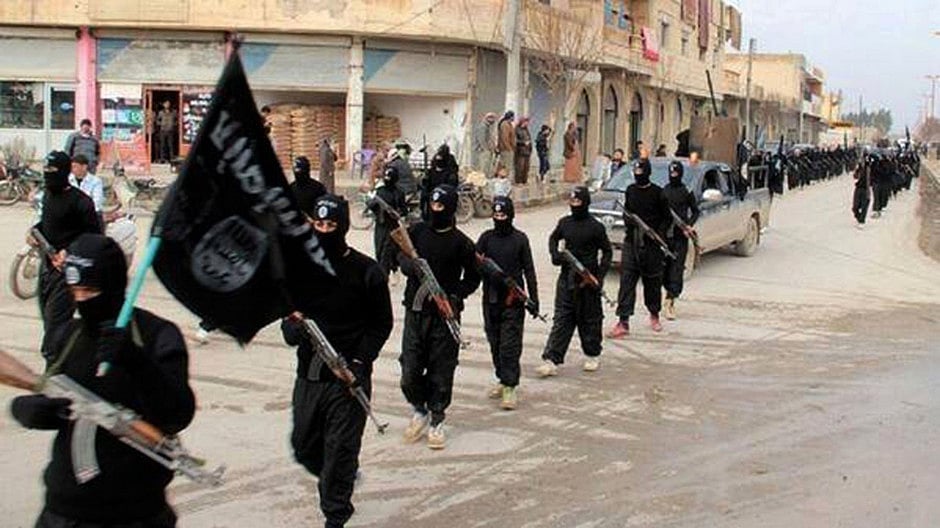
In the waning days of Ramadan, a series of bomb blasts and suicide attacks in Saudi Arabia brought to the forefront, once again, the terror that lurks everywhere and spares none. The perpetrators, some of whom were identified as sympathetic to Daesh (the self-proclaimed Islamic State of Iraq and the Levant), carried out their evil deeds on unsuspecting, innocent persons and institutions.
They targeted a United States consulate, a mosque in the eastern province of Saudi Arabia, frequented by followers of the Shiite sect, and perhaps one of the most outrageous acts — that of blowing up a bomb in one of Islam’s holiest shrines, the Prophet’s (PBUH) Mosque in Madinah.
Following the incidents, I was asked by an American who wanted to understand more about the ongoing turmoil in the Middle East, whether Islam was indeed a radical religion and by virtue of its teachings, whether it helped foster extremism. It was a question that is probably on the minds of many who are not very familiar with the teachings of our religion. They are among a rising multitude of individuals globally who are genuinely concerned or alarmed about the perceived rise in acts of terrorism that the media quickly attributes to “radical Islam”.
Listening to the concerns of the American, I explained to him that while I was not a learned man, I have known and practised enough of the religion my entire life and through my own personal education and experiences. No, Islam is not a radical religion. In fact, the word ‘Islam’ means submission and that in itself is not an act of aggression. Unfortunately, in recent times, it has become a lead banner for subversive groups who have manipulated the religion to read what they want to hear.
These subversive groups are sometimes the product of an extreme line of ideology that can be present in any religion. A prominent cleric had once warned that “Intellectual shallowness and lack of religious insight result in an intense interest in marginal issues like giving excessive importance to the growing of beard or the wearing of clothes below the ankle, so on and so forth. What is more dangerous is attempting to impose these preferences on others. Sometimes, what is obligatory is supplanted by what is recommended, and this is against the spirit of Islam.” Such extreme views often are adopted by those who choose to believe that everything else is haram or a sin.
Such subversive elements also place a lot of emphasis on metamorphic texts, while ignoring the Quranic verses that are straightforward and clear. They give more stress on the allegorical ones. They also tend to discredit qualified authority on religious subjects if their edicts are in conflict.
One of the factors behind the rise of extremism is a reluctance to listen to people who hold different views. Extremists have little interest in discussion or dialogue, as they never imagine that their views could be tested in the light of others’ opinion and can be either contradicted or refuted. They often have little knowledge, but assume that they know it all. These young people ignore the fact that if they want to study Sharia, they must seek the help of reliable Muslim scholars. But they simply refuse to do so. They flock to the calling of those clerics who adopt a harsh, non-accommodating view of anything that they find different.
Such people are also not familiar with true historical events. They probably are not aware of the fact that after the message came to Prophet Mohammad (PBUH), he spent 13 years in Makkah — initially in isolation — and performed prayers and the tawaf on the premises of Kaaba, even though it was surrounded by more than 360 idols at that time. Gradually and over time, he built a following that continues to grow daily.
In the initial call to Islam, the Prophet (PBUH) gradually introduced the basic teachings of Islam. To achieve targeted goals, giving the allowance of due time is important. Extremists seem to ignore these two important ways. They want to change things right away and in the manner they feel is right, brutal as it may be and according to the interpretation they choose to adopt.
Following the Ramadan attacks, the US Ambassador to Saudi Arabia, Joseph W. Westphal, said: “I condemn, and all decent people condemn, these attacks. All of us deserve the right to worship in peace and those who would transform this holy time into an occasion for hatred and bloodshed deserve our strongest condemnation.”
It is time for all Muslims to recognise that extremism does exist everywhere and we have to collectively take an aggressive stand towards eradicating any caustic ideology from our midst as it does no service towards promoting our peaceful religion. Only then will others understand what Islam stands for.
Tariq A. Al Maeena is a Saudi sociopolitical commentator. He lives in Jeddah, Saudi Arabia. You can follow him on Twitter at www.twitter.com/@talmaeena
Sign up for the Daily Briefing
Get the latest news and updates straight to your inbox
Network Links
GN StoreDownload our app
© Al Nisr Publishing LLC 2026. All rights reserved.