If you had walked into a bookstore, say 30 years ago, and asked to be directed to the “Middle East section” where books on the region were stocked, you would’ve drawn a blank from the clerk. These days, that section displays shelves upon shelves bulging with tomes aimed at the general reader written by journalists, academics, memoirists, polemicists and others about the history, culture, politics, social formation and in particular, the century-old conflict between Arabs and Jews in that part of the world.
All well and good. Let a thousand flowers bloom, you say, especially in a country where free thought is sacrosanct and the life of the mind is seen as a major building block of a vibrant, dynamic society. Only it’s not as simple as that. Pro-Israel institutions and pressure groups, which are as ample in number as they are assertive in influence, are always on the look-out for books critical of Israel, whose authors are then assailed, with impressive ease, as anti-Semites or even Nazis. We all remember the vitriol directed at The Israel Lobby and US Foreign Policy (2007) whose authors, John Mearsheiner and Stephen Walt, are distinguished scholars, teaching respectively at the University of Chicago and Harvard University.
Where the books are written by Jews, say liberal American Jews who, while ardent supporters of Israel, feel that the Israeli state is shooting itself in the foot by its continuing occupation of Palestinians and the colonisation of their land, thus subverting the ‘ideals’ of the Zionist enterprise, the authors are then attacked as self-hating, misguided misfits. To Europeans and others, who equally value a free public debate, this phenomenon is puzzling, not to mention disquieting. (The Mearsheiner and Walt book, which originally appeared as a long article in the London Review of Books, had been turned down by several American publications.)
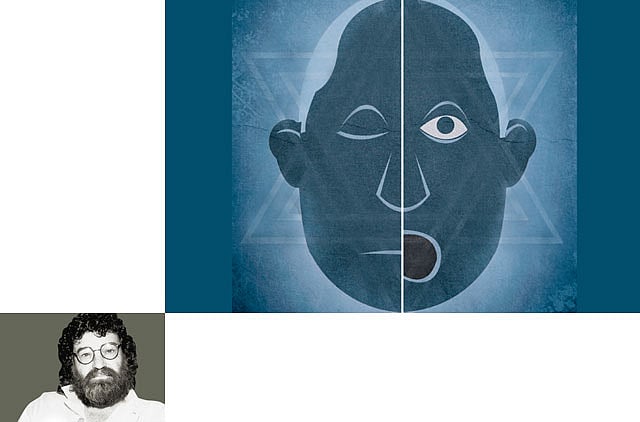
Now comes The Crisis of Zionism by Peter Beinart, a Jewish American pundit, author and prominent intellectual. As expected, the American Jewish establishment has gone down on the man like a ton of bricks. To be sure, Beinart is not your typical bleeding-heart left-winger. He is a liberal Zionist who does not care one jot about Palestinian rights. His concern is the reality of Israel and its preservation as a ‘democratic state’. His thesis is simple: The Jewish establishment is willy-nilly bringing about the disintegration of ‘Israel’s high ideals’ by supporting it right-or-wrong, and aggressively lobbying Congress and the White House to go along with whatever it desires. Israel should adhere to democratic values in order for it not to descend into apartheid as it appears to be doing. “Today it is failing, and American Jews are helping it fail”, he writes.
In a recent New York Times op-ed, Beinart deplored Israel’s colonisation policies and called on people everywhere, Jews included, to adhere to a policy of Boycott, Divestment and Sanctions (BDS) when it comes to products manufactured by colonists living on expropriated Arab land beyond the Green Line. Where those on the American Jewish left view Beinart as naive, Jewish groups have already branded him as wicked, treasonous and self-hating — no matter that it is clear throughout his book that he holds Israel dear and is himself an observant Jew, and no matter that his is an honest exploration of how Jewish liberalism has failed to help forge Israel as a ‘democratic state with ethical values’.
That’s the degree of vehemence and stark, often inexplicable, passion that accompanies the inter-Jewish debate, at least as evinced by the Israel-firsters in its midst. Understanding these folks’ feelings about Beinart and other well-meaning Jewish critics like him, wrote the political commentator M.J. Rosenberg recently in the Huffington Post, “may be more the job of a psychologist than a pundit because it is so irrational that it cannot be addressed by citing facts. It is a mark of how crazy the debate over Israel has become in this country that it exceeds anything that goes on in Israel, which itself has more than its share of right-wingers”.
It is difficult to say whether a discernible shift is indeed taking place among liberal Jews about where Zionism has taken both them and Israel itself. But one fact is plain: major Jewish organisations have refused to condemn the subversion of democracy in Israel, and liberal Jews like Beinart are imperceptibly becoming alienated from an entity that, in its own self-destructive but inexorable way, is moving headlong to becoming a duplicate of South Africa under apartheid.
Perhaps at the end of the day the problem lies with Zionism itself, or that brand of it that is ascendant today, and that has come to define Israel’s vision of itself as an embattled country, albeit one saddled with a holocaust fixation. (Netanyahu: “It’s 1938 and Iran is Germany”, and the Iranian president “is preparing another holocaust for the Jewish state”.) In the early days of the Zionist experiment in Palestine, four main currents of that ideology knocked about: Labour (socialist), Mizrahi (religious), Ahad Ha’am (cultural) — “a Jewish state not a state of Jews”— and Revisionist (ultranationalist).
Alas, the current that has emerged as preponderant today is the Revisionist, whose founder, the fascist Ze’eve Jabotinsky, was credited with creating the strategy known as the Iron Wall: the Zionist enterprise initially had to be executed unilaterally and by force, thus creating an ‘iron wall’ that the Palestinian population could not breach. After knocking their heads in vain against that impregnable barrier, the “natives” would recognise that they were in a position of utter, irreversible weakness. Then and only then would be the time to engage them in negotiations about their status on the land. From Menachem Begin in the 1970s to Benjamin Netanyahu today, Zionist leaders have shown themselves to be adept students of Jabotinsky’s demonic strategy.
A mindset like that however — a mindset that will continue to define Israeli politics for years to come even if Netanyahu were to fall under a bus tomorrow — cannot go on indefinitely without leaving a corrosive impact on the health of Israel’s body politic.
Though the issue has not totally polarised the Jewish community in the US, it has produced many a disgruntled voice like that of Peter Beinart. However, you speak up at peril of assault.
Fawaz Turki is a journalist, lecturer and author based in Washington. He is the author of The Disinherited: Journal of a Palestinian Exile.
Sign up for the Daily Briefing
Get the latest news and updates straight to your inbox
Network Links
GN StoreDownload our app
© Al Nisr Publishing LLC 2026. All rights reserved.