The next big railway revolution may happen on existing tracks
As Gulf rail expands, smart sensors and AI could transform how tracks are maintained
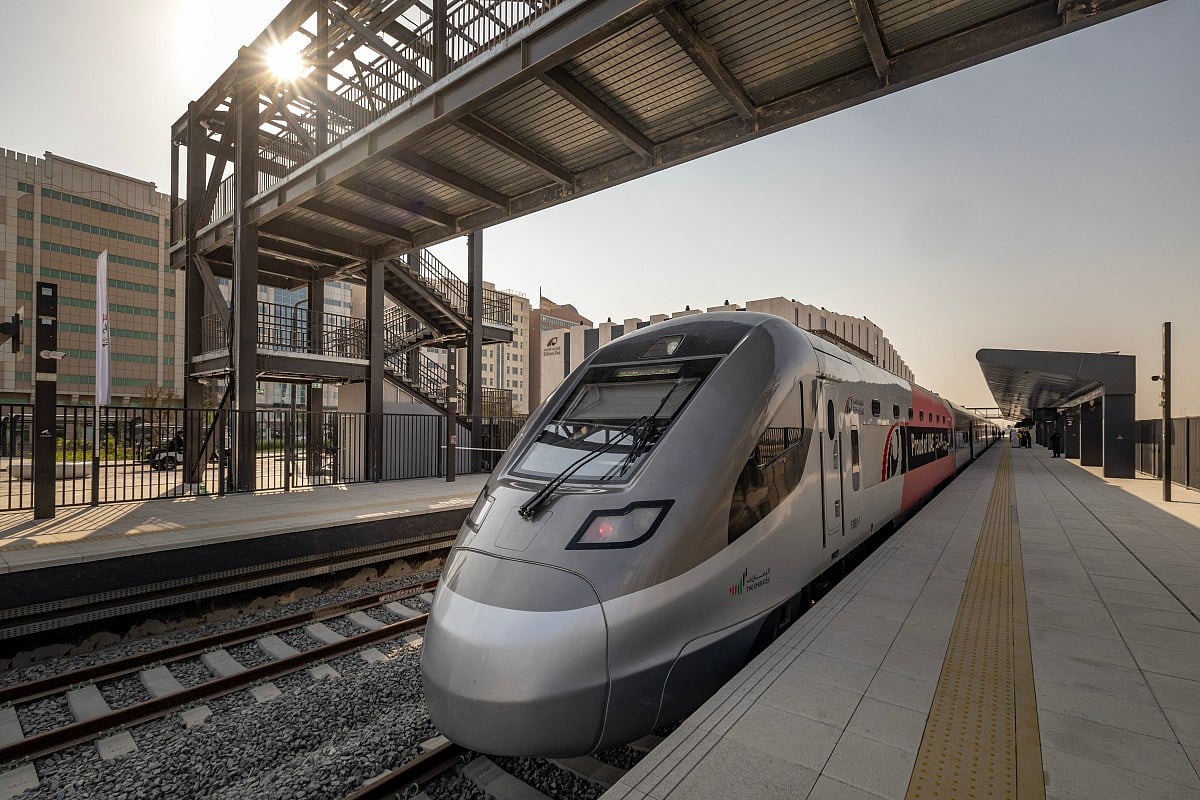
The freight trains that have been crossing the UAE’s deserts for years now share their tracks with a new passenger service and before the decade is out, they will share a network with the line joining the GCC states. The next question for the region’s railways is not how much more steel to put in the ground but how to keep the steel already invested operational for the next 50 years.
The default answer is the one most railways still rely on: maintenance governed by the calendar and the tonnage count, with inspection crews walking the line between fixed dates. The model served the industry well for more than a century, but it was designed for networks that are no longer the norm: ones with lighter traffic, longer night-time maintenance windows and cooler climates.
The new Gulf networks have an opportunity: they can inherit the old fixed maintenance schedule model or they can build something new.
Building something new
They should build something new and the primary reason is economic. A crack in the line found a month before a planned maintenance walk, confirmed by an inspector, planned into a quiet overnight shift, costs a fraction of the same crack found at 4am with a stopped train and a closed line behind it. One becomes a job on the plan and the other a derailment risk, with a bill that compounds every hour the track stays shut.
Nowhere is the case for building this in from day one stronger than in the Middle East. Rails here can run thirty degrees above air temperature on an average afternoon; wind-blown sand fouls the stone bed that drains and supports the track; day-night temperature swings fatigue the small fastenings that hold the rail to its sleepers; and long remote stretches turn every crew dispatch into a logistical challenge. These are not European conditions and systems trained on European data miss the signals that matter here.
Let’s build something smarter. What “smart” means in practice is less dramatic than the term suggests. We could use small sensors on in-service trains and along the line can record vibration, sound, strain and temperature as a matter of routine, to turn every journey into an inspection. Machine learning could sift the records for the early signatures of fouled ballast, rail corrugation, misalignment or weld fatigue, flagging where the problem is, how severe, and with what degree of confidence. A digital twin, a live computer model of the whole track, would keep track so engineers can see not only what is wrong but how fast it is getting worse.
Freight corridor test
One component of this has been field-tested on a UAE freight corridor: a wagon-mounted system using vibration sensing and precise positioning to detect sand contamination of the track bed under normal operations, checked against ground-penetrating radar surveys. The platform is modular, and its outputs feed into the asset-management software operators already run. Desert conditions produce their own signals, and we had to learn to read them.
There is, of course, the issue of safety. Should an algorithm make calls on a safety-critical railway? Alone, no. A well-built model explains why it flagged a location and reports its own confidence honestly: a qualified engineer confirms before any speed restriction is imposed or lifted. Even the ground-truth surveys used to train the models will carry their own measurement errors. The role for AI here is as a well-calibrated partner to engineering judgment, a tireless watchman, never an oracle.
Wagon-mounted sensors are only the first layer. Automated drones that launch from trackside docks on a schedule, inspect switches and rails, and return to recharge with no crew on the line are already a practical option, and satellite radar can now follow millimeter-scale ground movement under an entire corridor. Within the decade, sensors on trains, drones overhead and satellites above could feed one AI-driven picture of the network, each layer checking the others.
The smartest investment is in knowing, every hour of every day, the true condition of the steel already in the ground.
Dr Prabakaran Balasubramanian is Lead Researcher of the Advanced Materials Research Center at Abu Dhabi’s Technology Innovation Institute (TII)
Sign up for the Daily Briefing
Get the latest news and updates straight to your inbox
Network Links
GN StoreDownload our app
© Al Nisr Publishing LLC 2026. All rights reserved.