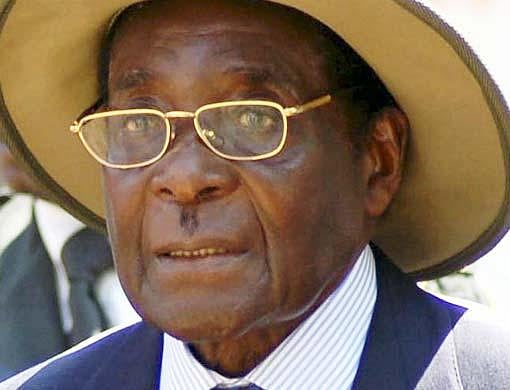
The invitation was for afternoon tea at the presidential state house. Irresistible, one might think, to sit down on a balmy southern spring afternoon with one of the more clever and courteous presidents of the 21st century — except that he is also one of the more calamitous. How was a cleric with a conscience to respond?
Under the circumstances, the Archbishop of Canterbury did pretty well last week as he paid the first visit to Zimbabwe's Robert Mugabe by a British dignitary in a decade.
Dr Rowan Williams rightly disdained the doubters who said that to visit the old autocrat would be a propaganda coup for a noxious regime. He was also rather more robust in the presence of that arch-operator than many western questioners to precede him.
Mugabe has been outsmarting adversaries since long before he took power more than 30 years ago. This is a man who is as at ease talking of cricket and reminiscing about Buckingham Palace, as he is whipping up crowds to harass foes. I wince at memories of my attempts to challenge him on democracy in 1994. He gave a series of quips and walked on, beaming.
The archbishop was better at sticking to his script. He handed over a dossier documenting abuse of churchgoers by state security forces. The day before he had lambasted Mugabe's record. So far so good. Lambeth Palace deserved the favourable reviews. But the archbishop missed a trick, and an important one.
In one deft stroke he could have wrongfooted Mugabe, compelled the west to rethink its strategy towards Zimbabwe and helped to end its current awful limbo: he should have stepped out of state house, and called for the US and European Union to give a timetable for the lifting of their targeted sanctions.
Wretched country
There will be many in Britain, the old colonial power where Zimbabwe is seen in particularly stark if sometimes simplistic colours, and indeed some in that wretched country's hard-pressed opposition, who will be appalled at such an idea.
The travel and trade bans on Mugabe and senior lieutenants were after all imposed after repeated brutal crackdowns on the opposition Movement for Democratic Change (MDC).
Does not Mugabe rail against the sanctions in speech after speech, blaming Zimbabwe's every woe on their impact and their sponsors in the imperialist West? Would the archbishop not have been just a "useful idiot" if he had called for them to go?
The answers are yes and no. It is time to call Mugabe's bluff.
If the sanctions are lifted he will, of course, claim victory and argue that the West is in retreat. Let him crow. The truth is that the sanctions, limited as they are, salve consciences in the West, but in fact do little but help keep a despot in power.
Officials of the MDC, in year three of an unhappy government of national unity with Mugabe's larcenous Zanu-PF, are desperate for them to go. Blaming the sanctions is one of the last two weapons the 87-year-old has in his rhetorical armoury — the other is his on-off push to have a majority state stake in foreign-owned mines and banks.
Mugabe's claim that the sanctions have destroyed the economy is ludicrous — his ruinous populism has done that — but they are, say business people, inhibiting investment. Also it is time to heed South Africa, for it is Pretoria not Whitehall which is steering policy on Zimbabwe.
The regional hegemon may have an erratic foreign policy — most recently it clumsily bowed to Beijing's pressure and denied the Dalai Lama a visa to attend Archbishop Desmond Tutu's 80th birthday — but it has been reining in some of Mugabe's excesses. Its pressure helped avert Mugabe's aspiration for a snap — and presumably brutal — election this year.
Pretoria wants sanctions lifted to discountenance Mugabe's party, which cites them as a reason not to implement the three-year-old political agreement that should underpin a free and fair election.
Many EU diplomats privately say sanctions achieve little and suggest that Britain backs them primarily to keep its right-wing press off its back. Foreign Office old hands like to say governments have three options: invade, impose sanctions and do nothing. Neither option one nor three is viable here, an old mandarin observes, so sanctions endure.
The prospect of seeing Mugabe shopping in Harrods once again is, of course, distasteful — although he can and does travel to UN summits. But few outside Pyongyang will really believe him now if he claims to be exonerated.
It is not that sanctions never serve a purpose, but Zimbabwe's have outlived theirs. Far from boosting Mugabe, their removal will hasten the prospect of Dr Williams meeting the MDC's doughty leader next time he has tea in State House, Harare.
— Financial Times
Sign up for the Daily Briefing
Get the latest news and updates straight to your inbox
Network Links
GN StoreDownload our app
© Al Nisr Publishing LLC 2026. All rights reserved.