Nepal’s reset moment: Can Balen deliver real reform?
Anti-corruption promise meets deep structural challenges at home and abroad
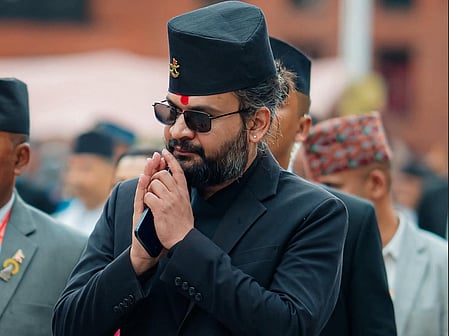
In a political earthquake that has stunned South Asia, 35-year-old former Kathmandu mayor Balendra Shah — popularly known as “Balen” — has led the insurgent Rastriya Swatantra Party (RSP) to an overwhelming parliamentary victory in Nepal. The election followed months of political turmoil and youth-led protests that shook the Himalayan republic and forced the resignation of the previous government.
Nepal has experienced political instability since the end of the monarchy in 2008 followed by the adoption of a republican constitution. Rivalries between the Nepali Congress, the communist factions led by the Communist Party of Nepal (Unified Marxist-Leninist), and Maoist groups that formed fragile coalition governments and rarely lasted a full term, have contributed to chronic political instability in the Himalayan nation.
The political class also struggled to address economic stagnation. Nepal’s roughly $42-billion economy has remained dependent on remittances and foreign aid, while unemployment has driven millions of young Nepalis abroad. For a generation raised in the digital era, the political elite appeared increasingly detached and corrupt.
Trigger
The immediate trigger for Nepal’s political upheaval came in 2025 when the government imposed sweeping restrictions on social media. What began as protests by students and digital activists rapidly escalated into nationwide demonstrations demanding an end to corruption and the entrenched political order. The crisis eventually forced the intervention of the military to restore order. A caretaker administration headed by former chief justice Sushila Karki was installed to oversee the transition and organise fresh elections.
The protests revealed something deeper than anger over social media regulation: they exposed the widening gap between Nepal’s youthful population — whose median age is around 25 — and a political leadership dominated by septuagenarians.
The parliamentary election held on 5 March produced an outcome few analysts had predicted. The RSP secured 182 of the 275 seats in the House of Representatives, an outright majority rarely seen in Nepal’s coalition-prone politics.
The established parties were decimated. The Congress won only 38 seats, while the Communists were reduced to 25 seats, marking one of the worst performances in its history.
Symbolic contest
The election’s most symbolic contest occurred in Jhapa-5, where Shah personally defeated veteran leader and former prime minister K.P. Sharma Oli. Shah won 68,348 votes against Oli’s 18,734, a staggering margin of nearly 50,000 votes. Many more, who had dominated Nepali politics for decades lost.
Shah’s rise is extraordinary even by Nepal’s unpredictable political standards. Trained as a structural engineer and once known as a rapper and activist, he first gained national attention when he won the Kathmandu mayoralty in 2022 as an independent candidate. His reputation for administrative efficiency and anti-corruption rhetoric transformed him into a national political figure.
Now, with a sweeping parliamentary mandate, he stands poised to become one of the youngest national leaders in South Asia since Pakistan’s Benazir Bhutto in 1988.
Great expectations
But with that mandate comes immense expectations. Shah’s campaign promised to fight corruption, generate employment, and double the country’s economic output within five years.
Delivering on those promises will not be easy. Nepal’s governance problems run deep. The bureaucracy remains slow and politicised, infrastructure is underdeveloped, and the country is vulnerable to natural disasters such as earthquakes and floods.
The new government will also need to address the persistent exodus of young workers seeking jobs abroad — an issue that has hollowed out Nepal’s workforce while making remittances a lifeline for the economy.
Moreover, despite the RSP’s parliamentary majority, Nepal’s complex federal system and entrenched political interests could slow reforms. The new leadership must also manage expectations among the very youth who propelled it to power.
Nepal’s economic future will depend on whether Shah’s government can translate popular enthusiasm into credible reforms. Priorities include infrastructure development, tourism revival, hydropower investment, and attracting foreign capital.
Foreign policy balancing act
Equally important is the delicate balancing act in foreign policy. Nepal sits between two giants — India and China — and successive governments have oscillated between them depending on political alignment.
The new leadership has hinted at redefining Nepal’s strategic role not as a buffer but as a bridge between the two Asian powers, potentially leveraging connectivity projects and regional trade routes. But that balancing act requires diplomatic finesse. Over-dependence on either neighbour risks political backlash at home and strategic vulnerability abroad.
Nepal’s upheaval may also reflect a broader regional mood. In recent years South Asia has witnessed waves of public discontent — from the economic collapse in Sri Lanka to political upheavals in Bangladesh. People support movements for clean governance and generational change.
Whether these movements can deliver on their promises is another matter. Political revolutions often generate expectations that institutions struggle to meet.
Yet for now Nepal stands at a moment of rare political clarity. A generation that once felt excluded from power has dramatically reshaped the country’s political landscape.
If Balendra Shah can transform that energy into stable governance and economic revival, Nepal’s long and troubled republican journey may finally be entering a new and more hopeful chapter.
Sajjad Ashraf served as an adjunct professor at the Lee Kuan Yew School of Public Policy, National University of Singapore from 2009 to 2017. He was a member of Pakistan Foreign Service from 1973 to 2008 and served as an ambassador to several countries.
Sign up for the Daily Briefing
Get the latest news and updates straight to your inbox
Network Links
GN StoreDownload our app
© Al Nisr Publishing LLC 2026. All rights reserved.