Emirati Resolve and the imperative of confronting terrorist organisations
How values-driven statecraft shapes the UAE’s security, humanitarian and regional role
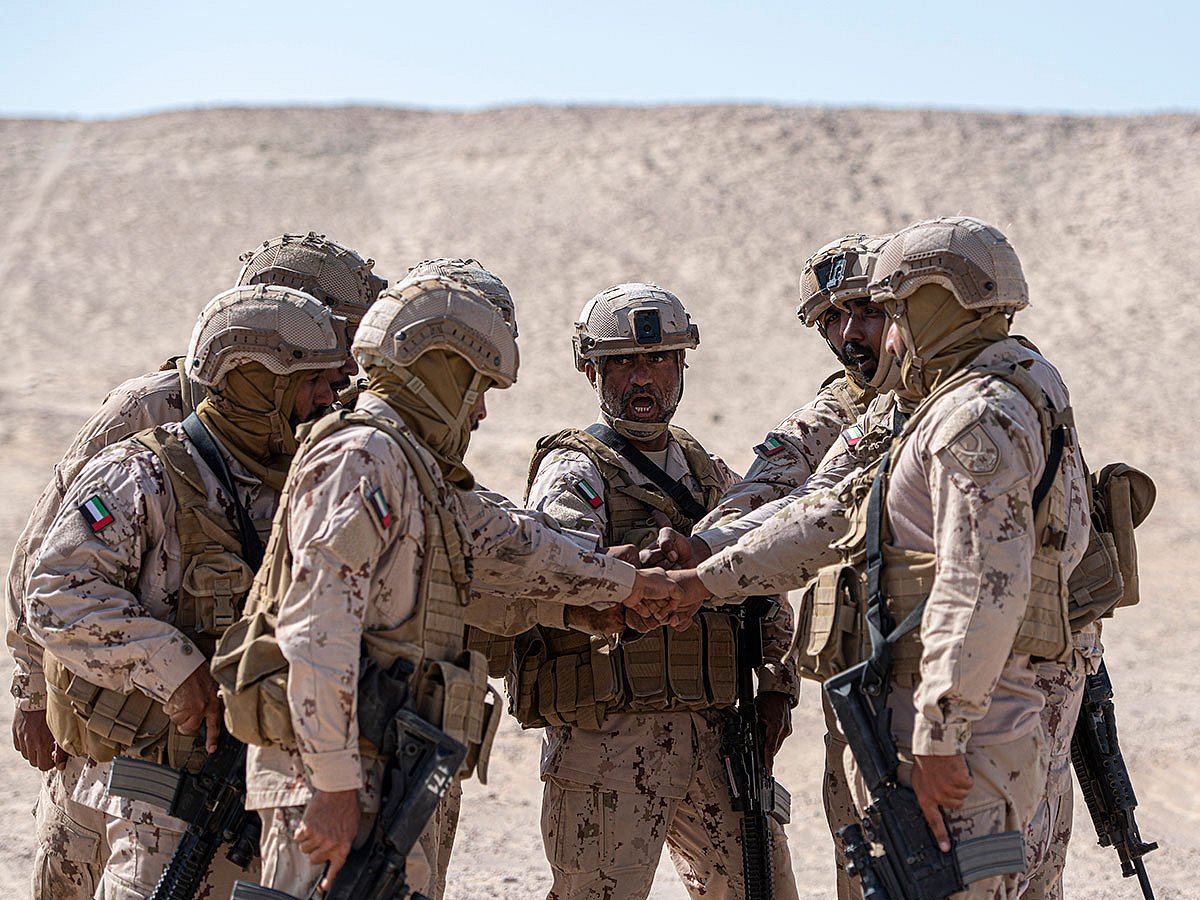
The concept of Emirati Resolve — a deeply rooted national value embodying determination, strategic foresight, moral responsibility, and steadfast readiness to defend legitimate states and protect regional stability — has long shaped the United Arab Emirates’ approach to security and peace. Resolve is not merely a cultural sentiment or rhetorical motif; it is a governing principle translated into policy, capability-building, and decisive action, particularly in confronting armed and terrorist organisations that threaten state sovereignty, regional order, and international security. The Houthi movement in Yemen represents one of the most prominent and dangerous manifestations of such threats.
The Houthis pose a multifaceted risk to regional and global security. Foremost among these risks is their systematic targeting of international maritime navigation. By attacking commercial vessels in the Red Sea and surrounding waters, the Houthis have transformed vital maritime corridors — essential for global trade and energy exports — into active military zones. Such actions threaten not only the security of regional states, but also the stability of international supply chains and energy markets, underscoring the global dimension of the Houthi threat.
Houthi risk
Beyond maritime insecurity, the continued dominance of the Houthis risks turning Yemen into a hub for international terrorism. Evidence points to coordination between the Houthi movement and transnational terrorist organisations, including Al Qaida and Somalia’s Al Shabaab, alongside the expansion of Daesh (ISIS) cells in remote Yemeni regions. This convergence of militant actors creates a permissive environment for terrorism, organised crime, and extremist ideology, with repercussions extending far beyond Yemen’s borders.
Crucially, the Houthis are not an indigenous national project reflecting the aspirations of the Yemeni people. Rather, they are embedded within a broader regional agenda that undermines Yemeni sovereignty and destabilises the Arab regional system as a whole. Their possession and use of ballistic missiles and armed drones against neighboring countries, combined with involvement in smuggling networks and irregular migration, further elevates the threat they pose to regional security.
UAE response
In this context, the UAE’s response has been guided by a principled conviction: regional security cannot be sustained without strengthening legitimate national states and confronting armed and terrorist organisations with clarity, consistency, and resolve. The Emirati participation in the Arab Coalition — particularly during Operation Decisive Storm — was driven by support for Yemen’s legitimate government and solidarity with the Yemeni people in the face of a militia-led coup. This engagement reflected a clear expression of Emirati Resolve, translating national values into disciplined strategic action.
On the military and strategic level, the UAE played a pivotal role in liberating the city of Aden, followed by Abyan, Lahij, and Shabwa governorates, preventing the collapse of southern Yemen into Houthi control. Emirati forces also contributed significantly to the liberation of Mokha Port and the securing of Yemen’s western coast and the Bab Al Mandab Strait — a chokepoint of immense strategic importance for global maritime trade. These efforts helped protect international shipping lanes and reduce threats to global commerce.
Furthermore, the UAE played a decisive role in liberating the city of Mukalla from Al Qaida, expelling the terrorist organisation and disrupting its operational and financial networks. These achievements did not merely represent tactical victories; they reflected a doctrine of proactive security — one that denies armed groups the space to entrench, finance themselves, or impose their will on state institutions. In turn, these operations enabled the Yemeni government to return and resume its functions, reinforcing the principle that state legitimacy is the cornerstone of long-term stability.
Humanitarian aid
Complementing its security role, the UAE adopted an extensive humanitarian and developmental approach toward Yemen. Between 2015 and 2025, Emirati humanitarian and development assistance amounted to nearly Dh30 billion, covering all 31 Yemeni governorates and benefiting more than 25 million people. This assistance reflected a comprehensive vision that views security and development as inseparable. In November 2025, the UAE further demonstrated its long-term commitment by pledging $1 billion to support Yemen’s energy sector, addressing one of the country’s most critical structural challenges. Emirati Resolve, in this sense, is not limited to confronting threats; it also entails sustaining hope, resilience, and recovery for affected communities.
Terrorist attacks
The terrorist attacks launched by the Houthis against civilian facilities and areas in the UAE on January 17, 2022, marked a defining moment. These events highlighted several critical lessons. They demonstrated the high level of international trust in Emirati leadership and the effectiveness of UAE diplomacy, as the country received broad international condemnation of the Houthi attacks. They also proved the readiness and professionalism of the UAE Armed Forces, emergency services, and law enforcement institutions in safeguarding national security and managing crises.
Equally important, the attacks revealed strong societal cohesion and public solidarity within the UAE during times of crisis. They underscored the importance of proactive security strategies to counter asymmetric threats and the value of intelligence-sharing with international partners. Finally, they reinforced the necessity of mobilising the international community against the terrorist threat posed by the Houthis — and the urgency of reaching a political solution to the Yemeni conflict, which has now extended beyond a decade.
In essence, the Emirati approach to confronting the Houthi threat illustrates how deeply rooted values such as Emirati Resolve can inform effective statecraft. By combining military determination, humanitarian commitment, diplomatic engagement, and societal resilience, the UAE has articulated a comprehensive model for addressing contemporary security challenges — one that is firm in confronting armed groups, principled in defending legitimacy, and steadfast in protecting regional and global stability, while remaining anchored in its ethical and national foundations.
Dr Mohammad Al Ali is CEO and Founder of TRENDS Research & Advisory and Senior Researcher/Writer and an Emirati author, specialising in strategic and political affairs
Sign up for the Daily Briefing
Get the latest news and updates straight to your inbox
Network Links
GN StoreDownload our app
© Al Nisr Publishing LLC 2026. All rights reserved.