Crushed dreams and civic chaos in India's streets
A young life lost to negligence exposes deadly flaws in Bengaluru's urban infrastructure
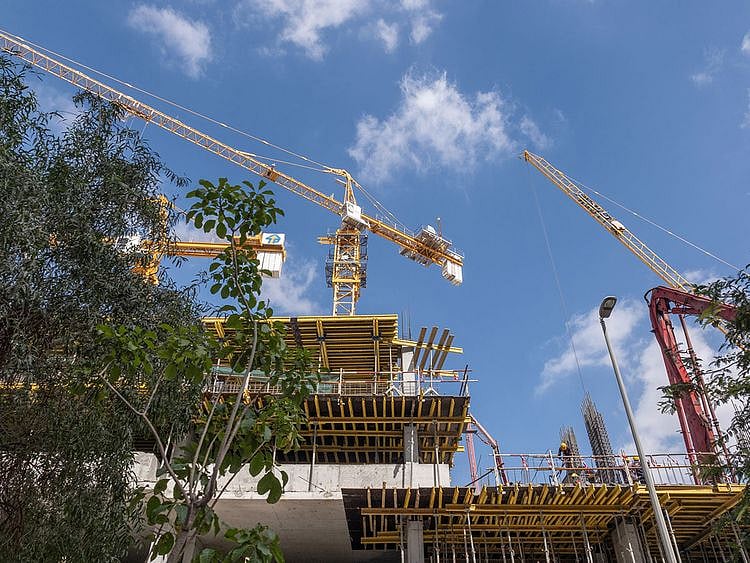
S. Tejeswini, a 10th Standard student, just fifteen years old, died last week in a sad and senseless manner. She was returning home from school when a wooden pole suddenly fell on her head from above. It came from a building under construction that she was passing by. She was rushed to the hospital by some onlookers and good Samaritans, but it was too late. She could not be saved. She was identified by the school ID that was found in her bag.
This happened in Bengaluru, India’s so-called Silicon City and one of the fastest-growing metros in the world. An innocent life lost. Will someone be held accountable? Unlikely. Criminal charges will be filed against the owner, builder or contractor as a matter of course, but will justice be served?
Highly improbable. Because it will be difficult to determine exactly who left the pole in such a precarious and unsafe manner that it came loose and crashed onto a pedestrian walking below. In any case, the matter will drag on for years before any sentencing is made.
Meanwhile, a precious and innocent life has been lost. A family is bereft of a young daughter. The mother and father, Dhanalakshmi and Sudhakara Rao, must be distraught and grieving. Tejeswini’s brother, Dishavanta, just two years younger, will have to live with the fact that his sister was snatched away because of the carelessness of some unknown person. A student of Vasavi Vidya Niketan, Tejeswini was also learning classical dance. Her father, a driver, would have had high hopes for her future.
Could this incident, one among many thousands across Indian cities, be dismissed as an “accident”? No. It speaks to a countrywide and endemic negligence and lack of accountability. The callousness, selfishness, and corruption of the governing class, most of whom are elected, are such that most Indian cities are devoid of the most basic safety standards and civic norms. Yes, there are regulations and rules aplenty, but these mostly serve to target those from whom some extra cash can be extracted on account of some infraction or other.
What does it tell us about civic infrastructure in the world’s most populous country and the fastest-growing major economy? The answer is simple: Indian cities have some of the poorest safety standards and infrastructure in the world. It seems that no one really cares. Streets are strewn with trash; iron rods and girders stick out of pavements or walls; stones and bricks from unfinished construction lie in dangerous places; uncovered manholes can easily become death traps for the unwary. Traffic and congestion are not only endemic but bordering on insane at almost any time of the day or night.
Indians are proud of keeping the insides of their homes spick and span. But outside, no one, it would seem, owns the city. Except for a couple of tier-two cities such as Indore in Madhya Pradesh and Mysore in Karnataka, most Indian conurbations are sorely lacking even in basic amenities and facilities. Water, electricity, plumbing, sanitation, garbage clearance and disposal, transport, pollution, and civic life leave much to be desired. Slums, illegal settlements, beggars, and homeless people are a common sight.
Even in New Delhi and its surrounding National Capital Territory, which boasts more than 20 million inhabitants — with more swarming in every day — the conditions are nothing short of appalling. When there is a mega international event, such as last year’s much-vaunted G20 summit, the VIP areas and roads leading to the venue were spruced up. The hawkers, beggars, and pavement dwellers were shifted out. Urban eyesores and slums were covered up with tall plastic screens, banners, and buntings. But things soon revert to the “normal” chaos and disorder.
Urban life in India, with its dirt, pollution, congestion, and terrifying traffic, is among the worst in the world. Who is responsible? A broken system. Will this change? Yes. Definitely. But the pace of change will be so slow that citizens will continue to suffer for decades to come — despite high taxation and exorbitant levies. Sad but true.
Bengaluru famous for burning lakes, unfinished pavements, and civic irresponsibility ranks among the worst cities in the world as far as its traffic congestion is concerned. Will Tejeswini’s death serve as a wake-up call? I certainly hope so. Otherwise, so early in the new year, another martyr to a city’s broken infrastructure and civic callousness will have died in vain.
Network Links
GN StoreDownload our app
© Al Nisr Publishing LLC 2026. All rights reserved.