Because Saudi Arabia and its GCC partners are often criticised for putting their own national security interests ahead of core Arab positions, Prince Turki Al Faisal's handshake with Israeli Deputy Foreign Minister Danny Ayalon at the most recent Munich Security Conference elicited confused reactions.
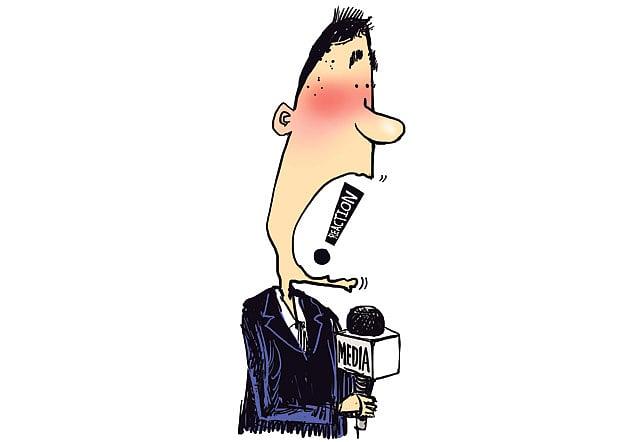
Arab officials who go through the motions with Israeli officers fall victim to the wrath of investigative reporters with selective memories. What is one to make of poor foresight and, more importantly, of the responsibility to provide accurate analysis?
Ayalon accused the erudite and soph-isticated Al Faisal, a former ambassador to the United States and Britain, "of conspiring to split a panel that was to include representatives from several countries including Israel, Saudi Arabia, Turkey, Egypt, Russia and the United States," allegedly because the Saudi did not wish to sit next to the Israeli representative.
According to press reports, Prince Turki objected to sitting next to Ayalon not because the deputy foreign minister was Israeli, but because of Ayalon's "boorish" behaviour a few weeks earlier towards the hapless Turkish ambassador to Israel, Ahmet Oguz Çelikkol.
Neither Prince Turki nor any number of diplomats appreciated Ayalon's January 12, 2010 gleeful remarks to news reporters, who were specifically ushered into the small office to film his meeting with Çelikkol when he declared, in Hebrew, "pay attention that he is sitting in a lower chair ... that there is only an Israeli flag on the table and that we are not smiling."
Though this was in extreme poor taste, as well as a bilateral dispute between Israel and Turkey, the Saudi disassociated himself from such a controversial figure. Ayalon's amateurish behaviour required an Israeli apology after the Israeli government evaluated the gravity of the matter, but what irked Prince Turki was Ayalon's goading at the Munich gathering, especially when he asserted that Saudi Arabia did not really support the Palestinian cause.
As the Saudi responded from the floor, Ayalon engaged in an irritating performance, calling on Prince Turki to come up to the podium and shake hands, which drew a retort for the showman "to come down from the podium" if he wished to. At this point, Ayalon stepped down, "apologised for what he had said and [Prince Turki] replied that he accepted the apology not only for himself but also for Çelikkol."
Commendable
In the tradition of honourable men, Prince Turki rose to the occasion, and was courteous without altering his political views. He issued a statement after diminutive critics lambasted him for shaking hands with an "enemy," stressing that "the Kingdom provided more than $500 million [Dh1.8 billion] in the last five years to the Palestinian Authority," and that his own "objections and denunciations of Israel's policies and its measures against the Palestinians have not changed."
In a clear message to Israel as well as its western backers, the former Saudi intelligence chief reiterated that peace should not be expected as long as the Israeli "theft" of Palestine was not redressed. This was as powerful a declaration as any Saudi ever uttered.
Even more compelling, and in what amounted to a specific political challenge, Prince Turki further declared: "Until Israel heeds US President [Barack] Obama's call for the removal of all [colonies], the Israelis must be under no illusion that Saudi Arabia will offer what they most desire — regional recognition." Crystal clear.
Two significant lessons ought to be drawn from this encounter.
First, shaking hands with someone who happens to be an official of a country that is at war with the vast majority of the Arab world does not amount to recognition and it behooves Monday Morning quarterbacks to do their homework before lobbing false accusations. President Bashar Al Assad shook hands, allegedly twice, with the Israeli President Moshe Katsav in Rome on April 8, 2005, during Pope John Paul II's funeral.
At the time, Damascus insisted that the gesture was a mere "formality," because "protocol required that participants shake hands."
Syrian officials went out of their way to clarify that the exchange did not "represent a change in Syria's position." Same for Prince Turki and Minister Ayalon. It should be obvious that the exchange did not represent a change in Saudi Arabia's position. In fact, it may be accurate to conclude that such interactions are the occupational hazards that diplomacy requires, which means that commentators should not read mysterious motives into routine etiquette.
The second and perhaps more important lesson concerns jumping to conclusions. By relying on secondary sources and spreading rumours that necessitate "clarifications," Arab investigative reporters fail to focus on the game of nations, which requires utmost flexibility. After every such encounter, partisan political bickering maestros attempt to decipher what is mundane and, frankly, inconsequential.
Few Arab and Muslim commentators appreciate the immense work that diplomats or academics perform in largely hostile environments, where being an Arab or a Muslim is often akin to being perceived with disdain.
Whether at the Munich Security Conference, Davos, or any number of such gatherings, a handful of senior envoys or scholars have the guts to stand up and offer their perspective. Prince Turki's principled stand, whereby he demonstrated statesmanship, remains an exception rather than the rule. Those who aspire for effective leadership should emulate it.
Dr Joseph A. Kechichian is a commentator and author of several books on Gulf affairs.
Sign up for the Daily Briefing
Get the latest news and updates straight to your inbox
Network Links
GN StoreDownload our app
© Al Nisr Publishing LLC 2026. All rights reserved.