‘The wound will not heal as long as the knife keeps twisting,” reads a profession of faith by four young Congolese and Rwandan artists trying to shatter stereotypes between the two neighbouring people of the Great Lakes region.
Through their group, Simama Africa, they mobilised some 30 young people from both countries for a day of reflection last month at the Protestant Welcome Centre in Goma, eastern Congo.
“We thought is was the right moment to create a dialogue between the youth of the two countries to see how to break the mistrust that the commemoration of the Rwandan genocide of April 1994 risked creating every year,” said Fison Muhindo, a young Congolese man and one of group’s founders.
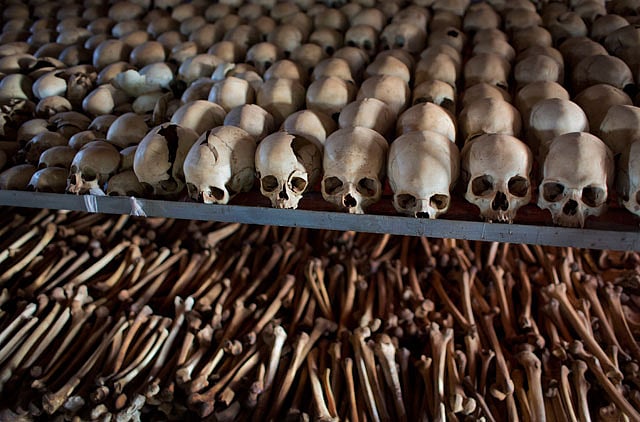
The Rwanda genocide, carried out against the Tutsi people of Rwanda by the ruling Hutu majority, claimed the lives of an estimated 500,000 to one million Rwandans. “We are all conscious of this sad history,” Muhindo said. “But if we continue to reflect on it negatively, we will not know how to build peace between us.”
For him, the persistence of the Rwandan Hutu rebel group Democratic Forces for the Liberation of Rwanda and other armed groups from Congo originates from this unfortunate event.
The conflict in Congo has already caused more than five million deaths, according to many reports.
Muhindo thinks the young generation needs to get involved in the search for a lasting solution.
A young Rwandan member suggests creating partnerships and exchanges. Speaking of an attack on Goma in 2012 by the M23 movement, a rebel military group based in eastern Congo, he recalled that on the eve of the attack: “I was in serious danger at the great barrier (the border crossing between Gisenyi and Goma) when I wanted to come here to Goma. I ended up vowing never to set foot here again,” he says. “Today, I understand that there were misconceptions between the youth of these two countries because some still remembered the images of hatred of 1994, even though we’re already in 2017.”
The young Rwandan firmly believes that history should not divide an entire people, and during the dialogue between the Congolese and Rwandan youths, he managed to convince his Congolese counterpart to participate in an activity at a Rwandan cultural centre in Gisenyi.
Hilda Vagheni, head of communications at the Central Baptist Church at the Africa Centre, who also attended the event, thinks that the two countries should adopt policies to soften the language of some slogans, such as “the genocide inflicted on the Tutsis”. Repeating this phrase victimises the youths of that community and creates a sentiment of guilt among young Hutus, she says, hindering the consolidation of peaceful relations between the two neighbouring communities.
The Simama Africa initiative took place the day after the ninth Diocesan Youth Day, when Christians from all denominations in Rwanda, Burundi and Kenya celebrate with those from the Congolese regions of North and South Kivu.
The essential message that emerged from the meeting was: “We are all the same.”
— Worldcrunch, 2017/New York Times News Service
Sign up for the Daily Briefing
Get the latest news and updates straight to your inbox
Network Links
GN StoreDownload our app
© Al Nisr Publishing LLC 2026. All rights reserved.