Saturday’s conviction of former Egyptian President Hosni Mubarak on charges of complicity in the killing of protesters during the January 25 revolution last year will go down in Arab history as an unprecedented event. Never before has an Arab leader been tried before a civilian court while receiving what most observers agree was a fair trial. Mubarak, the uncontested ruler of Egypt for 30 years, was toppled in a peaceful uprising that caught the world’s attention and earned its admiration. In the process more than 800 Egyptians were gunned down by anti-riot police and other organs of the regime.
Mubarak and his Minister of Interior, Habib Al Adly, were convicted and sentenced to life imprisonment for their involvement in the murders of protesters. But Al Adly’s lieutenants, who included top ranking officers in the notorious State Security and Central Security apparatuses, were acquitted. So were Mubarak’s sons, Ala’a and Jamal, who were found not guilty on corruption charges.
Initial reaction to the sentencing was euphoric, but soon afterwards angry Egyptians headed to Tahrir Square to express their dismay and frustration over the acquittal of Al Adly’s aides and Mubarak’s sons. Soon the airwaves were cluttered with legal and political chatter over the court’s ruling. Many observers expressed fears that the sentences would be overruled by the appellate court. Some cast a shadow of doubt over the true intentions of the judges presiding over the controversial case. Ever since the removal of Mubarak Egyptians have been trading in conspiracy theories involving the ruling Supreme Council of the Armed Forces (Scaf), the remnants of the old regime, called foloul, and even the powerful Muslim Brotherhood and its political arm the Freedom and Justice Party (FJP).
Disqualified
There is little trust in anything. Egyptians who voted for a constitutional referendum last year now believe they were duped by Scaf. There are legal cases pending against the parliamentary elections, which gave a controlling majority to the Islamists. And now a good number of Egyptians, especially those rallying at Tahrir Square in central Cairo and in other cities, want former army general and presidential candidate Ahmad Shafiq, who was Mubarak’s last prime minister, to be disqualified from the run-off vote in three week’s time.
Those who took to Tahrir Square are also calling for an immediate handing of power by Scaf to a civilian authority. Some talk of substituting the run-off vote on June 16 for a presidential council comprised of former presidential candidates Hamdeen Sabahi and Abdul Moneim Abu Al Fotouh in addition to FJP’s candidate Dr Mohammad Mursi. The latter has proposed to appoint the two men as his deputies once he wins the elections.
In short no one really knows where Egypt is heading or what events will unfold in the coming few weeks. The army is supposed to hand over power to the newly elected president at the end of June. In the midst of revolutionary rapture there are fears among secularists of an Islamist victory that would give the Muslim Brotherhood complete control over the future of the country. Some youth movements associated with the revolution have asked the Islamists for written guarantees ensuring that they would preserve the country’s civil nature and protect women’s rights.
On the other hand, the astonishing performance by Shafiq in the first round of elections has sent jitters across Egyptian society. His victory in the run-off can only mean a humiliating defeat to the revolution and a return of the foloul. Scaf has maintained that it will not interfere in the democratic choice of the Egyptian people. All other options will be resisted, it said. The Islamists would want to see Shafiq disqualified so that their candidate can register an overwhelming triumph.
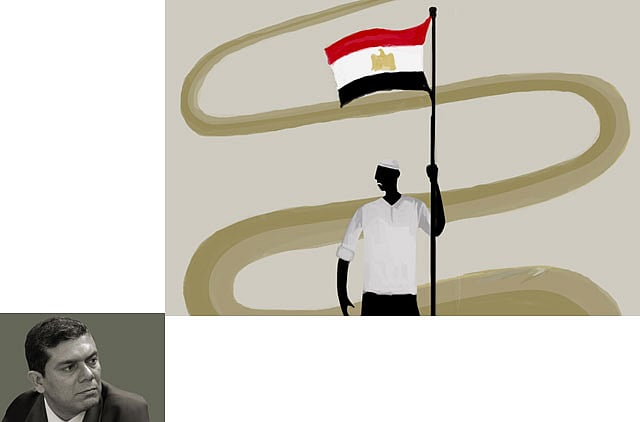
Egypt’s revolution has taken a serpentine route which at times defeated its objectives. It vacillated between supporting the army and its sponsorship of the political process — flawed as it may have been — and opposing the military and accusing it of plotting against the people. Now the revolutionaries want to change the rules of the game — yet again. The Islamists fear Shafiq, but believe the uproar over the court’s ruling on Mubarak will serve their candidate. At the same time the youth staging their sit-in at Tahrir Square want the Islamists to abandon the elections and go for a reconciliatory presidential council.
On top of this, Egypt is suffering from a free-falling economy and acute shortages in gasoline and essential goods. The current stand-off will only exacerbate the situation. This plays into Shafiq’s hand, who is promising stability and a return to the rule of law. His message appeals to the country’s Coptic minority and to many middle class Egyptians who are fed up with the revolutionaries and the sit-ins at Tahrir Square. They also fear Sharia rule under the Islamists.
The sentencing of Mubarak has failed to unite Egyptians. It is difficult to find anything that will unite them today. Moreover, Without a new constitution that specifies the president’s authorities the future looks grim. But overall, Egyptians have presented a peaceful alternative to the way Libyans have dealt with their former leader. Even Saddam Hussain’s historic trial was held under American occupation and lacked fairness. But the time must come when Egyptians must part ways with the past. The experiment of South Africa with its Truth and Reconciliation Commission is worth emulating.
Egyptians must find a way to unite again. Dwelling on the past and on conspiracy theories will keep the country bogged down. The time must come when Egyptians must look towards the future.
Osama Al Sharif is a journalist and political commentator based in Amman.
Sign up for the Daily Briefing
Get the latest news and updates straight to your inbox
Network Links
GN StoreDownload our app
© Al Nisr Publishing LLC 2026. All rights reserved.