A dark December: Analysing the convergence of global violence in late 2025
Why Bondi Beach, Germany’s markets and a US campus cannot be understood the same way
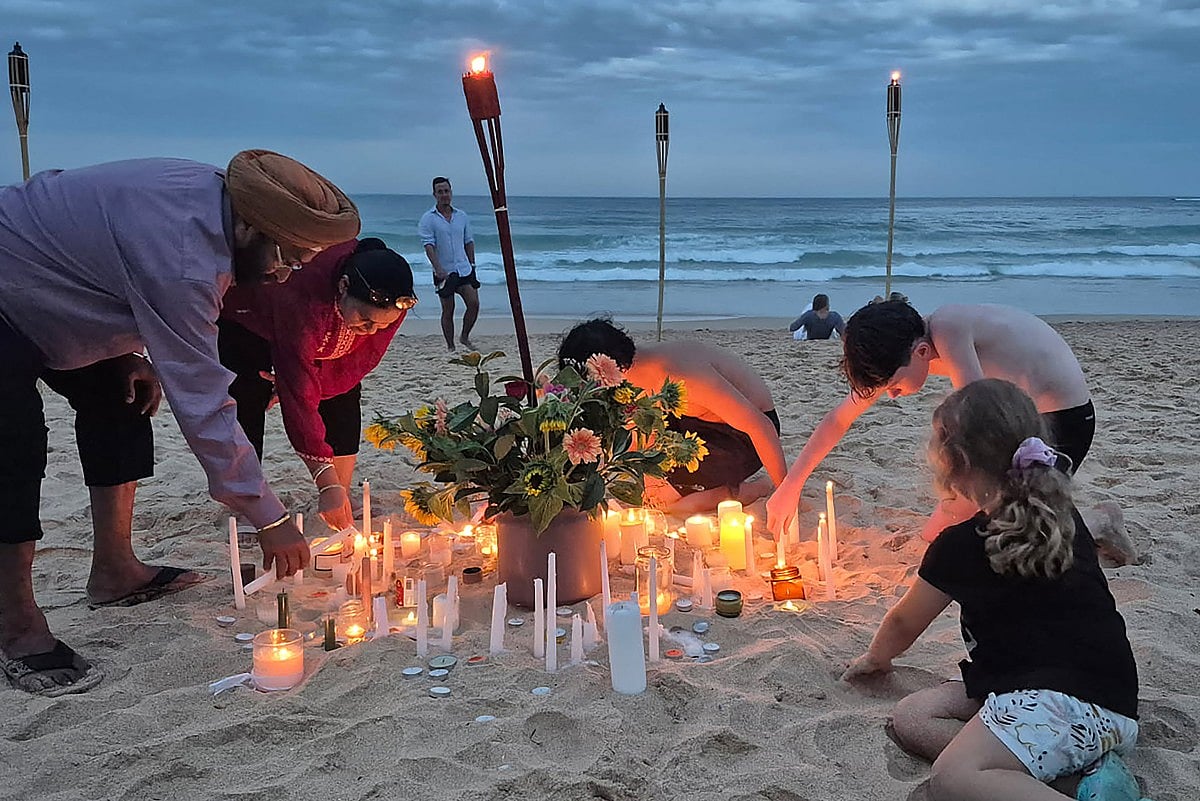
The mid-December period of 2025 has been marked by a tragic convergence of violence across three continents, shattering the festive atmosphere of Hanukkah and the pre-Christmas season. The events at Bondi Beach in Australia, Brown University in the United States, and a cluster of Germany-related holiday-security incidents, ranging from foiled extremist plots to high-impact “scares” at Christmas markets, though distinct in their execution and geography, force a reckoning with the evolving nature of political violence and public safety.
Although these incidents occurred in vastly different political and social contexts, they share enough characteristics to invite comparison. At the same time, critical differences in motive, targeting logic, and perpetrator identity highlight why analytical precision matters.
Together, these cases illustrate a broader trend in contemporary political violence: the operational convergence of terrorism and mass violence, alongside an increasing fragmentation of ideological commitment. Understanding these distinctions is essential not only for legal classification, but for policy responses, prevention strategies, and public discourse.
Bondi Beach: Antisemitic violence and the logic of terror
The Bondi Beach attack in Sydney most clearly aligns with the established definition of terrorism. The attackers deliberately targeted a Jewish community gathering celebrating Hanukkah, a choice that was both symbolic and strategic. The selection of a religious minority engaged in a public ritual transformed the victims into representatives of a broader community and turned the act into a message directed far beyond the beach itself.
Timing reinforced this communicative dimension. Attacking during a religious holiday maximised visibility, emotional resonance, and fear. The attack was intended to go beyond a single act of violence, inflicting fear and psychological damage on a much broader audience.
Equally significant is the identity of the perpetrators: a father and son operating as a small, self-contained unit. This highlights a key trend in modern terrorism, the decline of hierarchical organisations in favour of micro-networks bound by ideology, kinship, or shared grievance. It also underscores how extremist violence today often emerges from intimate social spaces rather than formal organisational structures, making early detection far more difficult. Such actors may never formally affiliate with a group, yet still internalise and act upon extremist narratives. The Bondi case thus reflects how contemporary terrorism can be both deeply ideological and operationally minimal.
What has sharpened since the attack, however, is the broader political and institutional argument now unfolding in Australia: that the massacre was not only a “security failure,” but a culmination of what critics describe as a “cascading” or permissive environment of antisemitism left insufficiently confronted.
Germany’s Christmas markets: From “classic” terror plots to high-impact scares
Germany’s Christmas markets fit squarely within a long-standing European terrorism template: quintessential “soft targets”, crowded, predictable, symbolically charged, and difficult to secure without fundamentally altering their character. They have been repeatedly targeted in extremist-motivated attacks precisely because they combine dense civilian crowds with strong cultural and symbolic significance.
Vehicle ramming, the preferred method in many cases, exemplifies the tactical evolution of terrorism toward simplicity. It requires little technical expertise, no access to explosives, and minimal coordination, yet produces mass casualties and widespread fear.
In Duderstadt (Lower Saxony), for example, a Christmas market was evacuated after a report of a person with a weapon. Authorities later identified a 17-year-old and clarified the object was a realistic-looking replica rather than a live firearm. This is not a footnote. It shows how “terrorism-like” public panic can be produced by lower-level threats, hoaxes, or reckless intimidation, forcing costly security responses and amplifying societal anxiety even when ideological intent is absent.
Importantly, the identities of suspects, often highlighted in public debate, are analytically less important than their targeting logic. As with many recent plots, when ideology is present it often involves small clusters rather than structured cells, reflecting how extremist narratives increasingly serve as a permissive framework for violence rather than a rigid command-and-control system.
Brown University: Mass violence, suicide, and the limits of terrorism classification
The shooting at Brown University, while no less tragic, occupies a different analytical category. Based on the latest publicly available information, the attack does not show clear evidence of ideological motivation, identity-based targeting, or an attempt to communicate a political message to a wider audience. The violence appears directed at a place, a campus building during exams, suggesting personal grievance, crisis, or a desire for notoriety rather than terrorism.
At present, the incident still most closely fits the typology of the American “school shooter,” a category often driven by personal grievance, psychological distress, or a desire for recognition rather than a coherent political agenda.
Crucially, new evidence has now confirmed that the suspect, identified as 48-year-old former Brown graduate Claudio Manuel Neves Valente, died by suicide in a New Hampshire storage facility before he could be apprehended. His body was found on December 18 and an autopsy confirmed a self-inflicted gunshot wound. Valente is also linked to the killing of an MIT physics professor in Massachusetts two days after the Brown University shooting.
These developments reinforce a troubling pattern seen in some mass shooters: the use of suicide not only as an escape from capture but as a final act in a series of lethal choices that may be as personal and psychological as violent. Though motive remains under official investigation, acquaintances described Valente as disillusioned and resentful toward the university, hinting at a narrative of personal grievance rather than organised political intent.
This distinction matters. In the United States, mass shootings frequently produce terror-like effects such as fear, disruption, national trauma, without being terrorism in the definitional sense. Absent evidence such as manifestos, ideological statements, or deliberate symbolic targeting, such incidents are more accurately classified as criminal mass violence. The psychodynamics of some shooters, particularly those who end their own lives, can further complicate attempts to assign clear categories of motive.
Biographical details alone rarely explain motive. What differentiates terrorism is not who the perpetrator is, but why they choose their targets and what message they seek to send.
Shared features: Why these attacks feel connected
Despite their differences, these cases feel interconnected because they share structural features characteristic of today’s threat environment. All involve soft, open civilian spaces designed for social interaction rather than security. All exploit moments of heightened visibility such as religious holidays, exam periods, and festive seasons, when public attention is already focused and emotional stakes are high.
Most importantly, all reflect the rise of small-scale violence with disproportionate psychological impact. Whether ideologically driven or not, perpetrators increasingly operate alone or in tiny networks, borrowing tactics from terrorist playbooks while pursuing a range of motivations. This convergence makes it harder for the public and sometimes authorities, to distinguish terrorism from other forms of violence.
Divergence and the risk of conceptual overreach
However, conflating these incidents under the single label of terrorism would obscure critical differences. The Bondi Beach attack and ideologically motivated, foiled holiday-season plots rely on symbolic group targeting and intimidation. The Brown University shooting, at least based on current evidence, does not. Meanwhile, incidents like the Duderstadt evacuation show that societies can experience “terror effects” even when the underlying event is not terrorism at all.
Precision is not semantic pedantry. It shapes how societies respond. Counterterrorism tools are not always suitable for addressing school shootings, and vice versa. Effective policy requires matching threat type to intervention.
What these cases reveal about contemporary political violence
Taken together, these incidents reveal a fragmented landscape in which ideological terrorism persists but increasingly overlaps with other forms of mass violence. Extremist narratives continue to motivate targeted attacks, particularly against symbolic civilian gatherings. At the same time, non-ideological mass violence remains prevalent, borrowing the spectacle and tactics of terrorism without its ideological core.
The most reliable indicator of terrorism today is not the perpetrator’s background or the weapon used, but the logic of targeting and messaging. When violence is designed to intimidate a community, disrupt social coexistence, and resonate far beyond the immediate victims, it crosses into terrorism. When it does not, it remains mass violence, devastating, but analytically distinct.
Understanding and maintaining this distinction is essential in an era where fear travels faster than facts, and where the line between terror and violence is increasingly blurred—but not erased.
Dr Kristian Alexander is a Senior Fellow at the Rabdan Security and Defence Institute (RSDI), Abu Dhabi, UAE
Sign up for the Daily Briefing
Get the latest news and updates straight to your inbox
Network Links
GN StoreDownload our app
© Al Nisr Publishing LLC 2026. All rights reserved.