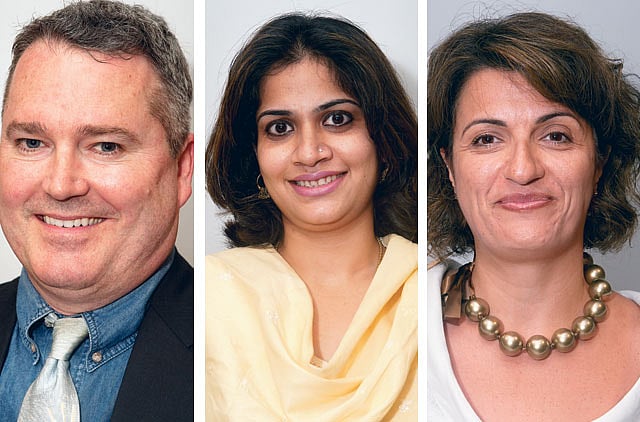
More than 26 per cent of children in the UAE are overweight. That is almost 250,000 young lives. And for more than two-thirds of these children, this will remain a life-long burden. The UAE is ranked 10th in the list of countries with the most overweight people and second when it comes to Type-2 diabetes. Child obesity in the UAE is clearly an issue, but what can we do to address it? Gulf News readers gathered in the newspaper’s office to find the answer. Issues ranging from lifestyle habits and parenting approaches to the need for awareness campaigns were touched upon in this month’s live reader debate. The readers tried to find the reason behind the surge in childhood obesity in the UAE and across the world. Once again, our guest moderator, Dr Don Love, a Gulf News reader, steered the debate and helped fellow readers in their efforts to find the answers to this long-standing issue. Here are the excerpts ...
Dr Don Love:
Child obesity is clearly a problem. where have we failed?
Sofia Aqeel Ahmad:
It is not the children’s problem, the problem is because of us — how we treat our children and how we care for them. Life has become too fast-paced, both parents have started working. But it is especially the duty of the mother to balance everything at home. Children should be given a nice, balanced diet. A big problem in the UAE is that we don’t have [enough] parks and playgrounds. We have caged our children.
Areej Juma:
[As children] we would go to a summer house in the mountains and ride a bike and go camping. You can’t do that here because of the heat. But it is also the lifestyle of the parents [which matters]. Children will sit in front of the TV, go to the cinemas or the malls. A lot of the responsibility falls on the parents.
Sunitha Rajkumar:
Exactly, because there is so much competition in academics, we are bothered more about our child excelling in academics.
Dr Don Love:
So, perhaps the school has to share responsibility?
Sofia Aqeel Ahmad:
Schools have the greatest responsibility, because children spend half the day in schools.
Vaishnav Rajkumar:
Our school has mass physical education classes and self-enhancement programmes, which include a lot of physical activities like karate.
Areej Juma:
I drop my child off at school every day and go to a supermarket nearby. I see pupils buying energy drinks, chocolates and chips. One thing that I am really proud of is that I raised three children and not once did my children buy food from the canteen. Why not prepare a sandwich in the morning? I have a friend who cooks a night before for her children. They don’t know what a burger from a restaurant tastes like!
Dr Don Love:
What is the administrative view on this?
Dr Utpal Kataky:
It varies based on socio-economic conditions. There are many schools in the UAE and some don’t have all the sports facilities. It would be unfair to say that every school should provide these. Obesity is multifactorial, of course the school plays a role to a certain extent, but even the parents have a responsibility. There are some who can afford house help, and it is the nannies who prepare the lunch for the child, not the parents.
Dr Don Love:
should we make physical activity a requirement?
Areej Juma:
Schools do have [a lot of extracurricular activities] because the hefty fees that they charge are not just for academics. Children at my son’s school are offered different clubs, some of which are very good.
Sofia Aqeel Ahmad:
Physical activity is not just running and biking. A lot of things could be done — like dancing or aerobics. My child’s school gives them indoor activities during summer. Obese children are often depressed. We need to boost their morale and tell them that we are there to help them. Obesity is not a disease, but it can lead to many diseases, like asthma or heart problems. I was shocked to see some of the statistics when I was researching child obesity.
Areej Juma:
We need awareness campaigns to teach parents about healthy eating.
Dr Don Love:
But do these campaigns work? Also, healthy food is more expensive than junk food.
Sofia Aqeel Ahmad:
If you have 50 fils, buy a banana, an apple or a cucumber. You can do a lot, but you have to think and make a clear plan.
Sunitha Rajkumar:
I make it a point to pack at least two fruits in my son’s lunch box and he really enjoys that.
Vaishnav Rajkumar:
I wake up very early to board my bus at 6am which means that I have to sleep early as well. So, after the load of homework, at around 8pm I go to sleep and don’t have the time for physical activities.
Dr Don Love:
Are We [a society] based on healthy eating and healthy living?
Sofia Aqeel Ahmad:
The media can play a very important role and can change people’s thinking. You can have awareness campaigns — why not walk for five minutes for obesity every morning?
Sunitha Rajkumar:
But when do we get the time to go outside during weekdays? [Until recently] parks have not even been open in the mornings in Sharjah.
Dr Utpal Kataky:
I think there are both sides to this. When I came here 32 years ago there weren’t as many parks. Now, you have so many. Of course the population has increased, too. I used to tell parents that if you give your children some pocket money, monitor where they spend it, too.
Areej Juma:
I tell people to keep children away from the middle aisles, where all the junk food is. What will parents do when the children just want to buy these products? Often they just let them [take whatever they want].
Sofia Aqeel Ahmad:
But children are children. How can you stop them?
Areej Juma:
If you have to give them [junk food], do it in a small quantity. Tell them why you can’t give them too much.
Dr Utpal Kataky:
Another problem is that there is a lot of commercial exploitation with advertising and then there is peer pressure.
Areej Juma:
If you read the information on the labels on some of these products, I wouldn’t give them to any child! You don’t even understand some of the ingredients.
Dr Utpal Kataky:
I think the only solution is to do what they are doing with smoking. There is no smoking in malls and [most] public places. And through these laws they have discouraged people from smoking.
Dr Don Love:
So, should we have chocolate-free zones too?
Dr Utpal Kataky:
Of course you can’t do it in the same way but something needs to be done to stop children and parents from buying junk food.
Sofia Aqeel Ahmad:
The school my child goes to has a Fruit Day and Vegetable Day just to inculcate healthy eating habits.
Vaishnav Rajkumar:
In my canteen, I see that vegetable sandwiches are available but in the mornings the sandwich shelf is [completely stocked] and in the evening it is full, too.
Dr Don Love:
But all the chocolates are gone! Do schools have [effective] health education programmes?
Dr Utpal Kataky:
In the last year I’ve had about 4-5 such sessions where I have given health education to primary, middle and senior schools students.
Sofia Aqeel Ahmad:
My children’s school also has an entire week called Salad Week — we give them a fruit every day, and the children make salads using them. Through the campaign at least my children have an idea about what fruits are.
Vaishnav Rajkumar:
We have presentations on healthy living at our school. Often, cartoon characters are used to teach us about the effects of eating junk food.
Sunitha Rajkumar:
But then at any social event, including class parties, all that you get to see is junk food!
Dr Utpal Kataky:
I tell parents that you must have at least one meal together. There are a lot of parents who don’t even eat dinner together; the children have dinner while watching something on their laptops.
Dr Don Love:
If there is one suggestion that you would like to make to parents, what would it be?
Areej Juma:
Talk to your children. That’s the only way children can change and improve their eating habits. As for over half the day children are on their own and they have to know how to make the right choices.
Dr Utpal Kataky:
Parents should set a good example. Instead of keeping a dozen cans of soft drinks at home, try to buy a dozen fresh oranges or apples.
Sofia Aqeel Ahmad:
We can get children involved while we are cooking. No matter how busy we are. Out of 24 hours, just take half an hour to guide them.
Sunitha Rajkumar:
Schools need to work on this, too. They need to make physical fitness mandatory. I feel that if you get low grades in academics you get scolded. But with physical education, even if you get a B or a C, there is nobody to question you.
Dr Utpal Kataky:
I think you should keep a requirement of a minimum of 50 per cent compulsory marks in physical education to pass a class.
Areej Juma:
If they are unhealthy, how can they focus during school? I don’t think an unhealthy child can excel in anything. Good academics can come only from a healthy physical state.
Dr Don Love:
So, do you want to have the last word Vaishnav?
Vaishnav Rajkumar:
Well, if I have a craving for chocolate ice cream or anything [else], all I have to do is pester my parents and I’ll get it. But not every day.
Meet the Gulf News Reader club
Areej Juma
Mother of three; bakes for school children and blogs about healthy eating and cooking.
Sofia Aqeel Ahmad
Mother of three and resident of Sharjah for the past six years.
Dr Don Love
Sharjah-based mass communication professor and guest moderator.
Sunitha Rajkumar
A management graduate, a parent and resident of Sharjah for the past 13 years.
Vaishnav Rajkumar
Eight-year-old pupil studying in grade four in The Millennium School, Dubai.
Dr Utpal Kataky
Pediatrician, working with Dubai Modern High School as a school doctor.
Conclusion
- Parents need to gather more information on healthy eating and living and monitor their children’s health.
- Schools need to work with parents to help children stay fit.
- Media campaigns can be effective in controlling obesity among children.
- Junk food is easily available and is leading to child obesity.
Sign up for the Daily Briefing
Get the latest news and updates straight to your inbox
Network Links
GN StoreDownload our app
© Al Nisr Publishing LLC 2026. All rights reserved.