What is mogging? The 2026 Collins Word of the Year that has people over 30 asking...why?
Mog is a clipped form of AMOG — "alpha male of the group"
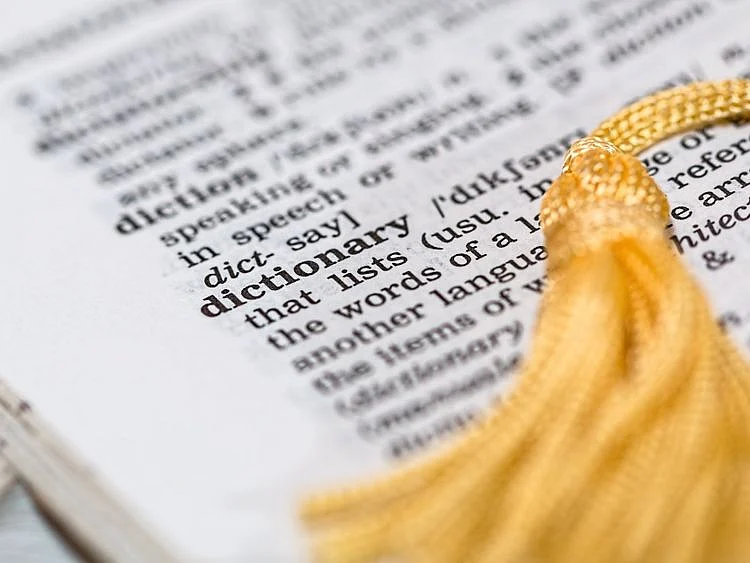
I don't know how much bandwidth I have left to understand more new words.
I survived rizz. I made my peace with delulu. I nodded along to aura farming the way you nod at a someone in a country where you only know the word for 'thank you.' By the time maxxing appeared, I stopped trying.
And now, on November, Collins English Dictionary has crowned its Word of the Year for 2026, and it is, deep breath, mogging.
If you just heard that word for the first time, congratulations: you have been mogged. Let's get you caught up.
So what is mogging?
To mog someone is to outshine them. Upstage them. Make them look, by comparison, like the 'before' photo. Collins defines it as outshining or outperforming someone or something, usually used playfully or ironically when somebody gets upstaged.
It started out being about looks, for example, the the friend who turns up to the group photo looking like a cologne advert while everyone else looks like they've just come off a red-eye. But it has since stretched to cover almost anything. Your colleague's spreadsheet mogs yours. Your neighbour's barbecue mogs your barbecue. Your seven-year-old's sandcastle mogs the one you spent forty minutes engineering. (It always does.)
It has also, inevitably, sprouted a whole sub-genre. There is frame-mogging (having a bigger build than the person beside you), jaw-mogging (better jawline), hair-mogging (self-explanatory and, for some of us, painful). People joke about walk-mogging strangers they overtake on the pavement. Olympic figure skating champion Alysa Liu even told reporters that her competition strategy was simply "to mog."
Where did it come from?
Here is where the cheerful bit takes a slightly less cheerful turn.
Mog is a clipped form of AMOG — "alpha male of the group" — a term that surfaced in pickup-artist and so-called manosphere forums in the early 2000s. In those corners of the internet, the AMOG was the dominant man in the room, and to AMOG someone was to out-alpha them, usually in front of women.
By around 2016, Merriam-Webster notes, the shortened verb mog was turning up on male internet forums to describe taller, more muscular men pictured next to supposedly "inferior" ones. In the early 2020s it became core vocabulary of looksmaxxing, the online subculture of young men trying to maximise their physical attractiveness, sometimes by fairly extreme means. If looksmaxxing is the process, mogging is the scoreboard.
The word's breakout moment this year came courtesy of a streamer called Clavicular, a prominent looksmaxxing figure, who posed for a photo with a burly fraternity leader. His own followers declared he had been "brutally frame-mogged." The internet, which loves nothing more than a self-own, did the rest.
(Fun footnote for the word nerds: mog is not entirely new to English. Old British dialect used it to mean to move along or shift off somewhere. Which is roughly what the rest of the vocabulary did when this one arrived.)
How a forum word went mainstream
What's interesting, and why Collins picked it, is what happened next. Gen Z and Gen Alpha took a word born in some genuinely grim online spaces and turned it into a joke. Today it's mostly used as gentle teasing between friends: a way of saying 'you look great and I resent it,' rather than a ranking of human worth.
The numbers back this up. Collins' lexicographers, who track a 27-billion-word corpus spanning news and social media, recorded a 210% rise in usage in 2026, both online and in ordinary conversation. Mogging beat a shortlist that included firewave, and in doing so, mogged it.
That's the magic of slang. Language doesn't ask permission. A word can start in the worst room in the house and end up at the dinner table, its edges sanded down by a few billion ironic uses.
The verdict
So there it is. Mogging: word of the year, cautionary tale, and proof that English will absorb absolutely anything if you give it a funny enough meme.
Maybe 10 years from now, I'll suddenly look up the internet and find that 'Pikapikachued' is a new word and it means to be so stunned by something, you almost feel electricity bolting from your cheeks.
Sign up for the Daily Briefing
Get the latest news and updates straight to your inbox
Network Links
GN StoreDownload our app
© Al Nisr Publishing LLC 2026. All rights reserved.