New in Dubai? 20 everyday Arabic phrases every expat learns, from marhaba to khalas
Why new arrivals in Dubai quickly start saying habibi, yaani and inshallah
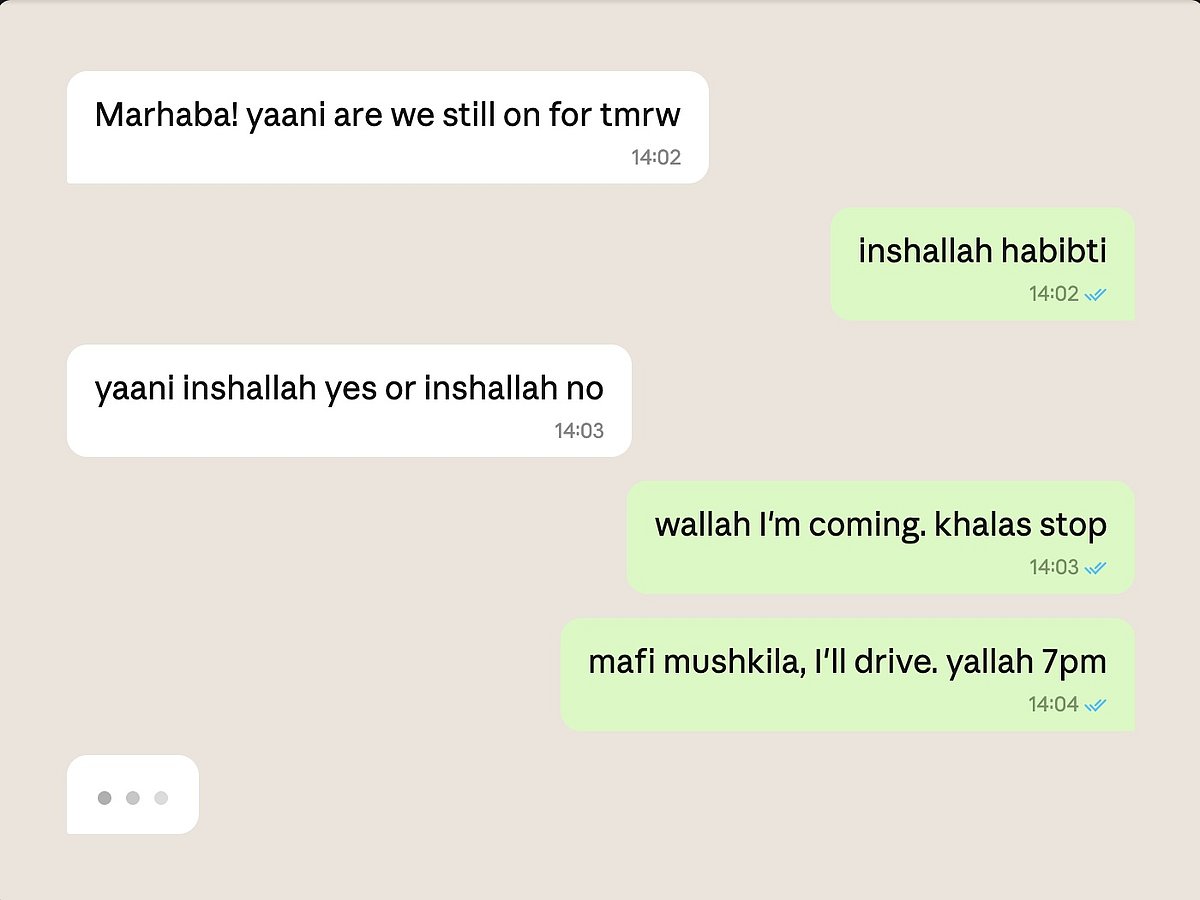
Dubai: In Dubai, we don't say hello. We say marhaba.
There was a social media trend that went viral on Instagram a while ago: "In my city, we don't say..." Most versions were built around local stereotypes. Dubai's was different, because the phrases people listed are the ones residents genuinely use every day.
Across a city where more than 200 nationalities live together, people have created a shared vocabulary of Arabic, English, Hindi, Urdu and even bits of Tagalog that everyone seems to understand, even if they don't speak the language they came from.
Here are some of the Arabic words and phrases you'll hear in Dubai, what they actually mean, and why almost everyone ends up using them.
Marhaba
Hello, and rather more welcoming than hello manages.
It comes from a root suggesting spaciousness, the sense of making room for someone. Ahlan wa sahlan does similar work and means welcome. If you learn one word from this list, this is the one most likely to be said back to you.
Yaani
The word every non-Arabic speaker here has absorbed without ever looking it up.
Literally it means "it means". In practice it does the job of "like", "you know", "sort of", and the pause you make while working out what you actually think. It is the most useful filler word in the region, and it slots into English sentences without any resistance at all.
Habibi and habibti
My love, my dear, and the most flexible word in Gulf English.
Habibi to a man, habibti to a woman. It can be genuine affection, casual friendliness between colleagues, or a pointed way of telling someone they are being unreasonable. Tone does all the work. "Habibi, no" is a complete sentence and everyone here understands exactly what it means.
Inshallah
God willing, and the source of an entire genre of jokes.
Used sincerely, it acknowledges that plans are not entirely in your hands. Used in an office, it can mean yes, probably, ask me later, or absolutely not, depending on who is saying it and how fast. The trend videos tended to translate it as "I promise", which is funny precisely because it so often is not one.
Wallah
I swear to God.
Technically an oath, practically an intensifier. It turns a statement into a sincere one. "Enti so cute wallah", which turned up in more or less every version of the trend, is a perfect way of how people here actually talk: an Arabic pronoun, two English words and an Arabic oath, all one one sentence.
Yallah
Let's go. Come on. Hurry up. Right, we're leaving.
Probably the most widely understood Arabic word in the UAE, used constantly by people who speak no other Arabic whatsoever. Yallah bye is a farewell in its own right.
Khalas
Enough. Done. Finished. Stop.
Ends arguments, ends meetings, ends children's negotiations about screen time. Firm without being rude, which is a difficult register for English to hit in a single word.
Bikam
How much.
Some versions of the trend used haza kam, which is closer to formal Arabic. In a souk, in practice, it is bikam. Worth learning before you visit the Gold Souk rather than after.
Kayf halik
How are you. Kayf halak to a man, kayf halik to a woman.
The expected reply is alhamdulillah, praise be to God, which functions here roughly the way "fine, thanks" does elsewhere while carrying rather more weight.
In Dubai we don't say...we say...
So: marhaba to anyone who has just moved here and is quietly panicking. Yaani, you will pick it up faster than you think. Habibi, nobody is judging your pronunciation. And when someone tells you the delivery will arrive at six, inshallah.
Khalas. Yallah bye.
Network Links
GN StoreDownload our app
© Al Nisr Publishing LLC 2026. All rights reserved.