First line of care
A paediatric first-aid course arms you with the necessary training to limit injuries to your children during medical emergencies
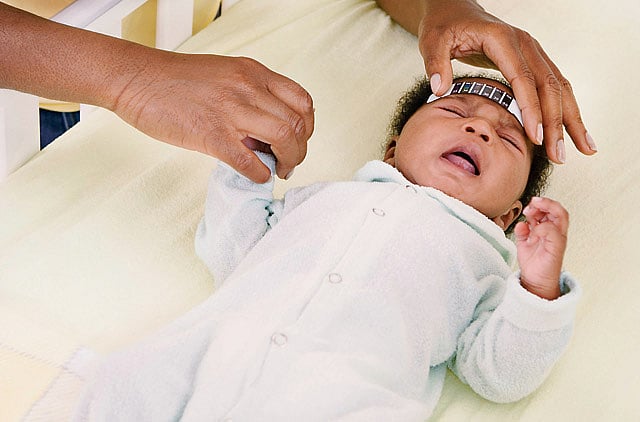
Finding yourself as the first responder when your child needs emergency medical care is likely to be a frightening experience, and more so if you are unsure of the correct action to take while you wait for medical assistance. To ensure you have the knowledge and confidence necessary to deal with an emergency situation involving your child, consider attending a paediatric first-aid course to equip yourself with the basic skills.
"All parents, guardians and anyone taking care of children should have basic first-aid training," says Rachel Jex, registered nurse and St John Ambulance first-aid trainer at Dr Keith Nicholl Medical Centre. "It is especially important in [countries where] emergency facilities are difficult to access."
Despite the technical nature of course material, no prior knowledge is required. According to Dr Randall Phillips, Medical Director, Synergy Integrated Medical Centre and emergency specialist with American Heart Association (AHA) certification, first-aid courses are tailored towards those of a non-medical background. "A paediatric first-aid course is designed to teach someone with no previous medical experience what they can do as a first responder to a potential[ly] serious accident or event involving a child," he says.
Care should be taken when choosing a course, according to Jex, to ensure the information imparted is up to date and accurate. "There are many courses run in Dubai by individuals and companies," she says. "When choosing a course check that they are [run by] a trained instructor [who holds] a current certificate with an organisation such as St John or AHA — you can look online for current and up-to-date practice for first aid on the St John and AHA — and to ensure that someone is reputable, they should work for a clinic, a hospital or a training company [as] this will mean they have a licence to teach."
Dr Phillips says accreditation is not necessarily imperative, though, unless the course attendee needs a particular accreditation certificate for their job. "However, a course should be given by someone with training credentials in first aid," he says.
Key aspects
When looking for a course, you should ensure it covers a number of key aspects of first response, says Dr Phillips. "The course should cover how to respond to an unconscious child and include urgent care situations such as cardio-pulmonary resuscitation (CPR), choking and other breathing problems, burns, head injuries and convulsions."
Jex says the course should also show you how to place a casualty in the correct position for recovery, as well as how to deal with situations such as choking or drowning. "It is also good to attend a course that offers what to do if a child is burnt or [suffers] a broken bone," she says.
"I offer two courses — an emergency first-aid course covers CP, the recovery position, choking and drowning and the second course is basic first aid, [which] covers burns, scalds, head injuries, shock, fainting, allergic reactions, bites and stings and other common accidents."
Comprehensive courses
Dr Phillips teaches course attendees how to deal with non-urgent medical cases such as care of bleeding wounds, fractures and sprains. "I additionally cover care of fever and consequences, heat-related illnesses — important in this region — care of animal bites, allergic reactions and nosebleeds," he says. "I encourage questions throughout so that any or all potential problems are talked about." >
Anna Robinson, 28, says not knowing what to do in an emergency situation could have had dangerous consequences for her daughter when she was a toddler. "My little girl choked on a piece of food while she was in her high chair one day and, although I vaguely knew I should pat her on the back, it wasn't working and I began to panic as it was clear she was unable to breathe. Luckily my sister was with me at the time and knew what to do, as she had done first-aid training for her job as cabin crew."
Following this incident, Robinson made sure she and her husband attended a paediatric first-aid course and she now keeps the manual from the course to hand at home, regularly reviewing the contents.
Update your knowledge
Maintaining your knowledge after your training course is vital, according to Jex, and she says current UK guidelines advise refresher courses every three years or yearly if you are the nominated first aider at your place of work.
"You quickly forget what you have learnt on a first-aid course if you are not using the skills," she says. "Always keep refreshing your knowledge — look back at the manual and practise things such as the recovery position and [what to do for] choking when you have time."
Dr Phillips recommends repeating the course every two years to strengthen your knowledge and pick up more information. "Also, every few years the recommendations change as medical care evolves and ongoing studies come up with new best practices in urgent care." n
Burns
• Do not touch the burn area.
• Leave any clothing stuck to the burn in place, unless it is contaminated with chemicals.
• Leave any blisters intact.
• Hold under cool running water for ten minutes, or until the pain settles (this may be as long as 30 minutes).
• Remove any jewellery or other constrictions.
• Cover with a sterile dressing.
• Any burn bigger than the palm of the casualty's hand, on the face or all the way around a limb should be treated in hospital.
• Always consider shock and be prepared to call for an ambulance if the condition deteriorates.
Choking
• A severe obstruction is when the infant cannot cry or make any noise; has difficulty coughing or breathing; has purple or red colouring around the face and neck; and has a blue tinge to the lips.
• Lay the infant face down on your forearm, supporting the back and chin.
• Give up to five sharp blows to the back.
• Check the infant's mouth and remove any obvious obstructions. Do not feel blindly into the mouth.
• If choking persists lay the infant on their back and give up to five chest thrusts using two fingers to the centre of the chest, just below the nipple line, approximately every three seconds.
• Check the mouth again and remove any obvious obstructions.
• If the infant is still choking, call for an ambulance. Do not leave the infant — if necessary, take them with you to the phone and continue the steps above until the ambulance arrives.
• If the infant loses consciousness start rescue breaths and chest compressions at a rate of 30:2
Important: Never do abdominal thrusts on an infant or blindly sweep the mouth with your finger.
Cuts and grazes
• Stop bleeding by applying pressure and raising limb.
• Clean wound and apply sterile dressing.
• If wound is to face, dirty or continues to bleed after 30 minutes seek medical advice.
• Always consider shock and be prepared to call for an ambulance if the condition deteriorates.
Limb injury
Rest - steady and support
Ice - apply cold compress or ice pack, wrapped in towel to prevent ice burn
Compression - wrap limb with layer of padding and support bandage
Elevation - elevate limb and check every ten minutes
If in doubt, treat as a fracture - immobilise the limb and seek immediate medical attention
Always consider shock and be prepared to call for an ambulance if the condition deteriorates
Sign up for the Daily Briefing
Get the latest news and updates straight to your inbox
Network Links
GN StoreDownload our app
© Al Nisr Publishing LLC 2026. All rights reserved.