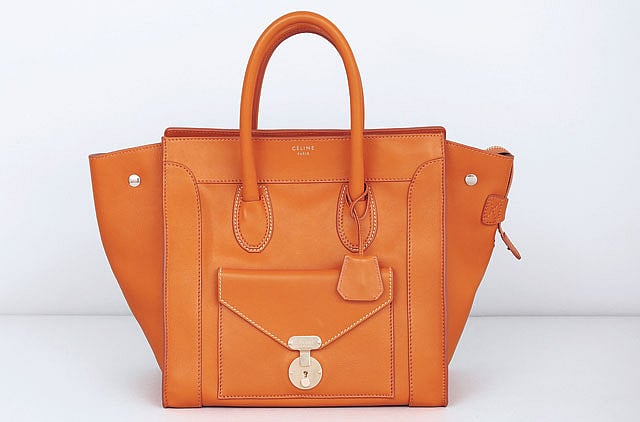
The days of the big brash designer label, beloved of Wags and minor celebrities, could soon be at an end as the world's top fashion companies move to a new "discreet" kind of luxury.
Handbags and accessories with large logos are being removed from designers' collections to be replaced with more subtle designs as part of a move for "anti-bling" fashion.
Gucci, whose bags featuring a giant double G emblem have been seen on the arm of celebrities including Paris Hilton, said recently that a recent move to downplay logos was paying off, leading to a surge in profits. Francois-Henri Pinault, the chairman and chief executive of its French parent PPR, which also owns Yves Saint Laurent, said: "Our groups are moving towards fewer logos, more discreet luxury. It's a question of adapting our ranges very rapidly to this new perception of luxury, a luxury which is more subtle, more sophisticated which is what we are doing."
The change has already begun at Gucci's sister brands such as Celine — whose British designer Phoebe Philo has led the way in reducing catwalk glitz in favour of more traditional, elegant designs and Bottega Veneta, known for its understated luxury leather goods. Other fashion houses such as Louis Vuitton have also recently introduced ranges where their logos are much less prominent.
"There is a distinct trend for quieter, discreet logos in a time of fashion that is altogether more pared down. A quieter mood has arisen from financially skittish times," said Harriet Quick, fashion features editor of Vogue. "We have moved through that era of everything being very noisy for the sake of it."
The profits at Gucci are a vindication for its chief executive, Robert Polet, who last year risked the wrath of fashion commentators by trumpeting his £800 (Dh4,561) Jackie and Pelham handbags, where the brand logo is barely noticeable, as an example of the "less ostentatious" products demanded by post-recession shoppers.
Discreet
His admission was an extraordinary turning point in the top-tier designer industry, where design labels have made billions of pounds by having accessories with big logos showcased by rappers and footballers' wives. Chanel set the bar for conspicuous consumption in 2008 when it designed calfskin handbags resembling its own black and white carrier bags.
Louis Vuitton has made millions from its recognisable "monogram" LV logo pattern. But research published recently showed that higher-spending consumers prefer more discreet branding. A study by Joseph Nunes, professor of marketing at the University of Southern California, said top-spenders are "willing to pay a premium to have ‘quiet' goods without a brand mark".
Fashion houses face a global dilemma in the wake of the recession. In Western countries, many shoppers who spent beyond their means in the past decade have stopped buying designer clothes and accessories, but in Asia, particularly China, spectacular sales growth is being driven by a new generation of aspirational consumers who still favour goods adorned with large logos.
Sign up for the Daily Briefing
Get the latest news and updates straight to your inbox
Network Links
GN StoreDownload our app
© Al Nisr Publishing LLC 2026. All rights reserved.