Adam Kechil: Car seats keep children safe
Adam Kechil, a Dubai-based expert in road safety, steers us in the right direction
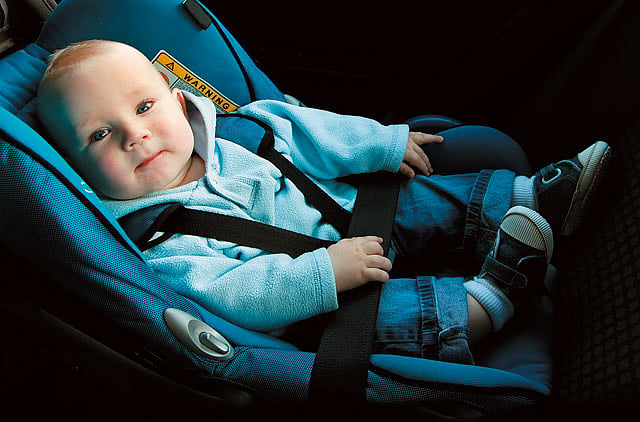
I can't stress enough that youngsters travelling in a car who are not wearing a seat belt or secured in a child seat, could be seriously injured or even die in the event of an accident. Children of all ages must use a seat belt or safety seat while in a car. The driver should be responsible for making sure that everyone travelling in the vehicle is wearing a seat belt. If the car does not have enough seat belts for everyone, then children younger than three years get priority.
Bear in mind that if a child becomes accustomed to being fastened in a baby chair, he/she will not protest about sitting in a child's car seat.
Your child may be secured in the car in the following ways:
- In a child seat specially designed for infants, which can be placed facing backwards in the front passenger seat. But this only applies if the car has no passenger-side airbag or if the airbag is disabled when the child is placed in this seat. (The air bag should be enabled once the child seat is removed and an adult uses the seat.) The front seat must be moved as far back as possible. A distance of at least 20cm must be left between the dashboard and the child seat so as not to hurt your child in a head-on collision. If your car has a passenger-side airbag that cannot be disabled, your child must be placed in a child seat in the back of the car.
- In the child seat, which must be fastened with the car's three-point seat belt.
As a general rule a baby should not be in a child seat for more than 20 to 30 minutes a day. The muscles in their back are not fully developed so remaining in one position for too long could have adverse effects on their health. Also, if your child's head sticks out over the top of the child seat, the seat is too small.
Why are airbags dangerous for children?
It may sound strange that a piece of technology designed for saving lives can also be dangerous. Airbags are made to protect adults weighing about 75kg. They are very powerful when inflated. A child who is in front of an airbag may suffocate or be severely injured by the impact of a rapidly inflating airbag. If your child is younger than 12 years, he/she must not sit in a front-seat that has an active airbag. If the child is over 12, move the seat as far back as possible.
Safety tips when driving with children
- Before a journey, make sure the child seat is properly fitted with a belt.
- If your child is not snug in the child seat, roll a couple of towels and place them on either side of the child in the child seat. Cushions especially designed for this purpose can be purchased.
- Only the parent or another adult should undo/fasten the child's safety belt.
- Do not place large/heavy objects on the rear seat or on the parcel shelf. In the event of a collision they may be thrown forward and could injure the passengers. These objects should be stored in the car boot.
- A child must never be left unattended in a child seat. They may hurt themselves or accidentally put their head under the seat belt and be suffocated.
Join ANM's Click! campaign: www.facebook.com/ClickCampaign
Sign up for the Daily Briefing
Get the latest news and updates straight to your inbox
Network Links
GN StoreDownload our app
© Al Nisr Publishing LLC 2026. All rights reserved.