Richa Rustagi, PMI's Managing Director for the Lower Gulf, Iraq and Kuwait
UAE model to shape PMI's smoke-free push across the region
Technovation Dubai explores the role of science, regulation and local market understanding
Last updated:
6 MIN READ
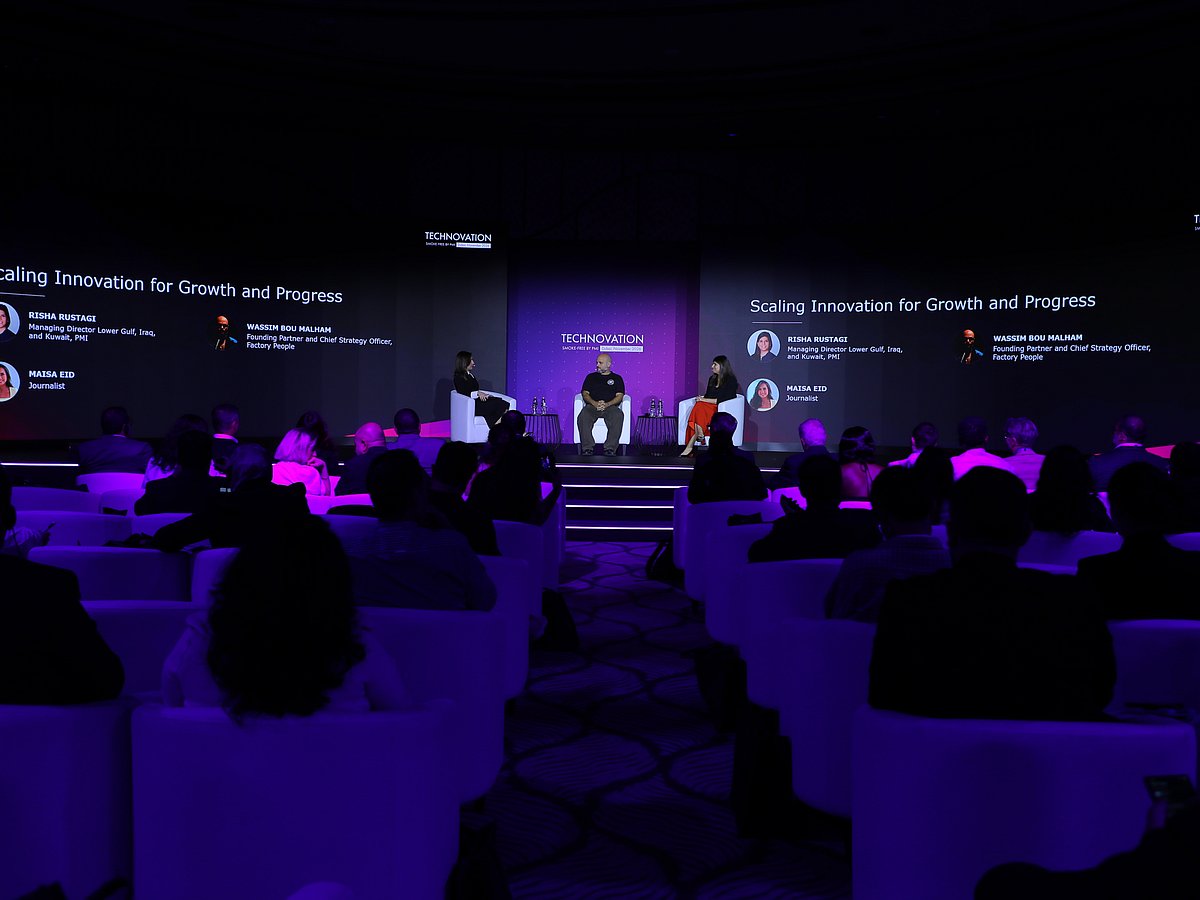
When Philip Morris International (PMI) looks at how to advance its smoke-free transformation across the region, the UAE has an important role to play.
"The UAE is one of the first markets that regulated and allowed us to launch IQOS and subsequently ZYN," says Richa Rustagi, PMI's Managing Director for the Lower Gulf, Iraq and Kuwait. "And because it is a place for innovation, it is a natural choice for us to bring our biggest and best launches here and then replicate the UAE model in other markets."
For Rustagi, the country's diverse population, openness to innovation and position as a regional hub make it an important market for understanding consumer needs and exploring how new products and ideas can reach wider audiences.
She was speaking to Gulf News at TECHNOVATION Dubai, held at W Dubai – The Palm on November 19. The day-long forum brought together speakers from healthcare, design, media, business and policy to examine a question extending beyond technological development: how do innovations translate into meaningful changes in people's lives, and what role should evidence, consumer understanding and regulation play in that process?
Understanding the consumer behind the innovation
For PMI, the importance of understanding consumer expectations comes from its own experience. Closing the event, Fred de Wilde, CEO of PMI International, reflected on the company's early trial of a smoke-free device in two cities. Despite the technology behind it, the device was bulky and the experience fell short of consumer expectations. The company had underestimated the complexity of changing a habit closely associated with taste and routine.
Fred de Wilde, CEO of PMI International
The lesson, he explained, was that developing a product was only part of the process. PMI also needed to improve the user experience, communicate more clearly and understand consumer feedback.
This theme carried through the discussions. Christos Kiritsis, PMI's Vice President for the Smoke-Free Products Category in South Asia, Indochina, CIS & MEA, stressed the importance of understanding the barriers that prevent people from changing established habits before developing solutions.
"Don't fall in love with the solution, fall in love with the problem," he said, highlighting the importance of credible evidence, consistent information and ensuring that consumer experiences align with what they are told.
This understanding also needs to extend across markets. While the UAE provides an important platform for PMI's regional activities, Rustagi noted that consumer needs and preferences differ across the six markets under her responsibility. Understanding these differences is essential when determining how innovations should be introduced and developed in individual markets.
Why the UAE matters to the regional strategy
The UAE's international outlook and cultural diversity also make it an important environment for exploring new approaches to consumer engagement.
"The UAE is a cultural hub that's home to people from many countries, not to mention the number of tourists and visitors the country gets," Rustagi says. "Things that are born in the UAE naturally tend to seep into the wider MENA region, which is exactly what we want to achieve."
Beyond product innovation, PMI is exploring partnerships with artists, creatives, entrepreneurs and other cultural voices to engage audiences through different platforms. Rustagi pointed to Curious Studio, PMI's collaboration at Dubai Design Week, as an example of this approach.
Wassim Bou Malham, Founding Partner and Chief Strategy Officer of Factory People, emphasised the importance of understanding local markets rather than relying on initial consumer interest alone. He pointed to the growing international reach of Arabic music as an example of how ideas can cross borders while retaining their cultural identity.
The importance of evidence in health communication
The discussions also addressed the importance of communicating health information accurately, particularly when explaining the differences between combustible tobacco and smoke-free alternatives.
Dr Mohammed Eltaweel, Consultant Psychiatrist and Substance Use Disorder Specialist and Medical Director of Hedoa Psychiatric Hospital in Egypt, emphasised that nicotine is addictive and not harmless. He reiterated that quitting smoking remains his first recommendation, while highlighting the importance of medical advice and psychological support for individuals who experience difficulties quitting. He also called for greater education among healthcare professionals to help them communicate health information more effectively.
Dr Tomoko Iida, PMI's Senior Director of Scientific Engagement for South Asia, Indochina, CIS & MEA, discussed nicotine's role in addiction and the harms associated with burning tobacco. She also highlighted the importance of making scientific research available for scrutiny.
Rustagi echoed the importance of transparency and informed engagement, noting that collaboration with media, government and other stakeholders is part of PMI's approach to communicating its scientific work.
"We're trying to bring about a fundamental change in society," she says. "We want people to understand our innovations and what we are trying to achieve, with the right guardrails."
Wassim Kari, Co-founder and CEO of Sohati, reinforced the need for context when communicating scientific findings. He argued that communicators should explain who research applies to, draw on the wider body of scientific evidence and avoid oversimplifying findings for headlines. "Even if science is universal, the people are local," he said.
Regulation, youth protection and illicit trade
Another major theme was the importance of regulatory frameworks that protect young people while ensuring that adult consumers have access to accurate information.
Dr Iida described preventing youth access as an ongoing challenge requiring cooperation between communities and enforcement authorities.
Guy Bentley, Director of Consumer Freedom at the Reason Foundation, argued that regulated access for adults and robust youth protections can coexist. He highlighted the importance of responsible marketing practices, retailer cooperation and appropriate tax frameworks for different product categories.
Mirza M. Abeer, CEO of the Association for Smoking Alternatives in Pakistan, called on policymakers to consider international experiences, including approaches adopted in the UK, Sweden and Japan, while keeping the longer-term objective of moving away from nicotine use in view.
The discussion also addressed the risks associated with products distributed through illicit channels. Stefano Betti, Deputy Director-General of the Transnational Alliance to Combat Illicit Trade, warned that counterfeit and substandard products can expose consumers to additional risks while bypassing safeguards designed to protect young people.
He called for stronger financial investigations, the seizure of criminal proceeds and more robust supplier vetting on online marketplaces, while urging policymakers to consider how regulatory decisions could affect demand for illicit products.
The scale of PMI's transformation
The discussions at Technovation also took place against the backdrop of PMI's wider business transformation.
Opening the event, Gijs de Best, PMI's President for South Asia, Indochina, CIS & MEA, traced the company's history from its origins as a tobacco shop in 1847 to its development into a Fortune 500 business. He described the shift towards smoke-free alternatives as a fundamental change in the company's direction.
Gijs de Best, PMI's President for South Asia, Indochina, CIS & MEA
PMI says it has invested more than $16 billion in research, development, commercialisation and manufacturing for its smoke-free portfolio, supported by more than 600 scientists, engineers and technicians.
Its portfolio spans heated tobacco, nicotine pouches and e-vapour products, which are available in 110 markets. Smoke-free products accounted for more than 40 per cent of PMI's total net revenues in the third quarter of 2026, with the company targeting a share of more than two-thirds by 2030.
PMI's smoke-free products are not risk-free and contain nicotine, which is addictive. They are intended exclusively for adults who would otherwise continue to smoke or use nicotine products.
Closing the event, de Wilde called for balanced regulation, continued scrutiny of scientific evidence and greater consideration of local market conditions, particularly across emerging economies.
For Rustagi, the UAE's experience offers an important starting point for the region's wider conversation around innovation, consumer understanding and regulation.
"We are fully committed to see a smoke-free world as quickly as possible," she says.
Sign up for the Daily Briefing
Get the latest news and updates straight to your inbox
Network Links
GN StoreAbout Gulf NewsTerms & ConditionsReach by GNSitemapContact usPrivacy PolicyGN FocusHave your sayWork with usAdvertise with usGulf News epaperPrinting Services
Download our app
© Al Nisr Publishing LLC 2026. All rights reserved.