Trust and resilience will define the future of global trade
Eugene Mayne, Founder and CEO of Tristar Group, on why resilience and trust matter
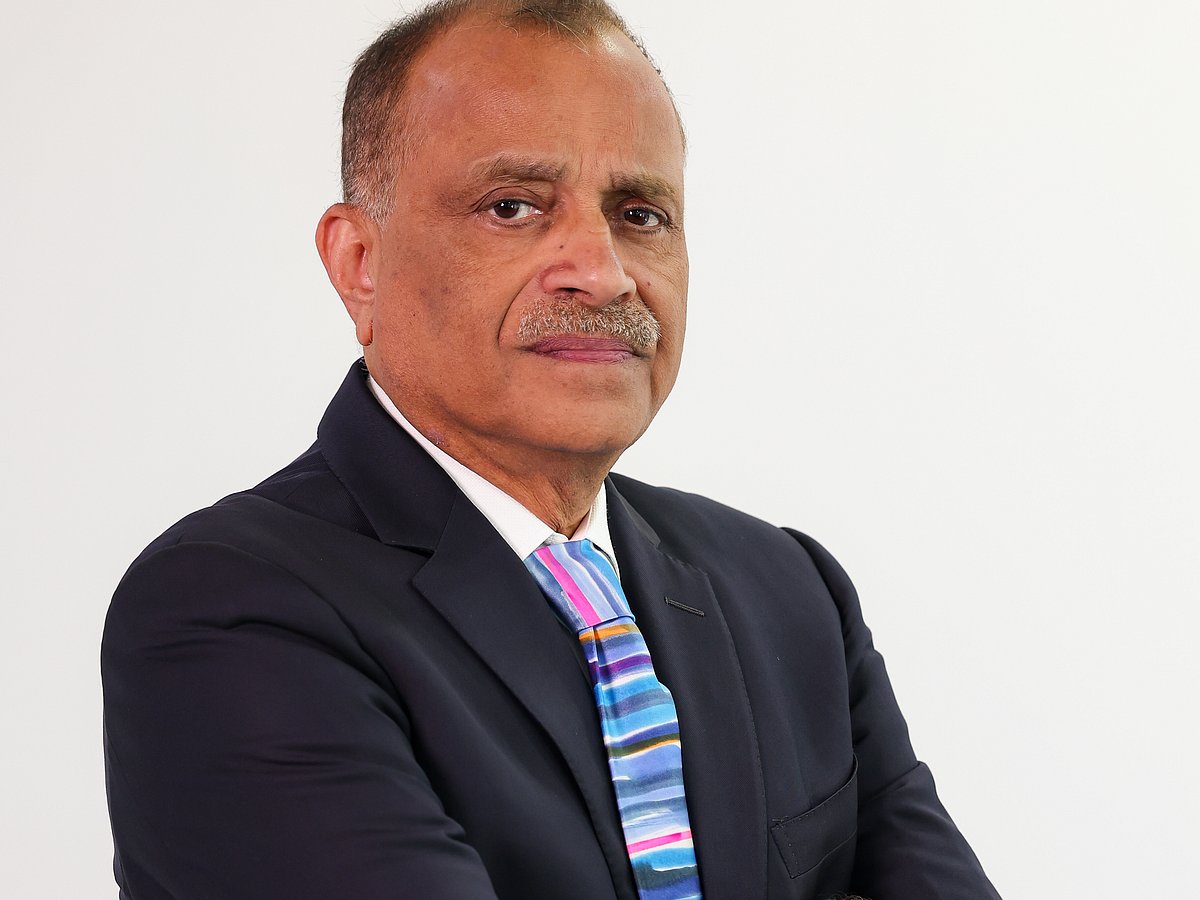
How are shifting supply chains, changing energy flows and geopolitical uncertainty reshaping global trade, and what qualities will distinguish the logistics and energy companies that emerge as leaders in this new era?
Global trade is being transformed by different structural forces. In an era of constant disruption, the greatest competitive advantage is no longer scale alone — it is the ability to adapt faster than change itself.
The fragmentation of global supply chains is moving the industry from globalization to regionalization. The emergence of regional hubs in the Middle East, Southeast Asia and the Americas embody this re-globalisation, which in turn demands new logistics architectures.
Supply chain resilience is taking priority over cost. We are witnessing trade being increasingly influenced by geopolitical alliances, sanctions and national security considerations.
We are seeing supply chains move from “just in time” to “just in case”; energy flows being redirected by geopolitics and the energy transition; shipping routes being challenged by conflict, climate events, and infrastructure constraints; and customers demanding greater visibility and stronger compliance and risk management.
The most striking shift is perhaps the very definition of supply chain efficiency. Value will come from the ability to adapt – not just optimise – and advantage will belong to those who can turn uncertainty into capability.
The next generation of logistics and energy leaders will be distinguished by the resilience of their networks, the intelligence of their data, the agility of their decisions and the trust they earn across borders and stakeholders. Equally important will be the ability to think beyond today’s business model. The Energy transition, geopolitical realignment, digital transformation, and changing customer expectations are fundamentally reshaping global trade.
The companies that succeed will be those willing to invest ahead of demand, embrace innovation and continuously reinvent themselves.
But above all one quality will distinguish the true architects of the next global trade paradigm: Reliability. Technology can be acquired, capital can be raised, and infrastructure can be replicated. Trust cannot. It is earned over the years through consistently delivering on commitments, operating safely, acting with integrity, and standing by customers when disruption occurs.
In the long term the future will belong to companies that move beyond transporting cargo or energy. They will become trusted partners that enable economic resilience, strengthen global connectivity and create lasting values for customers, communities, and society.
Many describe this moment as a ‘reset’ for regional trade. How should companies position themselves to turn today's disruptions into long-term competitive advantage?
I would look at it as recalibration and not resetting. The fundamentals that make a company successful – trust, reliability and integrity – continue to matter, and more than ever. What has changed is the premium placed on these qualities during uncertainty. When conditions are volatile, companies are not judged by what they claim to stand for, but how consistently these values show up in action.
There is not enough emphasis on diversification as a strategy – to redeploy capital, capacity and talent to wherever value is being created, instead of maintaining static positions. Success will depend on orchestrating complex ecosystems rather than controlling individual assets.
The priority is to build resilience into the supply chain — not just through diversification of suppliers and markets, but by creating optionality through regional hubs, strategic inventory, and multimodal logistics networks.
Embracing Technology and investing in talent are other key strategic differentiators. Artificial intelligence, predictive analytics, automation, and real-time visibility are no longer competitive advantages — they are becoming prerequisite for managing increasingly complex global supply chains.
The complexity of modern logistics demands people who can think systemically, tackle ambiguity and operate with cultural intelligence. The quality of people will ultimately determine a company’s ability to seize opportunities in this recalibration.
This is also an opportune moment to stress that sustainability be treated as a performance driver and be embedded in the business model. There is ample evidence that environmental stewardship and profitable growth are complementary.
Ultimately, the companies that will lead this new era will be those that replace a mindset of reacting to disruption with one of designing for disruption. In a world where uncertainty is the only certainty, resilience, agility, and trust will define long-term success.
What is driving the UAE’s rise as a global logistics and maritime hub, and how can both the country and industry leaders build on that momentum to shape the future of global trade?
The UAE’s strategic location at the crossroads of East and West gives it a natural advantage, but what truly distinguishes the UAE is its world-class ports, airports and multimodal infrastructure, business-friendly regulations, political stability, digital innovation, and the ability to make bold decisions quickly. Equally important is the country's willingness to invest ahead of demand, ensuring capacity is available before the market needs it.
Looking ahead, the next decade presents an opportunity for the UAE to evolve from being a world-class logistics hub into a global orchestrator of trade corridors. This will require deeper integration between ports, airports, rail and road networks, accelerated adoption of AI and digital trade platforms, greater investment in green shipping corridors and alternative fuels, and continued collaboration with neighbouring countries to create seamless cross-border supply chains.
The UAE is also uniquely positioned to become the preferred hub for resilient supply chains serving Africa, South Asia, and the wider Middle East. As global trade becomes increasingly multipolar, businesses will look for partners that offer reliability, neutrality, connectivity, and speed. These are qualities the UAE has consistently demonstrated.
The UAE has also created an ecosystem built on connectivity, innovation, and openness to global business. Industry leaders should leverage that platform — not just to move goods more efficiently, but to create smarter, greener, and more resilient supply chains that connect continents and create shared value.
As a company born in the UAE, we have witnessed first-hand how government and industry can work together to keep trade moving, even during periods of global disruption. Judging by the UAE’s journey over the past two decades, I believe it will not simply participate in the next chapter of global trade — it will help shape it.
Looking ahead I believe investments in people, technology, sustainability, and partnerships could be key in an increasingly connected global economy.
How is Tristar strengthening the resilience of global energy and cargo flows while positioning itself to lead the next generation of integrated, future-ready logistics networks?
Safety and reliability remain the foundation of everything we do. Our customers entrust us with critical energy supplies that power economies, hospitals, airports, industries, and communities. That responsibility demands uncompromising operational discipline, strong governance, and a culture where doing the right thing is non-negotiable.
A recent example was the disruption to regional maritime routes. When maritime routes were severely disrupted and regional ports became congested, we rapidly pivoted to the UAE–Oman Green Corridor to maintain the uninterrupted flow of raw materials and essential commodities for our manufacturing, construction, trade, and energy customers.
By leveraging the Dubai – Oman land corridor we were able to bypass critical maritime choke points and avoid significant port delays. The Sharjah – Oman route became a key artery for our fleet operations and nearly 40 percent of our fleet traffic to Oman continue to use this corridor to improve turnaround times and enhance supply chain resilience.
It reinforced an important lesson: resilience is not about avoiding disruption — it is about having the capability, partnerships, and agility to adapt when disruption inevitably occurs.
Equally important is the trusted relationships we have built over decades with customers, suppliers, governments, and partners. Those relationships allow us to mobilise resources rapidly, coordinate effectively across borders, and respond decisively when crises arise. In today's world, resilience is not just about having robust systems—it is about having trusted networks that perform when they are needed most.
Our role extends beyond transporting energy. We see ourselves as enabling economic resilience. Every time we ensure that fuel reaches an airport, a hospital, a power station, or an industrial facility, we help keep economies functioning. As global trade becomes increasingly interconnected and unpredictable, the companies that will lead are those that combine operational excellence with innovation, sustainability, and trust.
The future of energy logistics will not be defined by moving products more cheaply, but by moving them more safely, more sustainably, and with greater resilience.
We are positioning ourselves in three keyways. We are strong believer in global energy transition. While conventional fuels will continue to play an important role for many years, we are investing in lower-carbon logistics solutions, alternative marine fuels, more energy-efficient vessels, and technologies that reduce emissions across the value chain. Sustainability is no longer a compliance exercise — it is becoming a source of competitive advantage.
By building resilient logistics ecosystems rather than standalone supply chains. That means investing in strategically located terminals, multimodal transport networks, maritime assets, and digital connectivity that provide customers with multiple routing options and greater operational flexibility when disruptions occur.
By accelerating digital transformation. Artificial intelligence, predictive analytics, real-time visibility, and data-driven decision-making are enabling us to anticipate risks, optimise asset utilisation, improve customer experience, and strengthen business continuity. The supply chains of the future will be intelligent, connected, and increasingly autonomous.
Our vision is simple: to build a global logistics network that is not only efficient for today's world, but resilient enough for tomorrow's.
Sign up for the Daily Briefing
Get the latest news and updates straight to your inbox
Network Links
GN StoreDownload our app
© Al Nisr Publishing LLC 2026. All rights reserved.